 Saturday, November 21, 2026
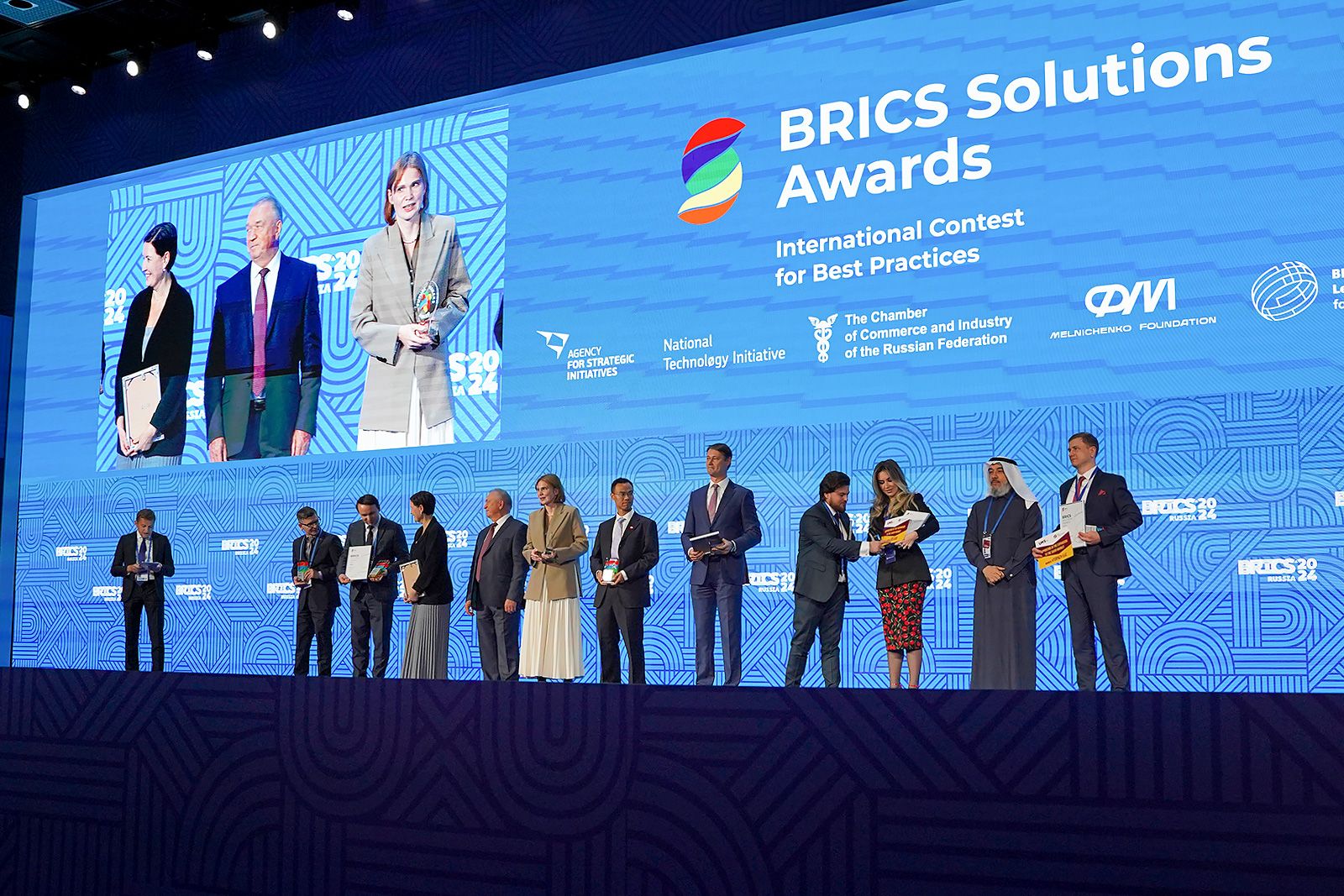
 The competition fosters the exchange of knowledge and best practices and promotes collaboration on the development and implementation of new technologies.





Two digital initiatives from Moscow have been recognized with the prestigious international BRICS Solutions Awards. The project titled "Digital Twin of the City of Moscow" was awarded in the category in the category of "Platforms and Integrated Solutions for Government and Public Administration," while the initiative "Experiment on the use of innovative computer vision technologies for medical image analysis and subsequent applicability in the healthcare system of Moscow" was honored in the "Biotechnology and National Health" category.
Artificial Intelligence Supporting Medical Professionals
The project titled "Exploration of Innovative Technologies in Computer Vision for Medical Image Analysis and Implementation in the Healthcare System of Moscow" is being executed at the Center for Diagnostics and Telemedicine of the Moscow Department of Health. This initiative employs artificial intelligence (AI) to analyze and interpret results from various medical imaging modalities, including CT, MRI, X-ray, fluorography, and mammography. Starting in 2024, this advanced technology will be accessible to healthcare professionals across the nation upon integration of local infrastructure with the MosMedAI platform. Currently, AI-assisted interpretation processing is operational in over 10 regions.
"Our project aims to reduce the workload of specialists and enhance the quality and speed of reporting. For the past 4 years, AI has played a vital role in supporting our radiologists. During this period, it has processed over 13 million studies and currently is capable of identifying 38 different diseases. However, the final diagnosis and decision-making always remain the responsibility of the radiologists," explained Anastasia Rakova, Deputy Mayor of Moscow for Social Development.
"The neural network also performs automatic measurements for radiologists and generates radiology reports. We are continuing to develop this project, working on 22 additional modalities. This experiment, on such a large scale, is unprecedented globally. Moscow was the first to implement such solutions at a at the city level, and we believe this experience will serve as a model for other cities and countries, showcasing how modern technologies can improve medical care and the efficiency of healthcare professionals." said Anastasia Rakova.
About the BRICS Solutions Awards
The BRICS Solutions Awards competition is organized annually by the country holding the BRICS chairmanship. In 2024, Russia chaired the awards, coordinated by the Agency for Strategic Initiatives, in partnership with the Chamber of Commerce and Industry of the Russian Federation and the Roscongress Foundation. The awards recognize promising projects that improve the quality of life in BRICS countries. The competition fosters the exchange of knowledge and best practices and promotes collaboration on the development and implementation of new technologies.
"We are delighted to host the BRICS Solutions Awards for the second time in our country.
This year, the competition received a record number of applications, exceeding 1,300 submissions from all Member states of BRICS," said Svetlana Chupsheva, Director General of the Agency for Strategic Initiatives. She noted that the categories "Artificial Intelligence and Digital Services," "New Industry and Energy," and "Biotechnology and National Health" attracted the most interest among participants, highlighting the growing importance of advanced technological solutions.





-23-300x250.png)




















