Tuesday, October 06, 2026
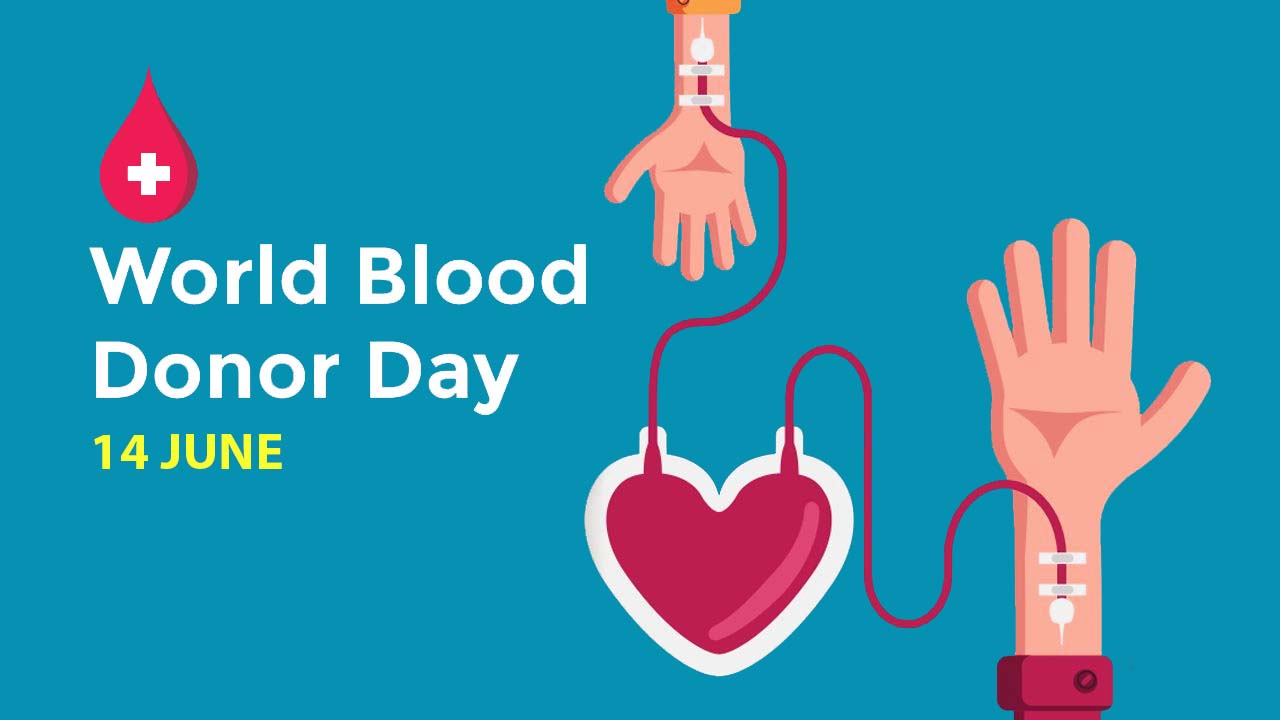
 Donate blood, and take steps for the benefit of humanity. Today, on World Blood Donor Day, we will explain all you need to know about blood donation.




Due to the lack of clarity on the policy of the government regarding blood donation, there is a dilemma in the minds of many people regarding blood donation. Why is it important to donate blood and what to do when needed, let's know friends –
Does donating blood have its own benefit as well as others?
Donate Blood It's Good for Both Recipient and Donating Person
Read the tips given below and know how donating blood has its own benefit along with others.
- By donating blood, you can save another person's life.
- Blood donation cannot be produced in any way and there is no substitute for it.
Every year 40 million units of blood of about 250 cc are needed in the country. Only 5,00,000 units of blood can be made available. Blood accounts for 7% of the total weight in our body.
According to statistics, more than 25 percent of people need blood in their life.
How beneficial is blood donation for the body?
Blood donation reduces the risk of a heart attack. Doctors believe that donation dilutes the blood, which is good for the heart.
According to new research, donating blood regularly also reduces the risk of cancer and other diseases, because it removes the toxic substances present in the body.
After donating blood, the bone marrow makes new red cells. Apart from getting new blood cells, the body also gets wellness.
Blood donation is a safe and healthy tradition. The amount of blood taken in it, it is made again by the body in 21 days. The volume of blood in the body becomes complete in 24 to 72 hours.
What happens and what should be done before donating blood?
Before donating blood, there is a mini blood test, in which hemoglobin test, blood pressure, and weight are taken. After donating blood, it is tested for hepatitis B and C, HIV, syphilis and malaria, etc. If symptoms of these diseases are found, he is informed immediately by not taking the blood of the donor.
The only reason for the lack of blood is a lack of awareness.
Men and women above 18 years of age, whose weight is 50 kg or more, can donate blood three to four times in a year.
If only 3 percent of the blood donors donate blood, then the shortage of blood in the country can be overcome. By doing this untimely deaths can be prevented.
Smoking should be avoided before and for a few hours after donating blood.
The person donating blood should not drink 24 to 48 hours before donating blood.
Before donating blood, all the questions asked should be answered correctly and clearly.
Note – After donating blood, you can do the same work as before. Due to this there is no weakness of any kind in the body.
Give your blood some hope to flow in someone's veins. This is a wonderful way to survive in many bodies
What is your blood group and what is its availability?
Blood Groups with Availability Percentage
- O+ 1 in 3 37.4% (Available in abundance)
- A+ 1 in 3 35.7%
- B+ 1 in 12 8.5%
- AB+ 1 in 29 3.4%
- O- 1 in 15 6.6%
- A- 1 in 16 6.3%
- B- 1 in 67 1.5%
- AB- 1 in 167 0.6% (rare)
Which blood group can a person take blood from?
O- can take from O-
O+ can take O+ from O-
A- can take from A-, O-
A+ can take from A+, A-, O+, O-
B- can take from B-, O-
B+ can take from B+,B-,O+,O-
AB- can take from AB-,B-,A-,O-
AB+ can be taken from AB+, AB-, B+, B-, A+, A-, O+, O-
This is an important message that can save someone's life.
Donate blood… Blood donation – Life donation!





.jpeg)
.jpg)
.jpg)
.jpg)
.jpg)
.jpg)
.jpg)


.jpg)
.jpg)
.jpg)
.jpg)
.jpg)
.jpg)