 Thursday, October 08, 2026
 Dr. Viswanathan stressed the urgent need for a holistic and integrated approach to diabetes management. He called for coordinated interventions across the healthcare sector, involving the government, medical professionals, and the community, to curb India’s diabetes epidemic and prevent further strain on healthcare resources.




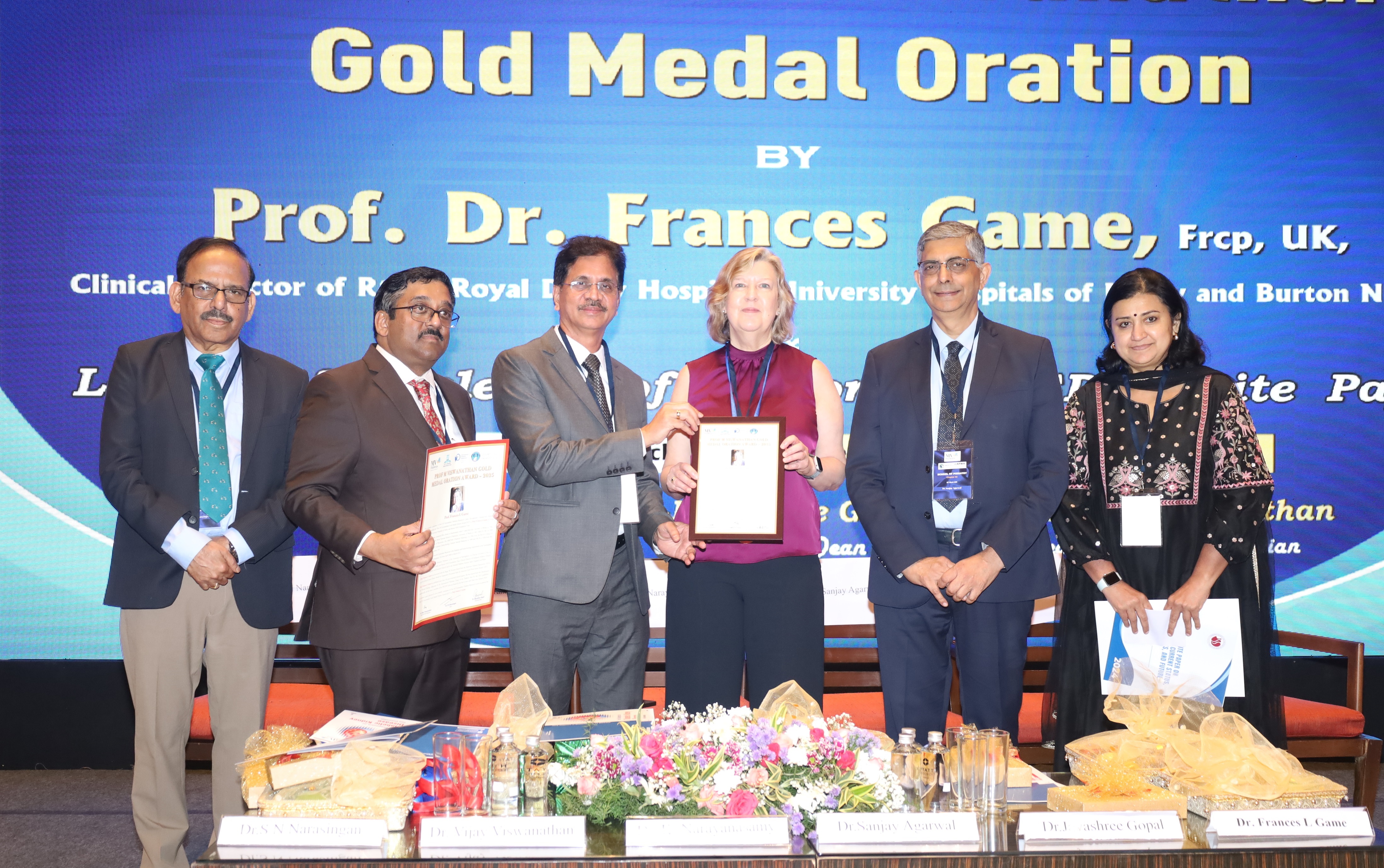
Chennai, March 22, 2025: The 39th Prof. M. Viswanathan Gold Medal Oration, organised by M.V. Diabetes and the Prof. M. Viswanathan Diabetes Research Centre in Royapuram, Chennai, featured Prof. Dr. Frances Game, Clinical Director of R&D at the University Hospitals of Derby and Burton, NHS Foundation Trust, England delivering an insightful address on eliminating preventable amputations worldwide and the latest clinical evidence.
Dr. K. Narayanasamy, Vice Chancellor of The Tamil Nadu Dr. MGR Medical University graced the event as the chief guest. Dr. Vijay Viswanathan, Head and Chief Physician of M.V. Diabetes and the Prof. M. Viswanathan Diabetes Research Centre, Royapuram, Chennai, and Dr. S. N. Narasingan, Dean & Dr. jayashree Gopal, Associate Dean of Prof. M Viswanathan Diabetes Research Center, were among the dignitaries who took part in the event.
The event also witnessed the launch of a white paper on diabetes care, developed by the Research Society for the Study of Diabetes in India (RSSDI), outlining strategic action plans for India. RSSDI is the world’s largest organisation dedicated to diabetes care, comprising 12,000 members across 23 chapters. Dr. Vijay Viswanathan currently serves as its National President. M.V. Diabetes has also conducted the Second School of Podiatry across North Chennai, South Chennai, and Bengaluru from March 20 to 22, 2025.
In her address, Prof. Dr. Frances Game, who also serves as the current Chair of the International Working Group on Diabetic Foot (IWGDF), shared her global expertise on preventing lower limb amputations due to diabetes. She emphasised that low- and middle-income countries bear a significant burden of diabetes-related foot complications, primarily due to low awareness of foot care practices and inadequate management of foot ulcers, often leading to amputations. She also highlighted the globally-recognised, evidence-based guidelines on diabetic foot care, developed by leading experts in the field.
In his address, Dr. Vijay Viswanathan emphasised that the oration and the launch of the white paper mark a significant milestone in raising awareness about global best practices in diabetes care in India. He highlighted that greater awareness, coupled with proper training, can help prevent many unnecessary amputations. “India has unfortunately earned the dubious distinction of being the diabetes capital of the world, with over 10% of its population affected. According to estimates by the Indian Council of Medical Research (ICMR), India has 101 million people living with diabetes. However, for every diagnosed case, another remains undetected. In Tamil Nadu, the prevalence of diabetes is approximately 15-18% in urban areas and 6-8% in rural regions,” he noted.
Dr. Viswanathan stressed the urgent need for a holistic and integrated approach to diabetes management. He called for coordinated interventions across the healthcare sector, involving the government, medical professionals, and the community, to curb India’s diabetes epidemic and prevent further strain on healthcare resources.
Dr. Viswanathan said that RSSDI envisions a holistic and integrated approach to diabetes care by actively engaging multiple stakeholders across various sectors. Committed to setting measurable goals by the next World Diabetes Day, RSSDI aims to drive progress in diabetes prevention, treatment adherence, and improved health outcomes across India. As part of this vision, RSSDI is focused on expanding access to care by leveraging mobile health units and telemedicine to reach underserved areas. It is also dedicated to raising public awareness through nationwide campaigns that educate people about diabetes risks, preventive measures, and treatment options. Enhancing research and data collection is another priority, with plans to establish a diabetes registry to improve understanding of trends, treatment efficacy, and patient outcomes across diverse populations.
With over 70 years of experience, MV Diabetes has developed a dedicated team capable of providing complete care for diabetes and diabetic foot complications. The hospital focuses on improving blood circulation in the legs, treating infections, and offloading pressure on the foot through the expertise of trained in-house technicians. Over the past three decades, the center has successfully saved the legs of more than 1,00,000 (1 lakh) individuals from major amputations.






.jpeg)










.jpg)
.jpg)
.jpg)
.jpg)
.jpg)
.jpg)


.jpg)