 Saturday, November 21, 2026
 Bladder perforations of this nature are extremely rare nowadays. In most cases, they occur on a very small scale, just a few millimeters, and patients usually seek medical attention within a few weeks.





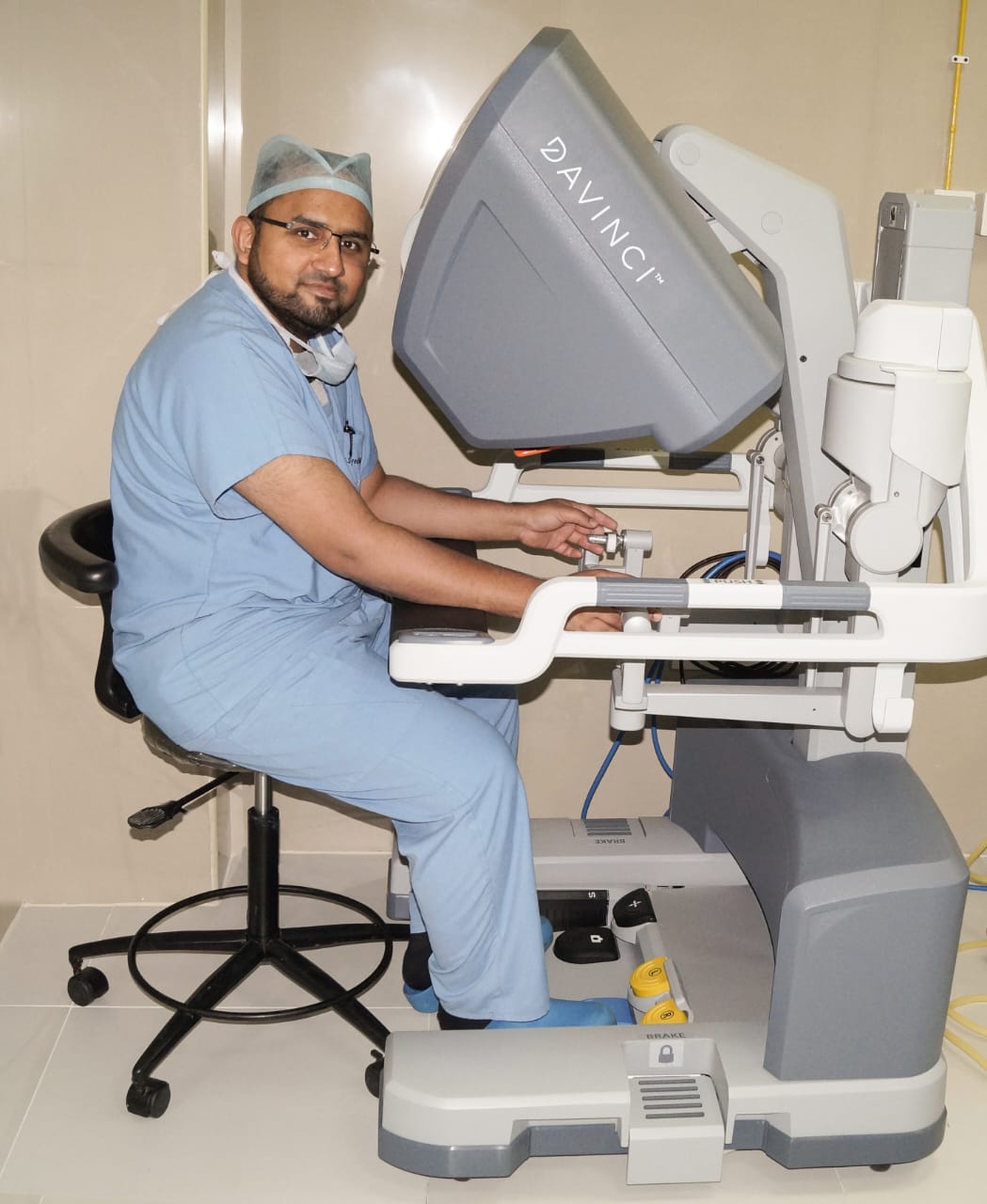
Hyderabad, June 7th, 2024: In a landmark achievement in the field of urology, doctors at the Asian Institute of Nephrology and Urology (AINU) successfully closed the large bladder fistula using the world's most advanced Da Vinci robotic surgical system, providing immense relief to the patient. Dr. S. M. Ghouse, Sr Consultant - UroOncology and Robotic Urology, AINU shared details of this groundbreaking procedure. Dr Sarika Pandya, Sr Consultant - Female Urology, AINU, took part in the procedure.
A 56-year-old woman from Anantapur district had been suffering from this issue for the past 35 years. During a normal delivery back then, she developed a large fistula in her bladder, measuring about five to six centimeters in length. Due to this fistula, she was unable to control her urine, which constantly leaked. She managed to get by all these years using diapers or some cloth to absorb the leakage. Recently, she came to the hospital with her husband, who needed treatment for kidney stones. Seeing the facilities available at the hospital, she mentioned her own problem and asked if there was any solution. After conducting the necessary medical examinations, we asked her why she hadn't sought treatment earlier. She explained that several doctors told they couldn't do anything due to the size of the fistula.
For such issues, traditional surgery can lead to recurrence again. However, with the advanced robotic technology available at AINU, we were able to completely close the fistula without leaving any small openings, thanks to precise, minimally invasive cuts. The procedure involved extremely delicate tissues that needed to be stitched with the utmost accuracy. Using the robotic surgical system, we meticulously and precisely closed the entire fistula, ensuring no errors and maintaining the highest level of care and commitment throughout the surgery.
"Bladder perforations of this nature are extremely rare nowadays. In most cases, they occur on a very small scale, just a few millimeters, and patients usually seek medical attention within a few weeks. However, for a patient who has been suffering from such a large urinary leak hole in urinary bladder for 35 years, having access to advanced robotic surgery capabilities is crucial. It allows us to fully restore their quality of life," explained Dr. Ghouse.
"Limitations in the field of medicine are diminishing every day. As a result, addressing such issues or even more severe problems is not a major challenge with modern technology. Dr. Ghouse and team of AINU doctors have set new standards in the treatment of bladder perforations, bringing new hope to the field of urology," explained Dr. Ghouse.





-23-300x250.png)




















