 Saturday, November 21, 2026
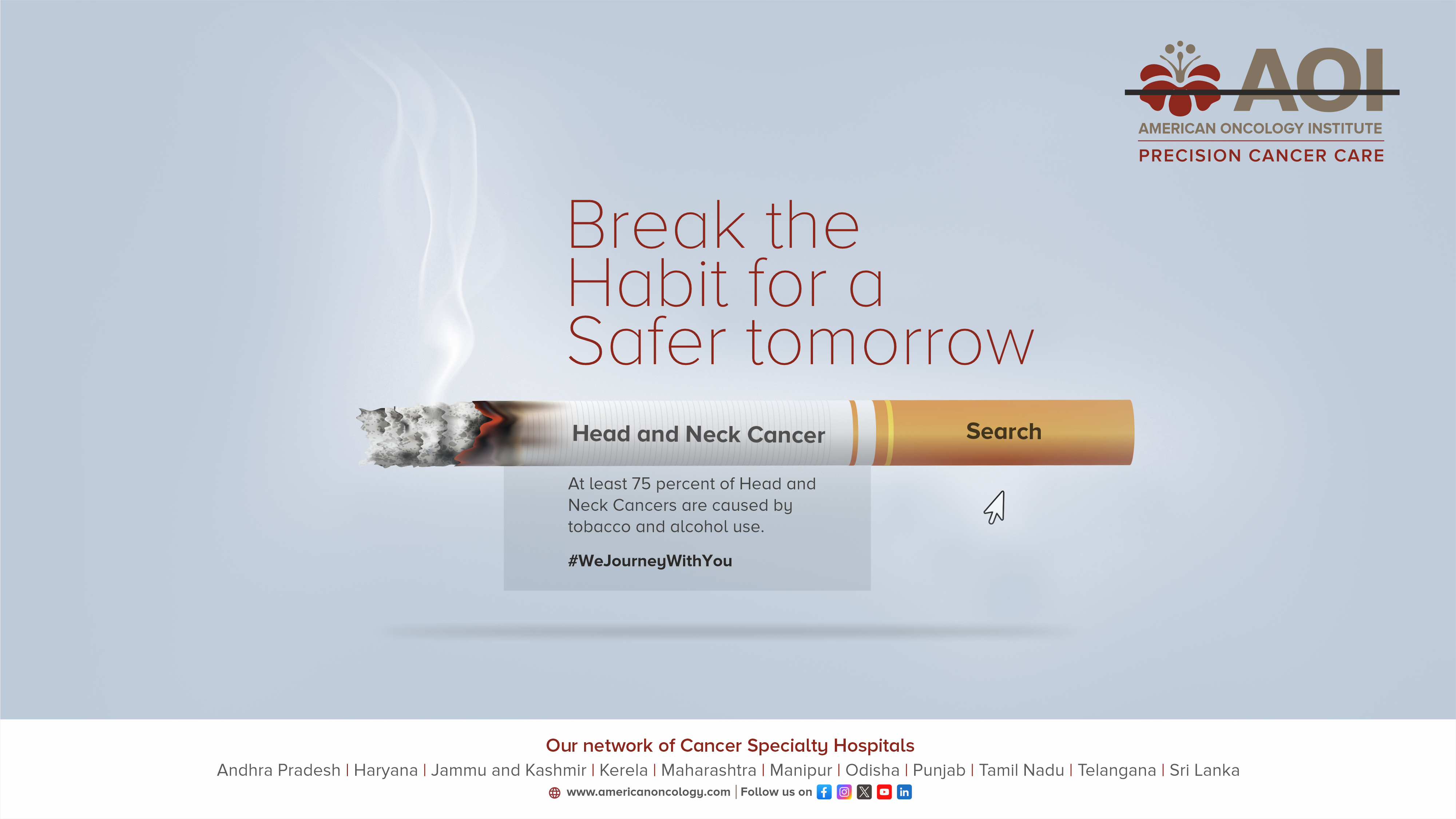
 The campaign highlights the risk associated with Tobacco and alcohol usages for Head and Neck Cancer through ATL & BTL activities.





India, Jul 17, 2024: The escalating incidences of Head and Neck Cancers are profoundly influenced by the interplay of tobacco and alcohol consumption. These two primary risk factors collectively contribute to approximately 80% of oral cavity cancers, emphasizing their significant role in disease development. Tobacco consumption manifests in various forms, including smoked products such as cigars, cigarettes, and beedi, as well as smokeless variants like gutkha and chewing tobacco. It’s a leading source, especially in the northeastern parts of India that contributes the highest incidence of cancer in India. Smokeless Tobacco (SLT) consumed both orally and nasally shows association with potentially malignant oral disorders and oral cavity cancers. The detrimental impact of tobacco is compounded when coupled with alcohol consumption, creating a synergistic effect where the combined risk exceeds the sum of individual risks.
American Oncology Institute (AOI), one of the largest Cancer hospital networks in South Asia has launched an awareness campaign #BreakTheHabit for a Safer Tomorrow," aimed at raising awareness about head and neck cancer. The campaign emphasizes the importance of breaking habits like tobacco and alcohol use, which are major contributors to these cancers. This campaign is an extension of the "Kal Ki Soch" short film released last year, which raised awareness about oral and mouth cancer for public health interest. Through its brand tagline, "We journey with you," AOI aims to reinforce its commitment to create a world without fear of Cancer.
Talking about the campaign, Harish Trivedi, CEO, CTSI-South Asia, said, “The rise in head and neck cancers in India is largely attributed to widespread tobacco usage. Crafting a campaign that captures the attention of our target audience, particularly the youth, presents unique challenges. It is crucial to select the appropriate message and platform, maintaining both creativity and simplicity. Our recent initiative, #BreakTheHabit, aims to bridge the gap in communication regarding the risk factors associated with head and neck cancers. Leveraging social media and a strategic media mix, we seek to raise awareness about the significant risks associated with tobacco and alcohol use in relation to these cancers. Our campaign focuses on addressing these modifiable risk factors through targeted prevention and cessation efforts, crucial for reducing the burden of this debilitating disease. With promising initial engagement, our goal is to reach a broader audience and enhance understanding of head and neck cancer awareness.”
By spreading awareness, AOI aims to encourage healthier lifestyle choices and promote early detection of Cancer. The campaign is live across AOI’s social media channels and further released in 10+ states in the form of outdoor and other in-house advertising. The campaign will leverage a mix of ATL and BTL strategies to maximize its reach and effectiveness.
(Region-specific) RCOO, AOI added, "Head and neck cancers are a major health concern in India, with a significant portion of cases being preventable. Through #BreakTheHabit we aim to educate the public on the dangers of tobacco and alcohol use and encourage regular screenings for early detection. Our dedicated team at AOI is committed to providing comprehensive care and support to all our patients."
AOI is the leading cancer hospital chain of South Asia operating 17 cancer hospitals in the region. American Oncology Institute is a wholly owned subsidiary of the largest cancer medical technology company- Varian Medical Systems, a Siemens Healthineers Company. This awareness campaign aligns with the central campaign idea i.e., #AOICancercare and #Wejourneywithyou.
According to the Global Cancer Observatory (GLOBOCAN), head and neck cancers account for about 30% of all cancers in India. The ICMR reports that over 200,000 new cases of head and neck cancer are diagnosed annually in the country, with tobacco and alcohol use being the primary risk factors. Early detection and timely intervention can significantly improve survival rates, making awareness campaigns like AOI's crucial in the fight against cancer.





-23-300x250.png)




















