 Thursday, October 08, 2026
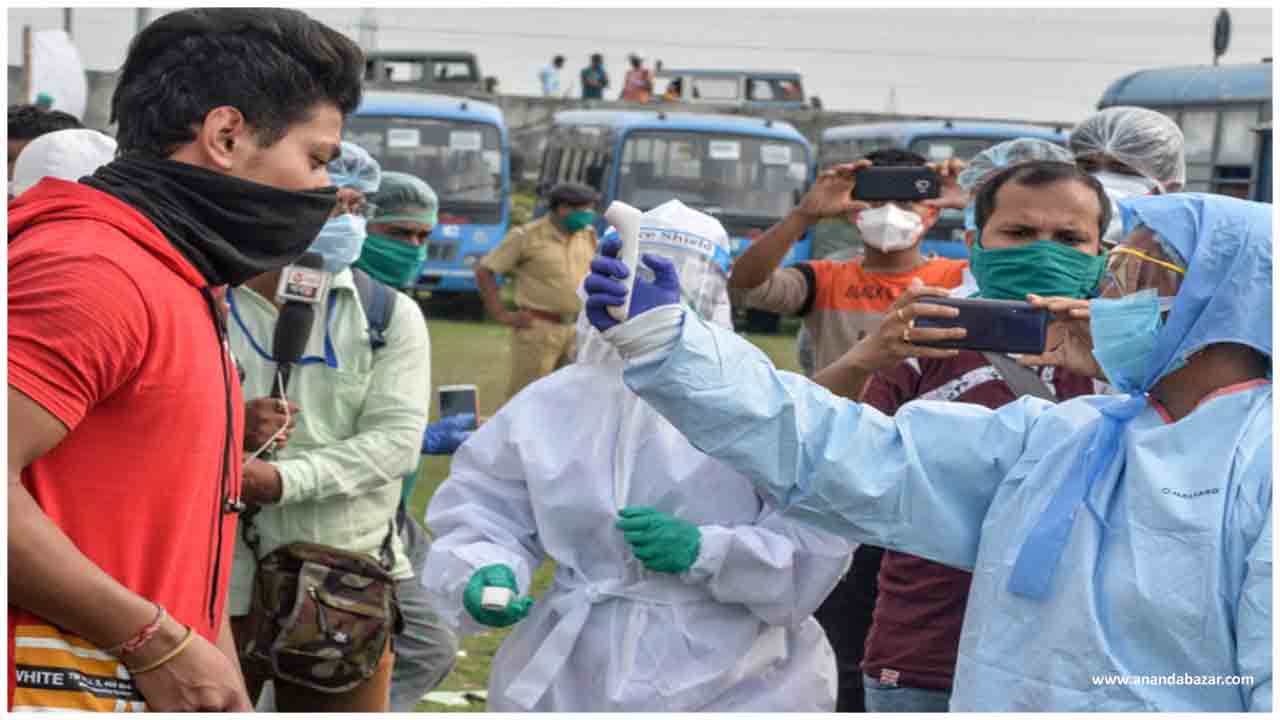
 To handle the pandemic situation more efficiently Delhi Government has canceled the leave of all medical staffs




The Delhi government has canceled the leave of all medical staff with the increase of COVID-19 beds amid fast-growing cases of coronavirus in the capital Delhi.Delhi Government issued an order that all hospitals and medical institutions should immediately recall all their employees on leave. Any relaxation, only in the most urgent circumstances.
For the first time on Friday, more than 3,000 cases of coronavirus infection were reported in the capital Delhi, due to which the total number of infected people has crossed 53,000.
According to the Delhi Health Department's Bulletin, the number of infected reached 53,116 with 3,137 new cases in Delhi on Friday. It said that in the last 24 hours, with the death of 66 patients of COVID-19, the figure of the dead reached 2,035. Meanwhile, according to official figures, the recovery rate of patients in Delhi has also improved and on June 18 this rate was 42.69%. Earlier, it was below 40 percent for 13 days. With the increase in cases, for the first time in two weeks, the rate of recovery of COVID-19 patients has crossed 40%.
Meanwhile, Delhi Chief Minister Arvind Kejriwal on Saturday opposed the State Disaster Management Authority (SDMA) meeting of Lt. Governor Anil Baijal's decision to make 5-day institutional isolation mandatory for COVID-19 infected patients. He said that after this decision people will refrain from having their test, due to which the infection will increase further.
According to sources, Kejriwal said why different rules are being implemented in Delhi when the Indian Council of Medical Research (ICMR) has allowed home isolation for patients without symptoms and mild symptoms across the country.
Delhi Deputy Chief Minister Manish Sisodia said after attending the SDMA meeting on the condition of Corona that LG's order to abolish beds' rates and home isolation in private hospitals could not be agreed in today's SDMA meeting.
Central Government has made the proposal to reduce rates for just 24% beds in private hospitals, Delhi Government wants at least 60% beds at reduced prices. This is what we have been demanding: Manish Sisodia, Delhi Deputy Chief Minister after attending SDMA meet on COVID-19.
Manish Sisodia said that the Central Government has proposed to reduce the rates for only 24% beds in private hospitals. Delhi government wants at least 60% beds at lower prices.
He has further added that if home isolation in Delhi ends, chaos will increase. Currently, more than 10,000 people are in home isolation and only 6,000 beds at isolation centers, where will we take all the people.
5 days institutional isolation required for corona infected: Lt. Governor
Delhi's Lieutenant Governor Anil Baijal on Friday ordered that under Home Isolation, it would be necessary for all Corona patients to remain in the Institutional Isolation Center for five days.
In his order, the Lt. Governor said that after five days stay in the Institutional Isolation Center, patients without symptoms of COVID-19 will be sent for home isolation. Patients with symptoms will be admitted to the hospital if needed. However, a Delhi government official said that due to this decision, people would shy away from further investigation. According to the government, about 8,500 Corona patients are currently in home isolation in Delhi. These are all patients with no signs of infection or slight symptoms.






.jpeg)










.jpg)
.jpg)
.jpg)
.jpg)
.jpg)
.jpg)


.jpg)