 Thursday, October 08, 2026
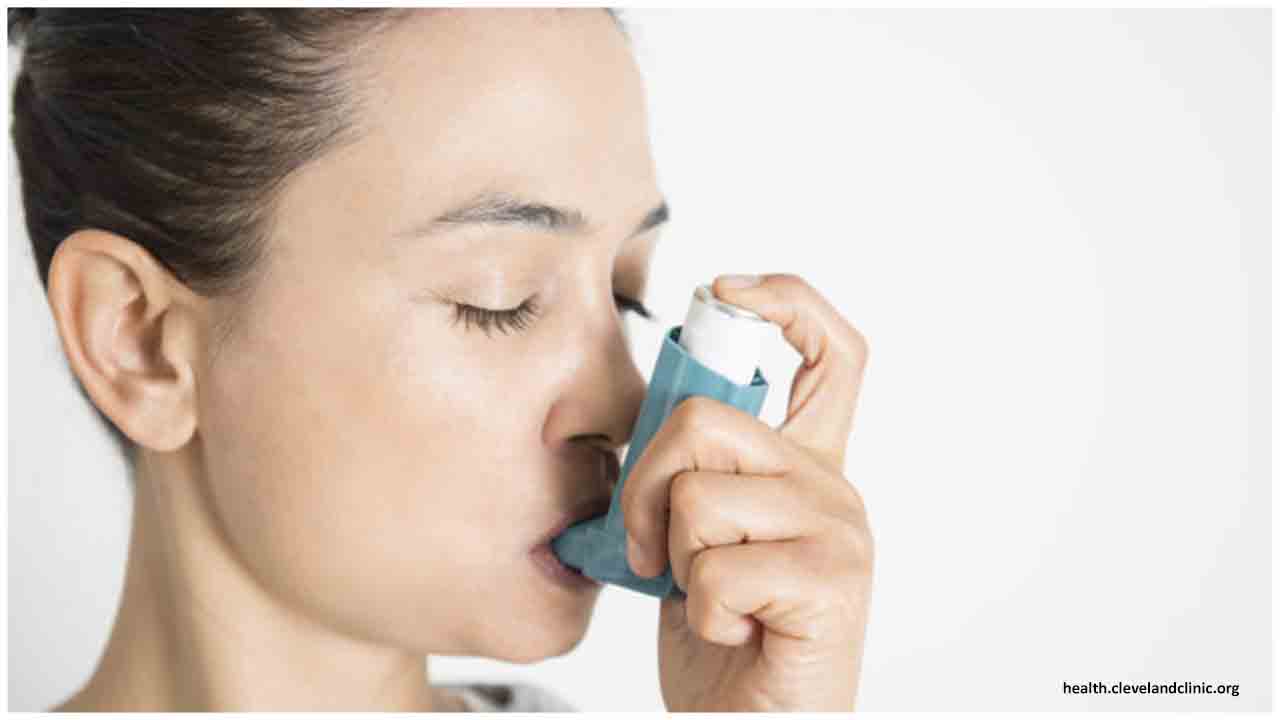
 Emerging research suggests a complicated connection




A developing assortment of examination on Covid-19 proposes that the infections connect to asthma is unquestionably more unpredictable than specialists may have foreseen.
From the get-go in the pandemic, specialists hustling to distinguish the conditions normal among the most wiped outpatients focused on lung conditions, including asthma. A likely connection appeared to be conceivable: The infection that causes Covid-19 can prompt extreme lung irritation, and different infections can set off perilous asthma assaults. However, developing exploration — including an ongoing review investigation of Covid-19 patients in 10 medical clinics — has confused the image of the association among asthma and basic instances of Covid-19.
That investigation, which took a gander at information from in excess of 1,500 patients, found that Covid-19 patients with asthma were not any more likely than patients without asthma to be hospitalized.
"I was expecting asthma patients [with Covid-19] to potentially admission more terrible. So what was astounding was that we really didn't see that," said study co-creator Gayatri Patel, a doctor, and hypersensitivity and immunology individual at Northwestern University. Her group's paper and different investigations will be basic for understanding the one of a kind hazard to the in excess of 25 million individuals in the U.S. with asthma, an umbrella term used to depict an assorted arrangement of respiratory issue set apart by lung fits, wheezing, and breathing troubles.
In any case, the investigation didn't take a gander at what specialists said is a squeezing question: Do individuals with various kinds of asthma have various degrees of hazard?
"Not all asthmatics are the equivalent," said Sharon Chinthrajah, an allergist and analyst at Stanford's Sean N. Parker Center for Allergy and Asthma Research.
There's proof to propose that separating the information by the asthma subtype could uncover distinctive hazard levels. Another ongoing investigation, this one directed by general wellbeing specialists at Harvard, dissected two asthma subtypes — hypersensitive asthma and non-unfavorably susceptible asthma — as independent hazard factors. The two-issue prompt comparative manifestations, yet are set off by various triggers: unfavorably susceptible asthma erupts with an introduction to allergens like dust and form, while non-hypersensitive asthma is exacerbated by work out, stress, chilly climate, and that's only the tip of the iceberg.
The populace based investigation, distributed as a pre-evidence paper a month ago, broke down clinical records from 492,768 individuals enrolled in the U.K. Biobank and discovered that non-unfavorably susceptible asthma essentially elevated the probability of extreme Covid-19, while hypersensitive asthma didn't.





.jpeg)








.jpg)
.jpg)
.jpg)
.jpg)
.jpg)
.jpg)


.jpg)
.jpg)
.jpg)