 Monday, October 12, 2026
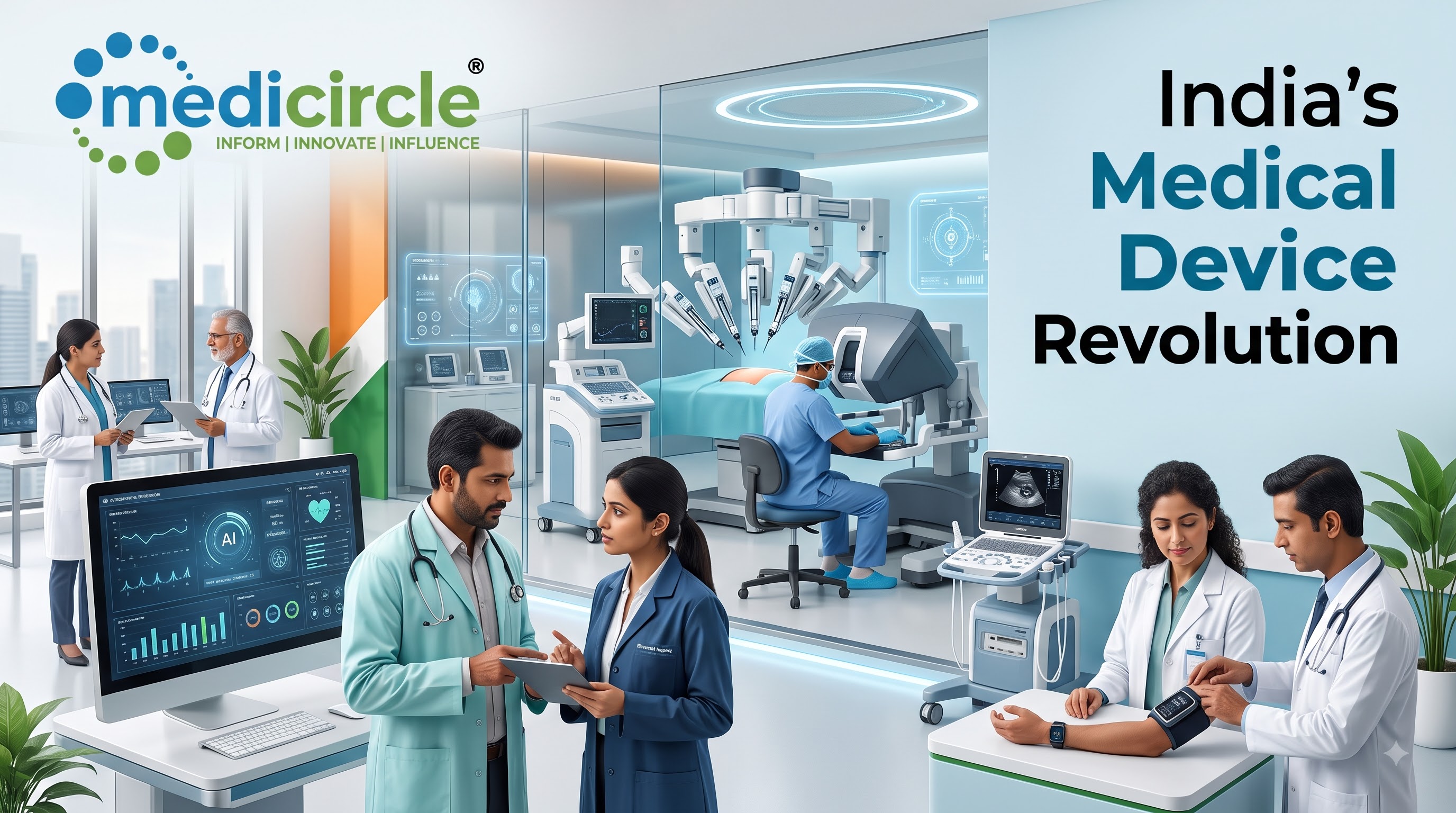
 India's medical device sector is transforming through PLI schemes, AI integration, and policy reforms, yet overcoming import dependence and regulatory complexity remains essential to achieving true global MedTech leadership.





Introduction
India's medical device sector stands at a defining crossroads. The country that once imported the vast majority of its diagnostic equipment, surgical instruments, and life-saving implants is now actively building the infrastructure, policy frameworks, and innovation ecosystems to manufacture them at home and eventually export them to the world. India's medical device market sits at approximately $16 billion today, against a global market that exceeds $600 billion, and that gap is precisely what makes the opportunity so significant. The question being asked in boardrooms, government corridors, and hospital procurement departments alike is whether India has what it takes to not merely participate in the global MedTech market but to lead it.
The answer, as it emerges from recent policy developments, industrial data, and ground-level realities, is neither simple nor entirely optimistic. India is moving in the right direction, but the road to becoming a credible global MedTech hub still requires bold decisions, structural investment, and patient execution.
Understanding India's Current Position in the Global MedTech Landscape
India's medical devices market is estimated at USD 12 to 15 billion in FY 2026, growing at a CAGR of 12 to 15 percent, which is faster than the broader healthcare sector. India remains 70 to 80 percent import-dependent in value terms. This persistent import dependence is not just an economic vulnerability. A parliamentary committee report in March 2026 flagged an import-export gap of $4.8 billion in FY25, with imports standing at $8.8 billion against exports of $4 billion, exposing the country to geopolitical risks, currency volatility, and global supply chain disruptions that raise costs and delay procurement.
However, this picture is not uniform across all device categories. Consumables and disposables, which represent roughly a quarter to a third of the market, including syringes, catheters, and surgical supplies, are segments where India is genuinely competitive, with domestic players holding meaningful share and exporting at scale. The challenge lies in the high-value segments such as imaging systems, advanced implants, cancer care equipment, and cardiovascular devices, where deep technology and component-level manufacturing are still developing.
The 9th edition of India Medical Device 2026, organized by the Department of Pharmaceuticals and the Federation of Indian Chambers of Commerce and Industry (FICCI) at Vigyan Bhawan, New Delhi, brought together policymakers, regulators, and industry leaders with a shared focus on export competitiveness, deeper domestic value addition, and innovation as the central pillars of India's medical device manufacturing agenda. The conference, themed "Towards Viksit Bharat: Advancing India as a Global Hub for Quality Medical Devices," signaled the seriousness with which the Indian government views this sector.
The Production Linked Incentive Scheme: Progress and Limitations
No conversation about India's MedTech ambitions can proceed without examining the Production Linked Incentive (PLI) scheme, which has been the government's primary instrument for stimulating domestic manufacturing.
The Rs. 3,420 crore PLI scheme provides incentives for incremental sales across four key segments: cancer care and radiotherapy, radiology and imaging, anaesthetics, cardio-respiratory and renal care devices, and implants. Till FY25, the government has released Rs. 266.64 crore as incentives under the scheme. The approved projects have commenced domestic manufacturing of high-end medical technologies, including MRI and CT equipment, linear accelerators, mammography systems, C-arms, ultrasound equipment, heart valves, stents, and dialysis products. Major beneficiaries include Wipro GE Healthcare, Siemens Healthcare, Philips, Nipro India, Meril Life Sciences, and Meril Healthcare.
The scheme focuses on four product segments that historically account for a disproportionate share of India's medical device imports. The strategic objective has been to catalyze complex manufacturing, reduce import dependence, and position India as a competitive production base within global MedTech value chains.
Yet independent industry analysis paints a more cautious picture. PLI scheme progress is real but modest relative to the rhetoric, with production remaining a small fraction of import-substitution targets. The USD 50 billion by 2030 figure widely cited across government communications is an aspiration, not a forecast. A steady growth trajectory at current rates implies a market closer to USD 20 to 25 billion by that year. This gap between ambition and realistic trajectory is not a reason for despair, but it is an important reality check.
Medical Device Parks and Infrastructure Development
Beyond incentive schemes, India has been building the physical infrastructure necessary to support manufacturing scale. Uttar Pradesh's Medical Device Park at Sector 28, Yamuna Expressway Industrial Development Authority, is a major initiative with an approved cost of Rs. 439.49 crore, including Rs. 100 crore in central support. It aims to reduce import dependence, lower manufacturing costs, and build a globally competitive MedTech ecosystem, and has already attracted investment interest from companies such as Wipro GE, Philips, Siemens, and Panacea.
Medical device parks in Uttar Pradesh, Tamil Nadu, Madhya Pradesh, and Himachal Pradesh are gradually operationalizing shared infrastructure for testing, validation, and common services. These parks are designed to reduce the capital burden on individual manufacturers by providing centralized facilities, which is particularly important for small and medium enterprises that cannot afford to build standalone testing infrastructure.
The vision driving these developments is not merely domestic consumption. Industry leaders from companies such as Abbott Healthcare have emphasized that beyond technology introduction, the industry has made substantial investments in India through research and development centres, Global Capability Centres, software and engineering hubs, clinical research, manufacturing, service networks, and workforce development. These investments not only strengthen patient care but also contribute to the creation of skilled jobs, developing local capabilities, and positioning the country as an increasingly important hub for global MedTech operations.
AI, Digital Health, and the Next Generation of Indian MedTech
The future of India's MedTech sector is not being written only on factory floors. It is being shaped in software labs, hospital ICUs, and regulatory offices where artificial intelligence is beginning to redefine what a medical device can be.
AI-assisted diagnostic tools are being deployed in district hospitals, robotic surgery platforms are entering Tier-II cities, and domestic manufacturers are increasingly competing in segments that were previously import-dependent.
On the regulatory side, significant progress is being made to bring India's framework in line with global standards. In October 2025, CDSCO released draft guidance on Medical Device Software under the Medical Device Rules, 2017, providing regulatory clarity for software-based medical technologies and reinforcing India's alignment with global digital health regulations while supporting innovation in AI-driven healthcare, Software as a Medical Device, and connected medical devices.
IndiaAI, the government's flagship AI initiative under the Ministry of Electronics and Information Technology, is collaborating with CDSCO to deploy artificial intelligence and machine learning tools that streamline regulatory processes for drugs, medical devices, and clinical trials, including SaMD products. The partnership focuses on automating document-heavy, rules-based tasks within CDSCO's SUGAM and MD Online systems. For MedTech innovators in India, this represents a meaningful improvement in regulatory predictability and processing speed.
Key areas where AI is transforming Indian MedTech include:
- AI-powered diagnostic imaging tools that help radiologists detect conditions faster and with greater accuracy
- Software as a Medical Device platforms that assist in disease screening, patient monitoring, and clinical decision support
- Robotic surgical systems being deployed beyond metro hospitals into Tier-II cities
- Remote patient monitoring devices that integrate with Ayushman Bharat Digital Mission infrastructure
Challenges That Cannot Be Ignored
Despite the momentum, India's path to becoming a global MedTech hub is obstructed by real and persistent challenges that require honest acknowledgment.
The first is the component and raw material gap. While final-device assembly has grown, upstream component manufacturing remains underdeveloped. Most high-value components, including precision sensors, specialty polymers, optical systems, and electronic sub-assemblies, are still imported. Without localizing the supply chain at the component level, India's devices will remain partially dependent on the very countries it seeks to compete with.
The second is the regulatory complexity that burdens startups. The Indian Council of Medical Research's MedTech Mitra initiative was launched in partnership with CDSCO and under NITI Aayog's guidance precisely because innovators and startups, despite being technically capable, find it hard to navigate the complex journey from ideation to clinical deployment. Difficulties related to regulatory requirements, testing and validation, industry-grade production, animal studies, clinical evaluation, and technology assessment mean that a large number of potentially effective MedTech products remain stuck at different stages of the development pipeline.
The third challenge is funding. While global MedTech companies such as GE HealthCare, Medtronic, Johnson and Johnson MedTech, and Philips India have deep India commitments, the domestic startup ecosystem often struggles with limited access to patient capital needed for multi-year clinical validation and regulatory approvals.
The fourth is quality perception in global markets. Indian devices have historically been associated with low-cost consumables rather than precision technology. Building the credibility of the "Made in India" label in high-value MedTech segments requires sustained quality investment and internationally recognized certification pathways.
The Road Ahead: What Would a True Global MedTech Hub Look Like?
Industry leaders and policymakers agree that the next phase of growth will be defined by India's ability to foster innovation, strengthen research and development, build resilient supply chains, develop advanced manufacturing capabilities, promote globally harmonized quality standards, leverage digital technologies, and expand India's footprint in international markets.
For India to become a genuine global MedTech hub, several conditions need to come together. These include:
- Deeper localization of components, not just final-device assembly
- Stronger academia-industry partnerships for clinical evidence generation
- Streamlined and predictable CDSCO regulatory timelines for new device categories
- Internationally harmonized quality standards that make Indian-made devices acceptable in regulated markets like the United States, European Union, and Japan
- Preferential public procurement policies that give domestic manufacturers a fair chance against established multinational brands
For global suppliers reassessing supply chain concentration risks, India presents a viable China-plus-one or diversification node as of 2026. This geopolitical tailwind is real, and India's window to capitalize on it is open right now. However, windows do not stay open indefinitely.
Platforms such as Medicircle play a meaningful role in this journey by bringing visibility to India's MedTech innovations, highlighting the voices of domestic device makers, and making the rapidly changing regulatory and policy landscape understandable to hospitals, clinicians, investors, and the broader healthcare community.
Conclusion
India's medical device revolution is not a future event. It is already underway. The policy architecture is taking shape, the infrastructure is being built, and the innovation ecosystem is maturing. What remains to be determined is the pace and depth of execution. The country has genuine competitive strengths, including a large domestic market, a growing pool of engineering talent, cost-competitive manufacturing, and increasing government commitment. The gap between today's $16 billion market and the $600 billion global opportunity is not a barrier. It is an invitation.
For the Indian MedTech sector to rise and meet that invitation, the work ahead is not about grand announcements but about patient, consistent, and well-resourced execution on manufacturing depth, regulatory clarity, quality standards, and global market development. India can become a global MedTech hub. Whether it will depends on the choices made in the years immediately ahead.
Q1: What is the current size of India's medical device market?
India's medical device market is estimated at approximately USD 20 billion in 2026 and is projected to reach USD 31.85 billion by 2034, growing at a CAGR of around 5.83 percent over that period.
Q2: What is the PLI scheme for medical devices in India?
The Production Linked Incentive scheme for medical devices, with a total outlay of Rs. 3,420 crore, offers a 5 percent incentive on incremental sales over a five-year performance period. It targets four segments: cancer care and radiotherapy, radiology and imaging, anaesthetics and cardio-respiratory devices, and implants.
Q3: Why does India still import most of its medical devices?
India remains 70 to 80 percent import-dependent in value terms because high-end imaging systems, advanced implants, and specialized capital equipment require deep technology and component-level manufacturing that is still being developed domestically. Only in consumables and disposables does India hold genuine global competitiveness.
Q4: What is MedTech Mitra?
MedTech Mitra is an initiative by the Indian Council of Medical Research in collaboration with CDSCO, under NITI Aayog's guidance, designed to help medical device innovators and startups navigate regulatory pathways, clinical evaluation requirements, testing and validation, and commercialization challenges so that their innovations can reach patients.
Q5: How is AI changing the medical device landscape in India?
AI-powered diagnostics, Software as a Medical Device, and robotic surgery platforms are being increasingly deployed across Indian hospitals, including in Tier-II cities. CDSCO released draft guidance for AI-based medical device regulation in October 2025, bringing greater clarity for innovators and developers in this space.
RESOURCES
- Indian Council of Medical Research (ICMR): Guidelines, publications, and the MedTech Mitra initiative for medical device innovation support
- Central Drugs Standard Control Organisation (CDSCO), Ministry of Health and Family Welfare: Regulatory framework, Medical Device Rules 2017, and Software as a Medical Device guidance
- India Brand Equity Foundation (IBEF): Industry data, FDI statistics, and sector analysis on India's medical devices market
- Department of Pharmaceuticals, Ministry of Chemicals and Fertilizers: PLI scheme details, medical device park development, and policy documentation
- NITI Aayog, Government of India: Strategic health sector reports and MedTech ecosystem policy direction
INTERLINKING KEYWORDS
medical device manufacturing India, PLI scheme healthcare, CDSCO medical device regulation, AI diagnostics India, MedTech startups India, Ayushman Bharat Digital Mission, Software as a Medical Device India, Make in India healthcare, medical device parks India
Last Medically Reviewed by:
Medicircle Medical Editorial Board on August 29, 2026
Disclaimer:
This article is intended for informational and educational purposes only. It does not constitute financial, investment, regulatory, or medical advice. The data and statistics referenced are based on publicly available government reports, industry analyses, and credible healthcare publications as of August 2026. Readers are advised to consult official government sources and qualified professionals for decisions related to regulatory compliance, investment, or healthcare policy.






.jpeg)










.jpg)
.jpg)
.jpg)
.jpg)
.jpg)
.jpg)


.jpg)