 Thursday, November 19, 2026
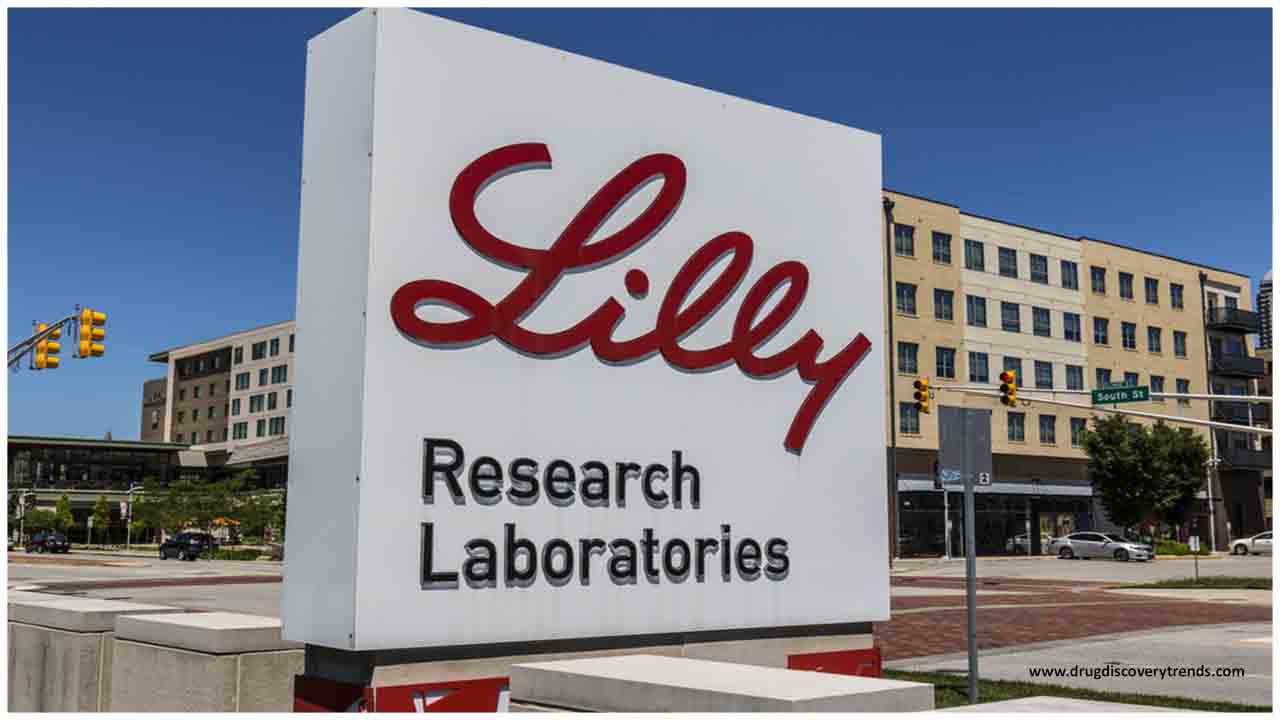
 Lilly is also doing preclinical studies of a third antibody treatment for the illness caused by the coronavirus that could enter human clinical trials in the coming weeks.





Eli Lilly and Co could have a medication explicitly intended to treat COVID-19 approved for use as ahead of schedule as of September if all works out in a good way for both of two counteracting agent treatments it is trying, its central researcher told Reuters on Wednesday.
Lilly is additionally doing preclinical investigations of a third counteracting agent treatment for the sickness brought about by the new coronavirus that could enter human clinical preliminaries in the coming weeks, Chief Scientific Officer Daniel Skovronsky said in a meeting.
Lilly has just propelled human preliminaries with two of the test treatments.
The medications have a place with a class of biotech meds called monoclonal antibodies broadly used to treat malignant growth, rheumatoid joint pain, and numerous different conditions. A monoclonal neutralizer medicate created against COVID-19 is probably going to be more successful than repurposed meds as of now being tried against the infection.
Skovronsky said the treatments - which may likewise be utilized to forestall the infection - could beat an antibody to far-reaching use as a COVID-19 treatment if they demonstrate success.
"For the treatment sign, especially, this could go quite quick," he said in a meeting. "On the off chance that in August or September we're seeing the individuals who got rewarded are not advancing to hospitalization, that would be ground-breaking information and could prompt crisis use approval."
"With the goal that places you in the fall time: September, October, November isn't preposterous," he said.
Coronavirus immunizations being created and tried at extraordinary speed are not liable to be prepared before the year's end at the most punctual.
Recently, Lilly declared it had started understanding testing for two separate immunizer medicines. One right now assigned LY-CoV555 is being created in an organization with Canadian biotech AbCellera. The other, JS016, it is created with Chinese drugmaker Shanghai Junshi Biosciences.
Both work by blocking some portion of the infection's supposed spike protein that it uses to enter human cells and duplicate.
Lilly's third neutralizer treatment up-and-comer follows up on an alternate piece of the infection and will in all likelihood be tried in the mix with either of the others, Skovronsky said.
The drugmaker, be that as it may, said it has a solid inclination to build up a treatment that can function admirably in COVID-19 patients as an independent, as assembling these sorts of medications, which are regularly regulated by mixture, is a mind-boggling procedure and limit is constrained.
"It's acceptable to have two antibodies. The drawback is that assembling is valuable. We have a restricted assembling limit. In the event that two antibodies are required, half the same number of individuals will get rewarded," Skovronsky said. "So we will likely check whether we can do one immunizer at as low a portion as could be expected under the circumstances."
Lilly will have the ability to cause a huge number of portions before the year's over on the off chance that it to can treat COVID-19 patients utilizing a solitary immune response medicate instead of with a blend, he said.
Forestalling the sickness with these sorts of medications presents an alternate assembling challenge completely.
"Worldwide limit concerning antibodies is simply not sufficiently high that we would ever consider satisfactory dosages" for "billions of individuals in the prophylactic setting," Skovronsky said.
The better arrangement is to generally immunize individuals with COVID-19 immunizations when accessible, and save immunizer medicines for individuals who have the sickness or were as of late presented to it.
They could likewise help defenseless populaces where antibodies are less successful, for example, nursing home patients, he said.
Lilly would like to lead a COVID-19 avoidance clinical preliminary in nursing home patients in the not so distant future, he included.
The Indianapolis-based drugmaker plans to deliver the medications in plants in Kinsale, Ireland, and New Jersey, and is happy to utilize its ability to help produce another organization's effective treatment, should Lilly's bomb in the clinical path.
Lilly is proceeding to screen for antibodies through its association with AbCellera, which is working with the U.S. National Institutes of Health to distinguish promising mixes, Skovronsky said.




-23-300x250.png)





















