 Monday, October 05, 2026
 Rs 1,000 crore allotted for migrant workers will support States for providing food, shelter, medical treatment, and transport




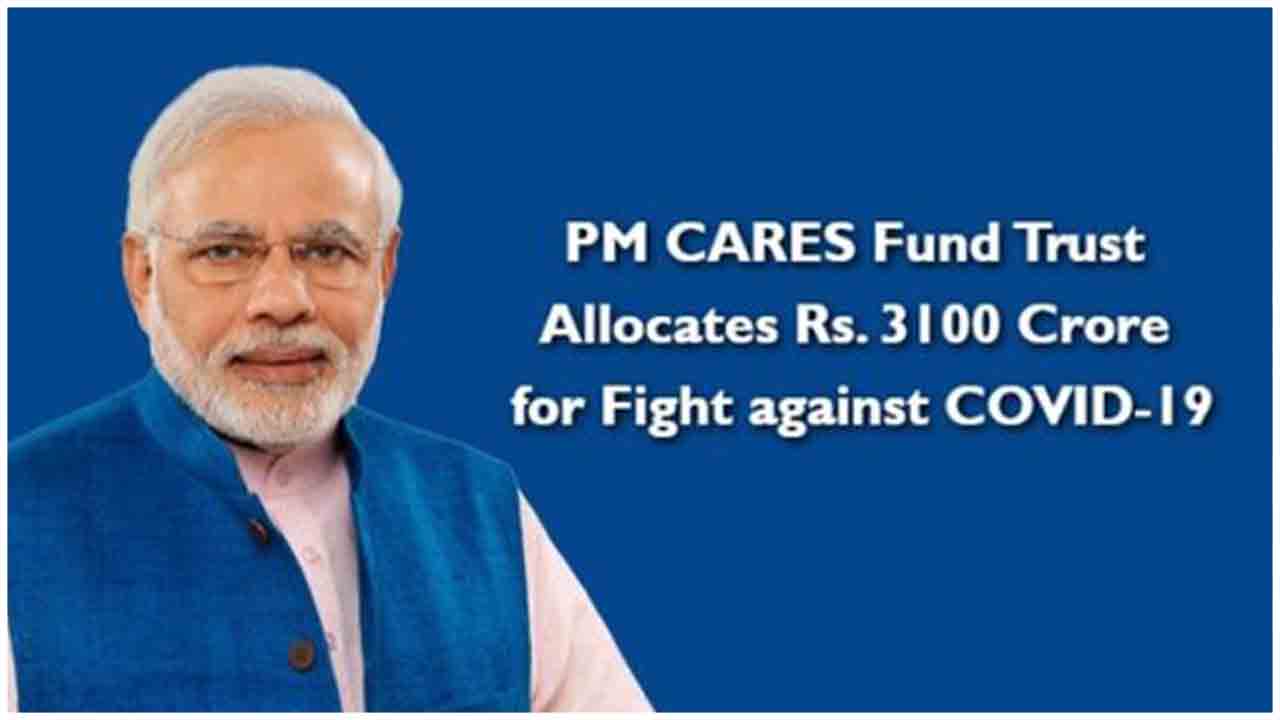
Rs 3,100 crore from the Prime Minister's Citizen Assistance and Relief in Emergency Situations or PM-CARES Fund are going to be used to fight the coronavirus crisis, the govt announced on Wednesday, amid mounting pressure for transparency in its new national fund.
"Out of Rs 3,100 crore, a sum of roughly Rs 2,000 crore are going to be earmarked for the acquisition of ventilators, Rs 1,000 crore is going to be used for the care of migrant laborers and Rs 100 crores are going to be given to support vaccine development," Prime Minister Narendra Modi's office said in a statement.
This money can pay for 50,000 "Made in India" ventilators that will be provided to government-run COVID-19 hospitals in the States and UTs treating patients of the deadly respiratory illness.
The Rs 1,000 crore allotted for migrant workers are going to support States and placed at the disposal of District Collectors or Municipal Commissioners for providing food, shelter, medical treatment, and transport.
"State/UT-wise funds are going to be released on the weightage of (a) Population of the State/UT as per 2011 Census - 50%, weightage (b) Number of positive COVID-19 cases as on date - 40% weightage and (c) Equal share (10% weightage) for all states/UTs to make sure basic minimum sum for all states," the govt statement said.
The Rs 100 crore marked for vaccine development is going to be spent under the supervision of the government's Principal Scientific Advisor to assist Indian academia, startups, and therefore the pharmaceutical industry that have close for research, it added.
The PM CARES Fund, formed by the cabinet on March 27, is managed by a trust with PM Modi as its chairperson and senior cabinet members as trustees.
Announcing the primary set of components of the Rs 20 lakh-crore COVID-19 economic stimulus package announced by Prime Minister Narendra Modi, minister of finance Nirmala Sitharaman said the measures will help “spur growth and build a really self-reliant India”.
“It addresses simple doing business, compliance, and due diligence, and therefore the intention is added to create local brands,” she said.
The Rs 20 lakh-crore spending, including ones announced earlier also because the RBI’s measures, is seen because of the government’s plan to check the world’s fifth-largest economy hurtling towards its first full-year contraction in four decades.
Sitharaman said automatic collateral-free loans of a four-year tenure with a 12-month moratorium on interest payment, will benefit 45 lakh small businesses. Besides, an estimated Rs 1 lakh crore in dues to MSMEs by government and central PSUs are going to be released within 45 days.
The FM announced a Rs 30,000-crore special liquidity scheme for nonbanking finance companies (NBFCs), housing finance companies (HFCs) and micro-finance institutions (MFIs) that are finding it difficult to boost money in debt markets. Further a Rs 45,000 crore partial credit guarantee scheme 2.0 was also announced for NBFCs, HFCs, and MFIs with low credit rating to assist them to extend a loan to individuals and MSMEs.





.jpeg)
.jpg)
.jpg)
.jpg)
.jpg)
.jpg)
.jpg)








.jpeg)

.jpeg)


.png)