 Friday, October 09, 2026
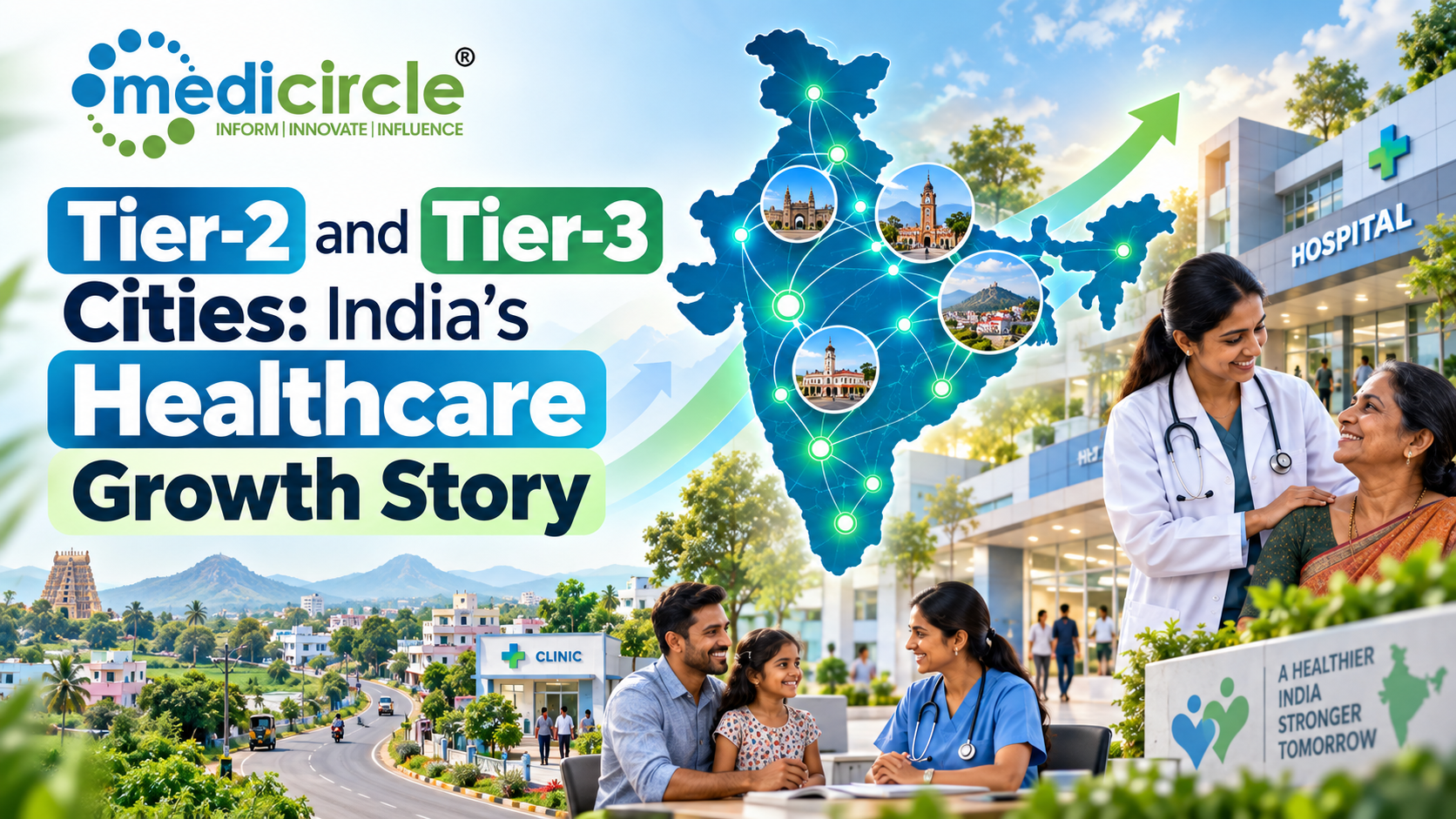
 India's Tier-2 and Tier-3 cities are emerging as high-growth healthcare markets, driven by government policy, private investment, digital health, and rising demand from underserved populations.





Introduction
For decades, India's healthcare story was largely written by its metropolitan cities. Delhi, Mumbai, Bengaluru, Chennai, and Hyderabad attracted the best specialists, the most advanced hospitals, and the majority of private healthcare investment. Patients from smaller towns thought nothing of travelling hundreds of kilometres to access quality care. That narrative is now changing with remarkable speed.
Tier-2 and Tier-3 cities across India are emerging as the next frontier of healthcare growth. From Lucknow and Indore to Vizag, Coimbatore, Nashik, Jodhpur, and Bhubaneswar, these cities are witnessing a confluence of forces that is reshaping how healthcare is delivered, accessed, and experienced. Private hospital chains are opening new facilities, healthtech startups are deploying digital health solutions, trained medical professionals are choosing to practise closer to home, and government schemes are extending coverage to populations that were previously underserved. The momentum is undeniable.
This shift is not simply a matter of geography. It represents a structural transformation in the Indian healthcare market, one that carries significant consequences for hospital leaders, healthcare investors, medical professionals, and the millions of patients who live beyond India's large metros.
Understanding Why Smaller Cities Are Gaining Healthcare Momentum
The growth of healthcare in Tier-2 and Tier-3 cities is not accidental. It is the product of several overlapping demographic, economic, and policy shifts that have been building for years.
India's population is not concentrated in its eight or ten largest cities. A substantial majority of the country's 1.4 billion people live in mid-sized cities and smaller urban centres. According to data from the Census of India and various urban planning studies, there are well over 400 cities in India with populations between one lakh and ten lakh. These cities collectively represent an enormous and largely underpenetrated healthcare market.
Rising incomes in non-metro cities are playing a significant role. The emergence of a middle class in cities like Vadodara, Agra, Mysuru, Thiruvananthapuram, and Raipur means that more households now have the financial capacity to spend on quality healthcare services. Health insurance penetration, while still low in absolute terms, is growing in these regions as employers expand coverage and government schemes extend their reach.
Infrastructure development is another critical enabler. The expansion of national highways, improved road connectivity, the growth of domestic air routes to smaller airports, and the roll-out of digital connectivity through BharatNet have all made smaller cities more accessible and more commercially viable for healthcare businesses.
The Role of Government Policy in Driving Healthcare Access
No discussion of healthcare in Tier-2 and Tier-3 cities is complete without acknowledging the transformative impact of government policy. India's central and state governments have introduced several programmes that are accelerating healthcare development in these regions.
Ayushman Bharat, the world's largest publicly funded health insurance scheme, has been one of the most consequential interventions. By providing health coverage of up to five lakh rupees per family per year to economically vulnerable households, the scheme has unlocked significant demand for inpatient care in smaller cities. Hospitals in Tier-2 and Tier-3 locations have enrolled as Ayushman Bharat empanelled providers, creating a sustainable patient base that previously could not afford hospitalisation costs.
The Ayushman Bharat Digital Mission (ABDM) is adding another layer of transformation. By creating a unified digital health infrastructure including Ayushman Bharat Health Accounts, Health Facility Registries, and Healthcare Professionals Registries, the ABDM is making it possible for smaller city hospitals to participate in a national digital health ecosystem. Telemedicine, electronic health records, and digital prescriptions are becoming practical realities even in cities that were digitally underserved just a few years ago.
The Pradhan Mantri Swasthya Suraksha Yojana has supported the establishment of All India Institutes of Medical Sciences campuses in states that previously lacked tertiary care infrastructure. Cities like Raipur, Bhopal, Jodhpur, Patna, and Bhubaneswar now host AIIMS campuses that are building specialist capacity and attracting medical talent to these regions. This not only improves care access but also helps retain doctors who might otherwise have gravitated exclusively to metros.
State governments have also been active. Several states have developed health corridors, medical device parks, and healthcare special economic zones in smaller cities to attract private investment. States like Andhra Pradesh, Telangana, Madhya Pradesh, and Rajasthan have actively courted private hospital chains to set up in Tier-2 districts through land allotments, tax incentives, and single-window clearances.
Private Sector Expansion: Hospital Chains Look Beyond Metros
The private healthcare sector in India has historically concentrated investment in large cities where patient volumes and average revenue per patient were highest. That calculus is shifting. Leading hospital chains are now actively pursuing expansion strategies that target Tier-2 and Tier-3 cities.
Groups such as Manipal Hospitals, Fortis Healthcare, Aster DM Healthcare, Care Hospitals, and several regional chains have announced or implemented expansion plans in smaller cities. The reasons are straightforward. Land costs in Tier-2 cities are a fraction of metro prices, making greenfield hospital development financially viable. Operating costs including staff salaries, utilities, and rentals are lower. And the demand environment is improving rapidly as incomes rise and insurance coverage expands.
There is also a competitive dimension. The metro markets for premium healthcare are increasingly crowded. Tier-2 and Tier-3 cities, by contrast, often still have a significant shortage of quality private hospital beds. A well-positioned hospital entering a smaller city with a strong clinical reputation can quickly build patient loyalty and achieve reasonable occupancy rates.
Medical value travel is also becoming relevant at a regional level. Patients from smaller towns and rural hinterlands who previously had no choice but to travel to metros are now finding that they can access comparable or adequate quality care at hospitals in nearby Tier-2 cities. This reduces travel burden, lowers out-of-pocket expenditure, and keeps healthcare spend within the regional economy.
Digital Health and Healthtech: Bridging Gaps in Smaller Cities
Technology is playing an increasingly important role in expanding healthcare reach in Tier-2 and Tier-3 cities. India's healthtech sector, which has grown significantly over the past several years, is increasingly focused on markets beyond the metros.
Telemedicine platforms have demonstrated their value in connecting patients in smaller cities to specialist physicians in larger centres. Following the Ministry of Health and Family Welfare's Telemedicine Practice Guidelines issued in 2020, teleconsultation has become a legitimate and increasingly adopted mode of care delivery. Platforms operating in this space have reported strong growth in user bases from non-metro cities.
Diagnostic networks are expanding aggressively. Companies like Dr Lal PathLabs, Thyrocare, Metropolis, and various regional diagnostic chains have built collection point networks across hundreds of smaller cities. Home sample collection services are making diagnostics even more accessible in areas where patients previously had to travel considerable distances to access a reliable laboratory.
Pharmacy networks and online medicine delivery platforms are also reaching deeper into smaller cities. The combination of a registered online pharmacy with doorstep delivery has improved medication adherence and access for patients managing chronic conditions in cities where specialist availability may still be limited.
Digital health records and hospital management systems tailored for smaller healthcare facilities are helping nursing homes, polyclinics, and district hospitals in Tier-2 and Tier-3 cities improve their operational efficiency and patient documentation practices. This is a foundational step toward better quality care and eventually toward integration with national digital health infrastructure.
Challenges That Must Be Addressed
Acknowledging the growth potential of Tier-2 and Tier-3 cities should not obscure the challenges that remain. A clear-eyed understanding of these challenges is essential for all stakeholders, including hospital leaders, policymakers, investors, and healthcare brands seeking to engage with these markets.
Specialist availability continues to be a significant constraint. While general practitioners and primary care physicians are more widely distributed, specialists in fields such as oncology, cardiology, neurology, and neonatology remain concentrated in metros. Attracting and retaining specialists in smaller cities requires competitive compensation, career development opportunities, and access to good educational and social infrastructure for their families.
Regulatory complexity, while improving, can still pose challenges for healthcare entrepreneurs setting up new facilities in smaller cities. Navigating the requirements of the Clinical Establishments Act, fire safety norms, biomedical waste management regulations, and NABH accreditation processes can be resource-intensive for smaller organisations.
Healthcare literacy, while improving, remains uneven. Patients in some Tier-3 cities may still rely on unqualified practitioners, delay seeking care, or have lower awareness of the range of services available to them. Public health communication, awareness campaigns, and community health worker programmes have a vital role to play in improving health-seeking behaviour.
Health insurance penetration in Tier-2 and Tier-3 cities, while growing, is not yet at levels that can fully sustain high-quality private hospital operations without dependence on out-of-pocket payments. Expanding insurance access and awareness in these markets remains a policy and industry priority.
The Opportunity for Healthcare Brands and Communicators
Platforms like Medicircle have an important role to play in this transition. As India's healthcare media and knowledge ecosystem, Medicircle connects hospital leaders, healthcare brands, medical professionals, and patients through credible and impactful content. For hospitals expanding into smaller cities, for healthtech companies targeting non-metro markets, and for specialists seeking to build a professional reputation in Tier-2 regions, healthcare media platforms offer visibility, credibility, and the ability to reach a relevant and engaged audience.
Communicating expertise, building trust with patients in new markets, and articulating the quality of care on offer are critical success factors for healthcare organisations entering smaller cities. Responsible and well-crafted healthcare content can meaningfully contribute to this trust-building process.
Conclusion
India's Tier-2 and Tier-3 cities are not simply an extension of the metro healthcare market. They represent a distinct and rapidly growing healthcare ecosystem with its own dynamics, opportunities, and challenges. The convergence of rising incomes, government policy support, private sector investment, digital health expansion, and growing patient awareness is creating conditions for sustained healthcare growth across hundreds of cities that were previously underserved.
For India to achieve its public health goals, to reduce the burden of non-communicable diseases, to improve maternal and child health outcomes, and to build a genuinely universal health coverage system, the development of healthcare infrastructure in smaller cities is not optional. It is essential. The organisations and professionals that recognise this opportunity early and invest thoughtfully in these markets will be well positioned to shape the next chapter of Indian healthcare.
Frequently Asked Questions
Q1: Why are Tier-2 and Tier-3 cities becoming important for India's healthcare sector?
These cities are gaining importance because of rising middle-class incomes, improved connectivity, government scheme coverage through Ayushman Bharat, and significant unmet demand for quality healthcare that metros alone cannot serve.
Q2: Which government schemes are supporting healthcare growth in smaller Indian cities?
Ayushman Bharat, the Ayushman Bharat Digital Mission (ABDM), Pradhan Mantri Swasthya Suraksha Yojana, and various state-level incentives for private hospital investment are among the key schemes supporting healthcare expansion in Tier-2 and Tier-3 cities.
Q3: What role does technology play in improving healthcare access in non-metro Indian cities?
Telemedicine platforms, digital diagnostic networks, online pharmacies, and hospital management software are all helping to extend quality healthcare access to patients in smaller cities who previously had limited options.
Q4: What are the main challenges for private hospitals entering Tier-2 and Tier-3 markets?
Attracting and retaining specialists, navigating regulatory requirements, building patient awareness, and expanding health insurance penetration are among the most significant challenges for private healthcare providers in smaller Indian cities.
Q5: How can healthcare brands build trust in Tier-2 and Tier-3 city markets?
Healthcare brands can build trust by investing in credible content communication, expert visibility, patient education, and responsible media presence. Platforms focused on ethical healthcare communication play an important role in supporting this process.
Resources
- Ayushman Bharat Pradhan Mantri Jan Arogya Yojana (PMJAY): Official scheme portal providing data on empanelled hospitals, beneficiary coverage, and claims across Indian states.
- Ayushman Bharat Digital Mission (ABDM): Government of India's digital health initiative establishing national health infrastructure including health IDs, registries, and interoperability frameworks.
- Ministry of Health and Family Welfare (MoHFW): India's central health ministry providing policy documents, programme guidelines, and national health statistics.
- NITI Aayog Health Reports: NITI Aayog publications on India's health system performance, including the Health Index and reports on healthcare investment and access.
- National Accreditation Board for Hospitals and Healthcare Providers (NABH): The accreditation body for Indian healthcare organisations, providing standards and accreditation status of hospitals across cities.
Interlinking Keywords
Ayushman Bharat scheme, private hospitals India expansion, healthcare investment India, telemedicine India, ABDM digital health, NABH accredited hospitals, Indian healthcare market, healthcare access rural India, healthtech startups India, specialist doctors Tier-2 cities
Last reviewed by:
Dr. Manthan Tripathi, Medicircle Editorial and Medical Advisory Team on 17, September 2026
Disclaimer
This article is intended for informational and educational purposes only. It does not constitute medical advice, clinical guidance, or a recommendation for any specific healthcare product, service, or provider. Readers are advised to consult qualified healthcare professionals for individual medical decisions. Medicircle is a healthcare media and communication platform and does not endorse or promote any specific hospital, brand, or investment opportunity mentioned in this article.






.jpeg)










.jpg)
.jpg)
.jpg)
.jpg)
.jpg)
.jpg)


.jpg)