 Thursday, October 08, 2026
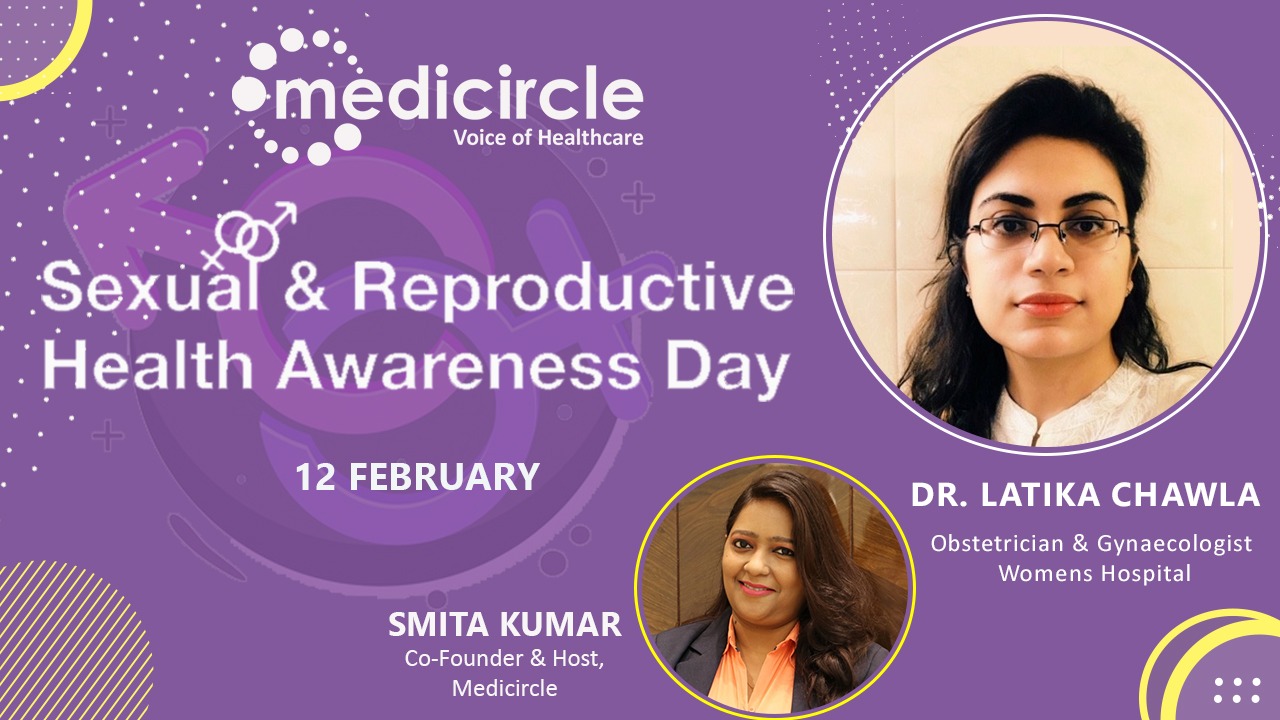
 Doctors are not there to judge people and hence you should share with them complete individual history about your sexual and reproductive health so that they can give you a customized solution,” says Dr. Latika Chawla, Obstetrician and Gynaecological Endoscopic Surgeon.





According to WHO, Sexual health is fundamental to the overall health and well-being of individuals, couples, and families, and the social and economic development of communities and countries. Sexual health requires a positive and respectful approach to sexuality and sexual relationships, as well as the possibility of having pleasurable and safe sexual experiences, free of coercion, discrimination, and violence. For sexual health to be attained and maintained, the sexual rights of all persons must be respected, protected, and fulfilled. Medicircle presents an exclusive series on awareness regarding Sexual and Reproductive health.
Dr. Latika Chawla is Obstetrician and Gynecological Endoscopic Surgeon at Women’s Hospital and Refonte Clinic, Mumbai. She has National and International publications to her credit and has presented and won accolades during her paper presentations across India. She has a special interest in endometriosis surgery and urogynecology. She is also the Founder of GoalMRCOG.
Women Do Not Prioritize their Reproductive Health
Dr. Chawla points out that “it’s very common for women of our own country to prioritize others’ health in the family over one’s own sexual and reproductive health or for that matter one’s overall health. Added to these women have inhibitions about openly speaking about their sexual and reproductive health issues in their families or with their gynaecologists. This is the practice that they need to come out of because they should realize that if they ignore issues like hygiene of their genital areas and infections resulting out of it, then this can gradually turn into a more severe health problem and affect other parts of the body too. Not only this it can create problems in conceiving as well later on,” Dr. Chawla says.
Awareness About Contraception is Limited
Dr. Chawla emphasizes “there is very limited awareness about contraception and that is why it gets assumed that all contraceptives are not conducive to good health. People do not make efforts to go to doctors and consult about the contraceptive options available or if something new has got developed in the arena for contraception that can be adopted for protection from unwanted pregnancies. Improper knowledge leads to undue abortions, deterioration of physical health, and is mentally stressful too.”
Make Transition to Menopause Smoother
Dr. Chawla stresses the need for women of reproductive age to start making healthy lifestyle changes so that transition to the menopause phase is smoother. She points out that during the menopause period women are prone to health problems, deterioration in bone health, and weight gain. Taking good care of health as one is advancing towards menopause would help reduce such challenges.
Delay in Menopause Affects Uterus Health
Dr. Chawla explains, “women on the higher side of the weighing scale naturally have more fat cells in their bodies. These fat cells also produce hormones. The higher the count of fat cells, the higher is the hormone production resulting in a delay in menopause. The further affects the linings of the uterus causing threats of uterus cancer too,” says Dr. Chawla.
Open Communication with Adolescents is Highly Important
Dr. Chawla stresses the need for schools and families of giving correct information to adolescents regarding hygiene, preventive measures of STDs, and reproductive health so that they do not get misguided by information from wrong sources. She observes, “All information available on the Internet is generic whereas every case is different, every individual history is different so the solution would also be different and only doctors can give customized solutions.”
Regular Contraception advisable over Emergency Contraception
Dr. Chawla points out that instant/emergency contraception is popularized through advertisements and people have started using it as an easy remedy. However, they are more harmful than regular contraception as the dosage is much higher leading to several health complications, delayed periods, and mental stress of missing periods.
Consulting doctors for Issues from Adolescence to Post Menopause is the Right Approach
Dr. Chawla assures that doctors are there to clarify doubts, create awareness and solve problems related to the sexual and reproductive health of women right from adolescence to post-menopause stage. It is fatal to use self-medication inspired by half-baked information available on the Internet. Younger women would be severely damaging their reproduction chances and women in general would be creating severe health complications by escaping doctor’s consultation. “You can use teleconsultation too from your comfort zone but do not avoid approaching doctors or hiding vital facts from them out of fear of them being judgemental towards you,” advises Dr. Chawla.
You can cunsult Dr. Latika Chawla at:
Refonte clinic, Lokhandwala; For appt: 9820782252/ 9890094763
Womens Hospital, Khar west; For appt: 9867623230/ 9890094763
(Edited by Amrita Priya)





.jpeg)








.jpg)
.jpg)
.jpg)
.jpg)
.jpg)
.jpg)


.jpg)
.jpg)
.jpg)