 Tuesday, October 27, 2026
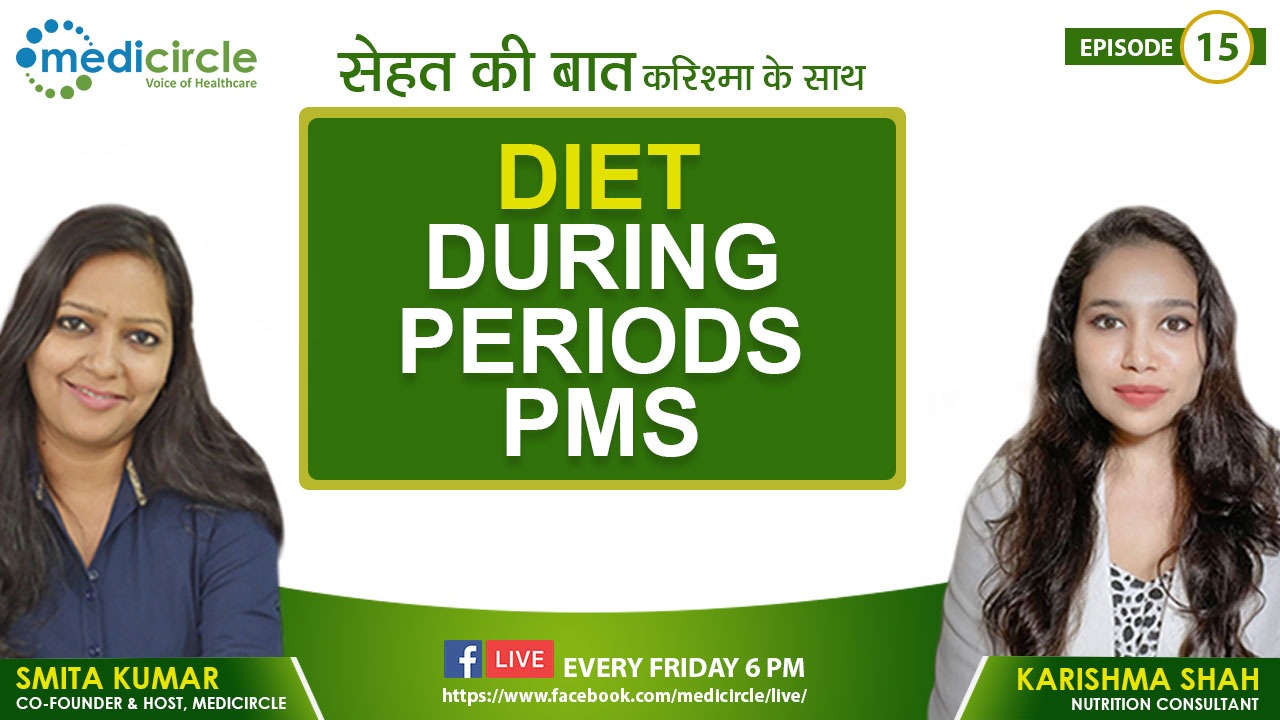
 Karishma Shah sheds light on the menstruation phase in women which is a delicate and sensitive issue. Women should be vocal about issues to find solutions is a must. She also emphasizes the diet during PMS which can help women stay in their best health.





Menses in every woman may cause some issues like Premenstrual Syndrome(PMS). It is important to spread awareness about menstruation. PMS might invite some problems like painful menses or mood swings. It is important to have the right diet during your menses.
At Medicircle, we are presenting the Ask The Expert Series for health awareness to understand facts and find solutions related to them. We have come up with a series of Sehat Ki Baat, Karishma Ke Saath. Let’s interact with Expert Karishma Shah about Diet for PMS
Karishma Shah is a Renowned Nutritionist and Plant Diet based Food Coach. She is also a Weight Loss Expert, Diabetes and PCOS Educator & Certified in Psychology of Eating
Awareness among women about menstruation
Karishma Shah says, “It is important to bring about changes to create awareness among women. Many females in India cannot afford sanitary napkins. It should be mandatory by the government to provide basic menstrual hygiene in the country for all women irrespective of rural or urban areas. Good menstrual hygiene can prevent a lot of problems and diseases. You should openly talk about menstruation.
Know all about menstruation
Karishma informs, “Menstruation is a natural process for every woman every single month of her life. It is a natural phenomenon in women for her reproductive life which allows them to conceive. Giving birth to a baby is discussed openly in our society. Similarly, discussing PMS and periods should also be discussed openly. The more open we are, the more we talk about problems that can lead to better solutions”
All you need to know about Premenstrual Syndrome
Karishma informs, “Every woman gets periods every month. However, the days before menses can be very tragic for a woman at times. We do not talk about periods naturally. Premenstrual syndrome (PMS) is a real issue. A woman's body is governed by hormones. When a girl gets her periods, there are many hormonal shifts that are common. PMS is a natural phenomenon. This occurs every month 4 -5 days before periods. The symptoms of PMS are
Body Aches Headaches
The 7 days of mense every month is very crucial in a woman's life. People should be more kind to women undergoing menstruation. A woman goes through physical, emotional, and hormonal pain during menses. We must be sensitive about such issues and not make fun of them. It is important to understand and emotionally support women at times of menses. When the girl is going through PMS, you must be sensitive towards her needs.”
Karishma says, “ Women are very strong by nature. But, when it comes to a physical problem, one should make sure to support her. During menses, there are many hormonal fluctuations. There are three hormones that fluctuate during menses which are :
Estrogen Progesterone Testosterone
Cravings in PMS
Karishma Shah says, “During menses, women might have some cravings which may present due to the lack of vitamin B12. This may lead to cravings for sweets. On the other hand, some women may crave junk food like french fries and oily foodstuffs, it is a clear sign of dehydration. There is a need for electrolytes. The woman needs to take care of her activities, sleep, and diet which she has her menses. Do not take up hectic work during menses. Organize and plan your work accordingly. Be vocal if you need rest. Do not do too much exercise. Yoga is good for PMS and periods. Avoid heavy exercises during periods.”
Diet and PMS
Karishma states,” Here are some important food tips
Have home-cooked healthy meals Have warm hot meals like oatmeal, idli, vegetable stir, hot piping poha Avoid salads and smoothies Have banana every day during periods
There are two nutrients that you need during menses
Magnesium like green leafy vegetables, spinach, cauliflower, Calcium
These two nutrients are important to avoid
Mood swings Body pain Sugar cravings.”
Diet rich in calcium and magnesium
Karishma says, “The diet rich in calcium and magnesium
Vegetables like green leafy vegetable Fruits like banana, chikoo, mango Nuts like almond, walnuts, and cashew nuts Sesame seeds are a good source of calcium Dark chocolates with a high cocoa content of 75% are rich in magnesium.”
Options to consume sesame seeds in your diet for PMS
Karishma informs, “Consume 2 spoons roasted sesame seeds powder mixed with a smoothie or other food preparations. Sprinkle sesame powder on any milkshake or protein shakes. Mix sesame seeds in dal and lentils.Til pak or chikki which is made during winters.”
Awareness about menstruation is a must among the opposite sex
Karishma says, “Education and awareness about menstruation is a must among women and the opposite sex. When we discuss menstruation, we will be able to find more solutions. It is important to spread awareness and educate everyone about the same.”
(Edited by Dr.Rati Parwani)




-23-300x250.png)

.jpeg)






.jpg)
.jpg)
.jpg)
.jpg)
.jpg)
.jpg)
.jpg)
.jpg)
.jpg)



