 Thursday, October 08, 2026
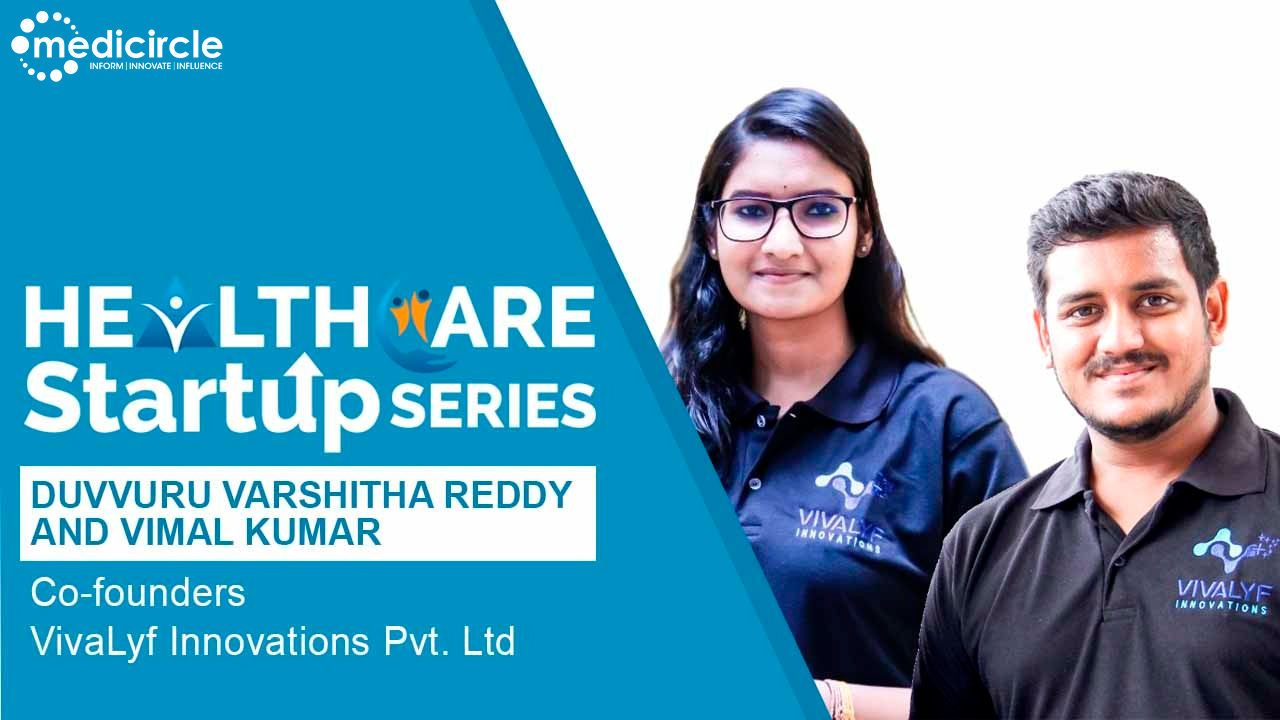
 Know more about Duvvuru Varshitha Reddy and Vimal Kumar's venture 'Vivalyf.' The duo embarked on the journey of creating an affordable and painless glucometer to help 77 million diabetic patients in India. Read their journey on reaching Shark Tank and plans for the future.




Duvvuru Varshitha Reddy is an inspiration to many. The 20-year-old made a pledge to solve the problem of pain diabetics face every day when they check their sugar levels. Varshitha along with her co-founder, Vimal Kumar, started Vivalyf which received Rs 56 lakhs in funding from Peyush Bansal of Lenskart and Anupam Mittal of Shaadi.com, in Shark Tank India.
Journey towards creating a pain-free glucometer
Being a diabetic, Duvvuru used to face two challenges - pain and cost. She says, “As a type 1 diabetic the doctors had advised my parents to prick my fingers 4-6 times a day. The cost for this used to be Rs 40 per prick. Which adds up to Rs 160 a day and around Rs 4000 - 5000 a month. I wasn’t the only diabetic patient in my family, my grandparents were diabetic too. This pushed our costs to around Rs 15,000 per month only on monitoring. Then there was the extra cost of injections and medicines. All these factors pushed me to start a journey to solve this issue.”
Challenges faced in creating EzLyf
Vimal Kumar narrates how the duo first met. Kumar says, “We met through Smart India Hackathon 2019, where I was the organiser and she was the finalist. During the Hackathon, I noticed how unique Varshitha was. It was later that I found out about her diabetes. After Hackathon, she contacted me regarding this problem and the solution she wanted to bring in. I got interested because of the severity of the problem. Also because there isn’t any similar product in the market. I wanted to work on this because I want to make people’s lives better and efficient.”
“While we were building the product we understood the three main challenges. One is the cost, the second is pain and the last is the size of the device. If the device is not compatible you wouldn’t be able to take it with you. We decided to make our product pocket-friendly. Another thing I have noticed with Varshitha is that when she is pricking herself all eyes are on her. We want to change that too and normalise this. We have kept in mind all the stakeholders, including the diabetic patients, their parents, doctors and more while building our product EzLyf. And I think we have done justice to that.”
Plans to increase EzLyf’s Accuracy Range
Varshitha says, “We are currently testing EzLyf with diabetic patients from different age groups, lifestyle, diet and other factors. Testing on different groups helps us to access our product’s accuracy range. For instance, type 1 diabetes patients will have the highest level of fluctuations, type 2 diabetes comes with one’s lifestyle and gestational diabetes will have few fluctuations too. Similarly, diet also varies. In the South, people consume more rice whereas in the North people have more wheat and fibre. Such parameters help us study our accuracy range across different people.”
Vimal Kumar adds, “Moreover, there’s a special algorithm that’s the core of our device. We would need more data sets and samples to create more accuracy.”
Pricing of EzLyf
Kumar says, “We have made sure that we calculate all the variables. For instance, if you buy any device you would need an extra battery. But we made sure that you wouldn’t need a battery with our product. Because that too is a repeatable expense. This has helped us reduce the price of our device. Our product would cost around Rs 4000 to 5000. Which is Rs 2 to 3 a day.”
Scaling up the venture
Kumar explains, “We are planning to manufacture 1 lakh devices a month. We have a network of distribution through various hospitals and companies that have been in this field. Our target sector is tier 2 and tier 3 cities. We will be reaching through primary healthcare centres, medical camps and conferences.”
Varshitha adds, “We will also be providing our app in multiple regional languages.”
Funds - Utilisation and Investment Opportunities
Kumar says, “We will be looking for investment opportunities. We would seek more funds in 2022 and ahead. The funds received will be used for improving our accuracy and precision. It will also be used in setting up our distribution network across different cities. We plan to have a D2C marketplace where everyone can log on to our website and purchase it from there.”
“One of our future plans is to set up our own factory that would cater to building only medical devices and self-care devices. We will come up with many devices that solve various problems. That is the mission of Vivalyf where we bring accessible and affordable healthcare solutions for crucial challenges.”
Vivalyf’s plans for 2022
“We at Vivalyf are very ambitious to solve problems faced by people. Our future plans include getting this product out and into the hands of diabetes patients. We will also be looking into solving problems within fields like ophthalmology, pulmonary and cardiology. Varshitha also has the ambition of getting into cancer research.”
Varshitha says, “As of 2022, we want to reach 5 lakh diabetic patients.”
(Edited by Priyal Shah)





.jpeg)








.jpg)
.jpg)
.jpg)
.jpg)
.jpg)
.jpg)


.jpg)
.jpg)
.jpg)