 Thursday, October 08, 2026
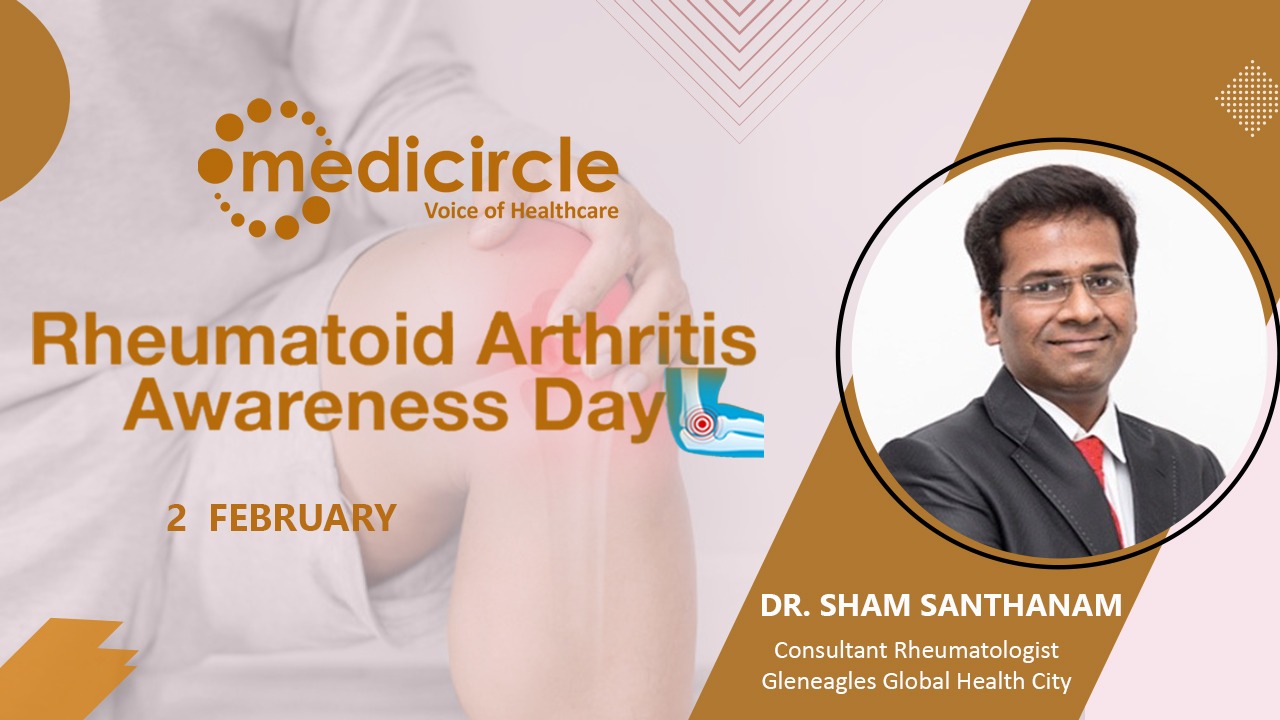
 People get confused between Rheumatoid Arthritis and Osteoarthritis. Dr. S. Sham, Consultant Rheumatologist, provides clarity on how they are different.





Rheumatoid arthritis (RA) is estimated to affect approximately 0.24 to 1 percent of the Indian population and is twice as common in women compared to men. It affects more than 180 million people in India; the prevalence is higher than many well-known diseases such as AIDS, and cancer. Around 14% of the Indian population seeks a doctor's help every year for this joint disease. In the series on rheumatoid arthritis, the team of Medicircle is speaking to many eminent rheumatologists so that there is awareness about all aspects of this disease amongst people.
Dr. S. Sham is a Consultant Rheumatologist at Gleneagles Global & Vijaya Hospitals, Chennai. He is M.D (General Medicine), D.M (Rheumatology), MRCP (UK), SCE Rheumatology (RCP UK). He holds European certificate of Rheumatology and is an Associate Editor - Indian Journal of Rheumatology.
Rheumatoid Arthritis and Osteoarthritis – Understand the Difference
Dr. Sham explains, “Arthritis is a general term comprising both Osteoarthritis (OA) and Inflammatory arthritis like Rheumatoid arthritis (RA). Rheumatoid arthritis is an inflammatory systemic disease, which initially causes joint inflammation and later can involve other organs (lungs, eye, blood vessels, etc) if not properly controlled. OA is a degenerative process that happens with aging similar to greying of hair. It is a non-inflammatory disease of individual joints. It is not a systemic disease and is caused due to wear and tear changes causing joint degeneration. The prevalence of OA has increased due to a sedentary lifestyle, lack of exercise, obesity, etc.” Dr. Sham says.
Better RA diagnosis is available these days
Dr. Sham informs, “RA prevalence is similar to diabetes (0.7-1.0%) in our country. RA is identified more these days probably due to better and early diagnosis. Lots of myths are prevalent regarding its diagnosis and treatment. This is mainly because there is a delay in connecting with a Rheumatologist and get correct knowledge.”
Motivating RA patients for exercise, yoga, and meditation would ease out their depression
Dr. Sham advises “Early diagnosis and treatment - leads to remission and being pain-free. Pain is the major factor for depression and it, in turn, becomes a cyclic process. Patients have to be counselled on types of pain in RA and differentiating it from other causes. Patients often assume that all musculoskeletal pain is due to RA. This is not true. Motivate patients to do exercises/yoga and meditation,” suggests Dr. Sham.
RA can be hereditary but the prevalence of such cases is low
Dr. Sham clarifies that “there is a genetic component to RA but the risk from it is small; similar in line with diabetes. So, an offspring might be carrying the gene but unless they get the environmental trigger (like; smoking, bacteria, viruses, etc) they won't be getting affected by the disease. The age of onset of RA depends on the age at which the environmental agent triggers the disease in a genetically susceptible individual,” Dr. Sham says.
(Edited by Amrita Priya)
Contributed By: Dr. S. Sham, Consultant Rheumatologist





.jpeg)








.jpg)
.jpg)
.jpg)
.jpg)
.jpg)
.jpg)


.jpg)
.jpg)
.jpg)