Tuesday, October 27, 2026
 Lab-verified case study from Redial Clinic demonstrates that structured lifestyle intervention — not pharmaceutical escalation — may be the appropriate first-line goal for Type 2 diabetes patients, including older adults





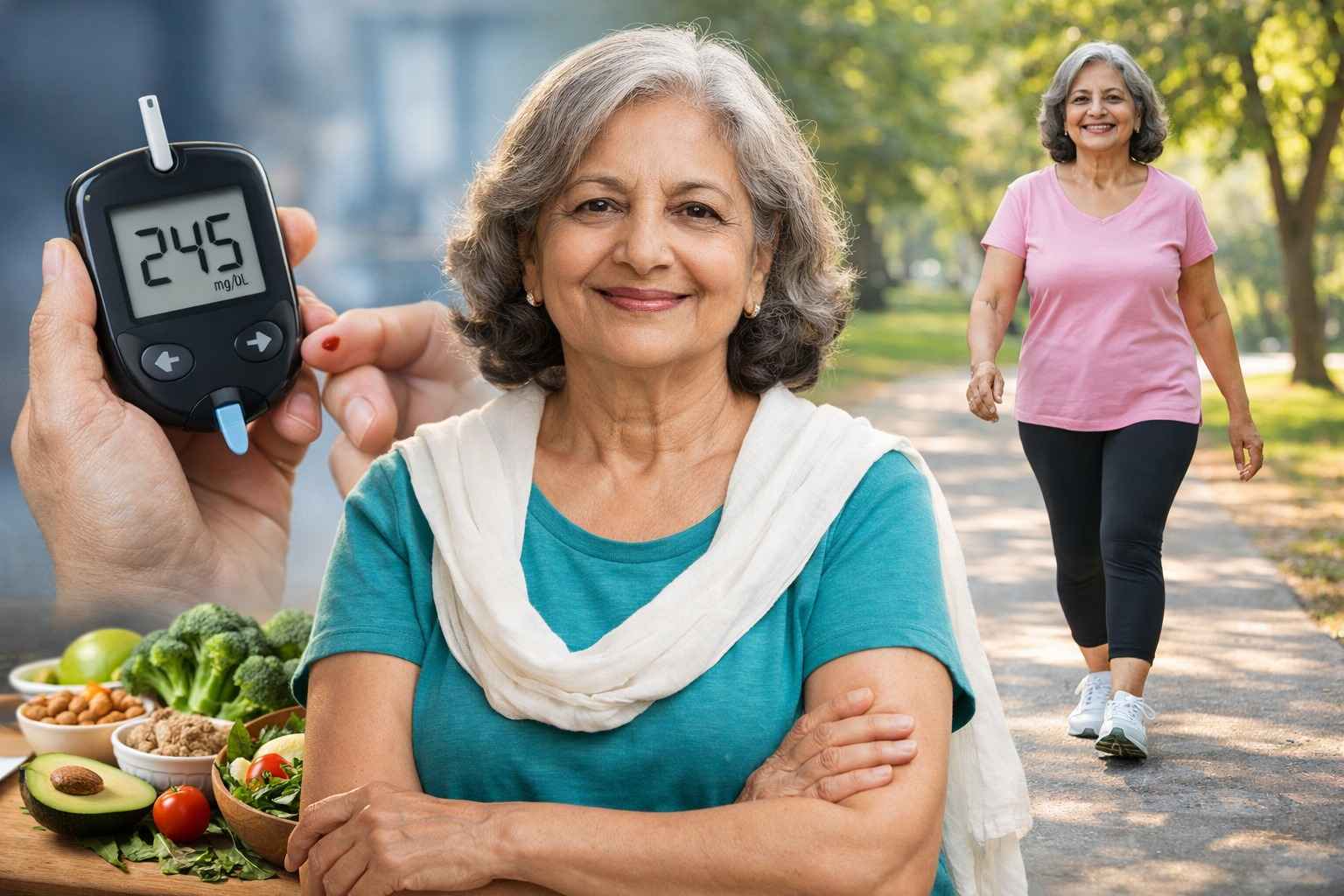
New Delhi, 16 March, 2026: A 65-year-old woman from New Delhi has achieved complete reversal of Type 2 diabetes within four months through a physician-led lifestyle intervention programme, according to lab-verified clinical data released by Redial Clinic, one of India's first centres dedicated exclusively to metabolic disease reversal.
Ms. Kanchana Mani presented at Redial Clinic in November 2024 with an HbA1c of 9.0% — well above the diabetic threshold of 6.5% — along with a fasting blood glucose of 218 mg/dL, fasting insulin of 13 μIU/mL, and triglycerides of 181 mg/dL. Her weight was 72 kilograms, concentrated predominantly around the abdomen. Her previous physicians had advised lifelong medication management, a recommendation consistent with conventional treatment guidelines for her age and severity.
By April 2025, verified lab reports from Dr. Dangs Laboratory showed a dramatically different clinical picture: HbA1c had fallen to 5.5% — non-diabetic by American Diabetes Association standards — fasting glucose had normalised to 94 mg/dL, fasting insulin had dropped 79% to 2.7 μIU/mL, and triglycerides had halved to 93 mg/dL. She had lost 14 kilograms. Critically, these results were achieved without any diabetes medication.
Why This Case Matters for India's Diabetes Epidemic
India currently carries a burden of over 100 million diagnosed diabetics, with projections suggesting this figure could rise further in the coming decade. The standard treatment paradigm — progressive medication escalation from metformin to sulfonylureas to insulin — focuses on glucose suppression rather than metabolic correction.
"The conventional approach treats glucose as the disease. It isn't. Glucose is the symptom," said Dr. Gagandeep Singh, MBBS, Founder of Redial Clinic and the physician who supervised Ms. Mani's reversal. "Kanchana's fasting insulin level told the real story. At 13 μIU/mL, her pancreas was overproducing insulin to compensate for resistant cells. Standard treatment would have ignored this entirely — because the pharmaceutical protocol doesn't change based on insulin levels. We targeted insulin sensitivity directly, and her glucose normalised as a consequence."
The Clinical Protocol
Ms. Mani's reversal followed Redial Clinic's coordinated care model, which integrates three simultaneous interventions under physician supervision: strategic dietary restructuring focused on macronutrient composition and meal sequencing to reduce insulin demand; time-restricted eating to allow regular recovery from chronic insulin exposure; and progressive resistance training to build metabolically active muscle tissue — what Dr. Singh describes as the body's natural "glucose sink."
The programme is physician-led but not physician-only. A nutritionist customises meal plans around each patient's preferences, cultural context, and metabolic response, while a fitness professional designs resistance training suited to the patient's age and capacity. Dr. Singh refers to this as the "Triangle Model" — three disciplines working in concert rather than a doctor handing out dietary advice in isolation.
An intermediate lab panel at one month (December 2024) showed HbA1c had already improved from 9.0% to 7.8%, with fasting glucose dropping from 218 to 145 mg/dL — confirming rapid early metabolic response and allowing clinical confidence to proceed without pharmaceutical intervention.
"This isn't a crash diet or a 30-day challenge. It's metabolic rehabilitation," Dr. Singh explained. "What makes this case particularly significant is Ms. Mani's age. There is a pervasive assumption in clinical practice that older patients cannot reverse metabolic disease — that age somehow disqualifies the cells from responding to intervention. Kanchana's biology didn't consult her birth certificate. Insulin sensitivity improves when insulin levels drop, regardless of age."
Beyond Glucose: The Broader Metabolic Correction
The clinical data reveal improvements that extend well beyond blood sugar. Ms. Mani's triglycerides fell from 181 to 93 mg/dL, and her HDL cholesterol improved from 46 to 52.5 mg/dL — changes typically attributed to statin therapy but achieved here through metabolic correction alone. Her liver enzymes, initially elevated (SGOT 46.5, SGPT 63.4 U/L at one month, suggesting fatty liver involvement), were also addressed through the protocol.
The most telling marker, according to Dr. Singh, is the fasting insulin trajectory. "An 80% reduction in fasting insulin — from 13 to 2.7 μIU/mL — is not symptom suppression. It represents genuine restoration of metabolic function. Her pancreas no longer needs to overproduce. Her liver can clear fat. Her cells respond normally to metabolic signals again. This is what reversal means in biochemical terms."
Challenging the Management Paradigm
Research supports the biological plausibility of these outcomes. The landmark UK-based DiRECT trial demonstrated that structured intervention achieved diabetes remission in nearly half of participants at one year, with early and decisive intervention producing the strongest results. Indian populations, often characterised by the "thin outside, fat inside" phenotype — high visceral fat relative to BMI — may be particularly responsive to interventions targeting abdominal adiposity and insulin resistance.
Dr. Singh emphasised that the case is not an argument against medication. "Medication remains essential for many patients, particularly those with advanced disease or insufficient beta cell reserve. But it should not be the default first-line approach for every patient. For appropriate candidates — especially those diagnosed early or with preserved pancreatic function — reversal should be the primary clinical objective, not an afterthought."
Redial Clinic, founded in 2013 in Green Park, New Delhi, has guided hundreds of patients through metabolic reversal programmes. The clinic's protocol tracks approximately 50 data points per patient across weekly, monthly, and quarterly intervals, including markers such as fasting insulin, HOMA-IR, CGM glucose patterns, waist-to-height ratio, and body composition — metrics that go beyond the HbA1c-centric approach of conventional diabetes management.
About Redial Clinic
Redial Clinic (ReDiaL — Reversing Diabetes with Lifestyle Management) is one of India's first physician-led centres focused exclusively on reversing chronic metabolic diseases — Type 2 diabetes, hypertension, obesity, and PCOS — through evidence-based lifestyle intervention rather than indefinite medication management. Founded by Dr. Gagandeep Singh, MBBS, the clinic's coordinated care model integrates physician-led medication tapering, personalised nutrition, and structured resistance training programmes. Redial Clinic is based in Green Park, New Delhi, and offers both in-clinic and remote consultations across India.





-23-300x250.png)

.jpeg)


.jpg)
.jpg)
.jpg)
.jpg)
.jpg)
.jpg)
.jpg)
.jpg)
.jpg)