Tuesday, October 27, 2026
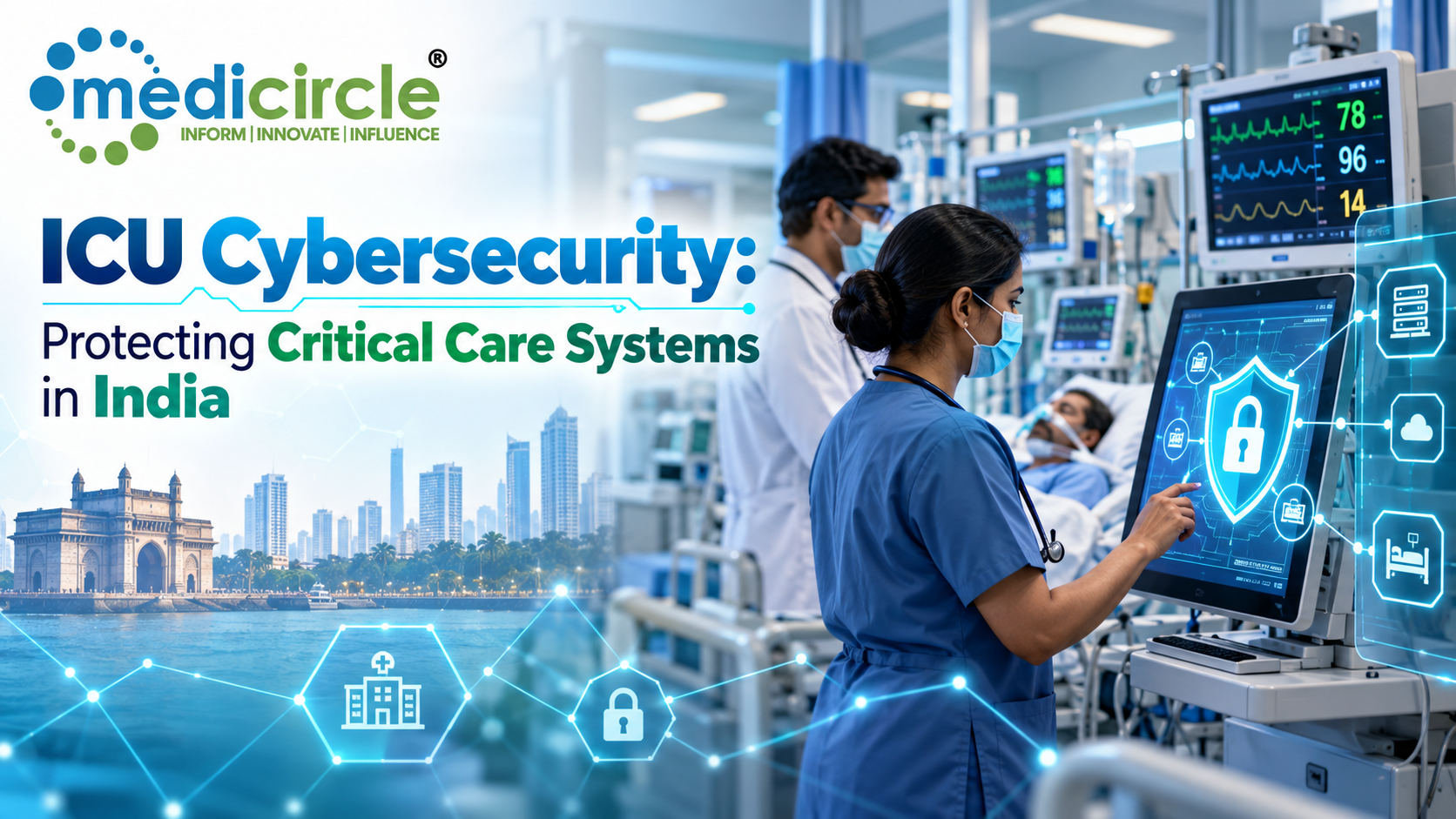
 ICU cybersecurity is a patient safety imperative for Indian hospitals. Connected critical-care devices face ransomware, phishing, and device exploitation threats requiring structured frameworks, regulatory alignment, and sustained staff awareness.





Introduction
Inside a modern intensive care unit, dozens of machines are working simultaneously to sustain human lives. Ventilators regulate breathing. Infusion pumps deliver precisely calibrated doses of medication. Cardiac monitors transmit real-time data to nursing stations. Patient records flow through electronic health systems. All of these systems are increasingly connected through hospital networks, and many are linked to the internet. This connectivity brings immense clinical advantages. It also creates a category of risk that Indian hospitals are only beginning to confront with the seriousness it deserves.
Cybersecurity in the ICU is no longer a subject confined to IT departments or technology conferences. It is a patient safety issue. When a hospital network is compromised by a ransomware attack or when a connected medical device is accessed by an unauthorized actor, the consequences are not merely administrative. Critically ill patients face delays in care, errors in treatment, and in some documented cases globally, outcomes that could have been prevented. For India, where healthcare infrastructure is undergoing rapid digital transformation through initiatives like the Ayushman Bharat Digital Mission (ABDM), the stakes of getting ICU cybersecurity right are extraordinarily high.
Understanding Connected Critical-Care Systems
The modern ICU is built on a foundation of digital connectivity. Medical devices no longer function in isolation. They communicate with each other, with electronic health record platforms, with pharmacy systems, and sometimes with remote monitoring services. This network of connected medical devices is often referred to as the Internet of Medical Things, or IoMT.
In Indian hospitals, particularly in larger private networks and teaching hospitals in metropolitan cities, the degree of IoMT integration has grown substantially over the past decade. A single ICU bed may be surrounded by five to ten networked devices, each collecting and transmitting patient data. The operational efficiency this creates is real and measurable. Clinicians receive faster alerts. Care teams can monitor patients remotely. Medication errors reduce when infusion pumps integrate with electronic prescribing systems.
However, many of these devices were manufactured years before cybersecurity was considered a hospital infrastructure concern. They run on operating systems that manufacturers no longer update. They carry default passwords that staff never change. They connect to the same hospital network used for administrative functions and email, creating pathways that a skilled attacker can traverse from one vulnerable point to reach core clinical systems.
Why Indian ICUs Face a Heightened Threat Environment
India's healthcare sector has experienced a sharp rise in cyberattacks over recent years. Multiple high-profile incidents at public and private hospitals have exposed the fragility of existing defenses. The All India Institute of Medical Sciences cyberattack in late 2022 remains the most prominent example, disrupting patient services across departments for weeks and affecting millions of records. While that incident was not confined to an ICU, it illustrated exactly how systemic and severe the consequences can be when hospital digital infrastructure fails.
Several factors make Indian hospitals particularly exposed. First, the pace of digital adoption has outrun the pace of cybersecurity investment. Many hospitals rushed to deploy electronic systems and connected devices without building the security governance structures needed to protect them. Second, skilled cybersecurity professionals with healthcare domain knowledge are in short supply in India. Third, procurement decisions for medical devices are often driven by clinical capability and cost, with little attention paid to the cybersecurity posture of the device itself.
There is also the dimension of regulatory readiness. Unlike sectors such as banking and finance, which operate under strict and well-enforced cybersecurity guidelines from SEBI and the Reserve Bank of India, healthcare cybersecurity in India has operated in a more permissive regulatory environment. The Digital Personal Data Protection Act of 2023 has begun to change this, but detailed implementation standards specific to clinical settings are still evolving.
Key Threats Targeting ICU Environments
Understanding the specific nature of cyber threats in ICU settings helps hospital administrators and clinical leaders make more informed decisions about where to direct resources and attention.
Ransomware remains the most disruptive and frequently documented threat. Attackers encrypt hospital systems and demand payment before restoring access. When this happens in a hospital that lacks segmentation between administrative and clinical networks, the ICU can be directly affected. Staff may lose access to monitoring data, drug dosing histories, and patient records at precisely the moments when they are most needed.
Phishing attacks are the most common initial entry point into hospital systems. Clinical staff, including nurses, resident doctors, and administrative personnel, receive fraudulent emails or messages that appear legitimate. A single click on a malicious link can introduce malware that quietly spreads across the network before being detected. In high-pressure ICU environments where staff are managing critical situations, the likelihood of someone clicking without scrutiny is real.
Medical device exploitation is a threat that is less commonly discussed but carries significant clinical implications. Researchers have demonstrated that certain infusion pumps, pacemaker programmers, and imaging devices can be accessed remotely if they are connected to insufficiently secured networks. The ability to alter a drug dosage remotely, even theoretically, represents a threat to life that places ICU cybersecurity in a different category from most other industries.
Insider threats, both malicious and accidental, also contribute to the risk landscape. A staff member accessing records they are not authorized to view, or inadvertently transferring data to an unsecured device, can breach patient confidentiality and create pathways for further exploitation.
Assessing Vulnerabilities: Where ICUs Fall Short
A meaningful cybersecurity strategy begins with an honest assessment of where existing systems are vulnerable. In most Indian hospital ICUs, several common gaps can be identified through audit processes.
Legacy devices running outdated software represent the most persistent structural challenge. When a manufacturer stops providing security updates for a medical device, the hospital bears responsibility for managing that risk, yet many institutions have no formal process for tracking device software versions or acting on known vulnerability disclosures. Network architecture in many hospitals also reflects older thinking, where clinical and administrative systems share infrastructure without meaningful separation. This flat network design means that a compromise in one area can propagate rapidly.
Access control practices are frequently inadequate. Shared login credentials for nursing stations, infrequent password changes, and the absence of multi-factor authentication for remote access all create conditions that attackers can exploit. Data backup protocols, where they exist, are often not tested rigorously enough to confirm that restoration would actually be possible in a crisis.
Staff awareness remains a critical gap. In a clinical environment, the expectation is that all energy and attention goes toward patient care. Cybersecurity feels like an IT concern. Bridging that perception gap requires sustained education and leadership commitment, not a single training session.
Regulatory Landscape and Compliance in India
India's regulatory environment for healthcare cybersecurity is maturing but has not yet reached the clarity and specificity found in jurisdictions like the United States, where the Health Insurance Portability and Accountability Act sets clear standards for protecting health information.
The Information Technology Act 2000, along with its 2008 amendments, provides a broad framework for data protection and establishes liability for entities that fail to maintain reasonable security practices. The Digital Personal Data Protection Act 2023 introduces stronger obligations around consent, data minimization, and the responsibilities of data processors, which include hospitals handling patient information.
ABDM guidelines emphasize the importance of data security in health records managed through the national health ID and health data exchange ecosystem. Hospitals that integrate with ABDM systems are expected to follow security protocols aligned with national standards, including encryption and audit trails.
The National Cyber Security Policy and directives from CERT-In, India's national cyber emergency response team, also apply to healthcare institutions, particularly regarding incident reporting requirements. CERT-In has issued directives requiring organizations to report cybersecurity incidents within six hours, a timeline that demands pre-established response protocols.
Building a Cybersecurity Framework for the ICU
Protecting ICU environments from cyber threats requires a structured and sustained approach rather than reactive patchwork. Hospitals that have made meaningful progress in this area tend to share several common practices.
Network segmentation is foundational. Separating ICU systems and medical devices from general hospital networks significantly reduces the blast radius of any successful attack. Even if an attacker compromises the administrative network, properly segmented clinical systems remain inaccessible. Implementing a zero-trust architecture, where every user and device must continuously verify its identity and authorization, adds another layer of defense.
Medical device security management should be formalized as a discipline within hospital operations. This includes maintaining a live inventory of all connected devices, tracking firmware versions and vulnerability disclosures, working with vendors on patch management, and establishing procurement standards that require cybersecurity certification or assessment for new devices.
Staff training programs must be designed for the realities of clinical environments. Simulated phishing exercises, short scenario-based modules on cyber hygiene, and clear protocols for reporting suspicious activity all contribute to a culture where cybersecurity is understood as part of patient safety, not separate from it.
Incident response planning ensures that when a breach occurs, the hospital does not face the additional crisis of uncertainty. A documented and practiced response plan should define roles, communication channels, escalation steps, and backup clinical procedures that allow patient care to continue even when systems are compromised.
Engagement with cybersecurity specialists who understand healthcare environments is strongly recommended. General IT security expertise, while valuable, does not automatically translate to understanding the clinical constraints and operational rhythms of an ICU. Specialist partners can help design protections that are robust without interfering with the delivery of care.
Prevention and the Path Forward for Indian Healthcare
Prevention in ICU cybersecurity is not a one-time project. It is an ongoing organizational capability that must be resourced, reviewed, and updated as the threat landscape evolves and as hospitals continue to adopt new technologies.
India's healthcare sector is on the cusp of significant further digital expansion. Telemedicine, AI-assisted diagnostics, remote monitoring of ICU patients, and integration with the national health ecosystem through ABDM will all deepen the connectivity of critical care environments. Each of these developments carries both clinical promise and cybersecurity implications that must be considered during design and implementation, not added as an afterthought.
Hospital accreditation bodies, including the National Accreditation Board for Hospitals and Healthcare Providers (NABH), have begun incorporating digital health standards into their frameworks. As these standards evolve to include cybersecurity criteria, accreditation can serve as a meaningful driver for raising baseline security practices across the sector.
Medicircle, through its commitment to credible and impact-driven healthcare communication, continues to bring expert conversations around healthcare innovation, digital transformation, and patient safety to a broader audience. The intersection of technology and clinical care is an area where informed public and professional discourse can influence institutional priorities and policy action.
Conclusion
The ICU is where medicine operates at its highest stakes. Every device, every data point, every connected system serves a patient whose life may depend on uninterrupted, accurate, and secure operation of that technology. Cybersecurity in this environment is not a technical abstraction. It is a clinical responsibility.
Indian hospitals have made remarkable strides in building modern critical-care infrastructure. The next necessary step is ensuring that the digital foundations of that infrastructure are as resilient as the clinical protocols built on top of them. With the right investment in frameworks, training, technology, and governance, ICUs across India can deliver the level of connected care that patients deserve without the vulnerabilities that currently put them at risk.
Frequently Asked Questions
Q1: Why are ICUs particularly vulnerable to cyberattacks?
ICUs rely on interconnected medical devices such as ventilators, infusion pumps, and cardiac monitors that often run on outdated software. These devices were not originally designed with cybersecurity in mind. When connected to hospital networks, they become potential entry points for cybercriminals. Any disruption to these systems can directly endanger the lives of critically ill patients.
Q2: What types of cyberattacks commonly target hospital ICUs?
The most common attacks include ransomware, which locks hospital systems and demands payment; phishing attacks targeting clinical staff; denial-of-service attacks that overwhelm network resources; and medical device hijacking. In Indian hospitals, ransomware incidents have increased significantly, causing operational disruptions in critical care settings.
Q3: How does a cyberattack in an ICU affect patient safety?
When ICU systems are compromised, clinicians may lose access to patient records, monitoring data, or medication dosing systems. This forces staff to revert to manual processes, increasing the risk of errors. In extreme cases, life-support devices can be disrupted. Studies from global health systems show that cyberattacks in hospitals are associated with increased patient mortality rates.
Q4: What regulations govern hospital cybersecurity in India?
India does not yet have a dedicated healthcare cybersecurity law, but several frameworks apply. The Information Technology Act 2000 and its amendments address data protection broadly. The Digital Personal Data Protection Act 2023 sets obligations for data processors, including hospitals. ABDM guidelines also require health data to be handled securely. Hospitals are expected to align with these frameworks and international standards such as ISO 27001.
Q5: What steps can Indian hospitals take immediately to improve ICU cybersecurity?
Hospitals should begin with a thorough audit of all connected medical devices and network access points. Immediate steps include network segmentation to isolate critical systems, enforcing strong access controls, conducting staff training on phishing and cyber hygiene, updating device firmware wherever possible, and establishing an incident response plan. Partnering with healthcare cybersecurity specialists is also strongly advised.
Resources
- Indian Computer Emergency Response Team (CERT-In): National nodal agency for cybersecurity incident response and advisories applicable to healthcare institutions in India.
- Ministry of Health and Family Welfare, Government of India: Policy frameworks and digital health guidelines including ABDM implementation standards relevant to hospital data security.
- National Accreditation Board for Hospitals and Healthcare Providers (NABH): Accreditation standards that increasingly incorporate digital health and information security requirements for Indian hospitals.
- World Health Organization: Global Health Security and Digital Health: WHO guidance on the intersection of digital transformation and patient safety in healthcare settings worldwide.
- ENISA (European Union Agency for Cybersecurity): Threat landscape reports for the healthcare sector offering globally relevant frameworks that Indian hospitals can adapt and adopt.
Interlinking Keywords
ICU cybersecurity India, hospital data breach, connected medical devices, Internet of Medical Things, ABDM data security, Digital Personal Data Protection Act healthcare, NABH accreditation digital standards, ransomware hospitals India, patient data protection, medical device vulnerability, healthcare network segmentation, CERT-In hospital compliance
Last medically reviewed by:
Dr. Manthan Tripathi, Medicircle Editorial and Medical Advisory Team on 12, September 2026
Disclaimer
This article is intended for informational and educational purposes only. It does not constitute medical, legal, or cybersecurity advice. Hospitals, healthcare administrators, and clinical professionals should consult qualified specialists in healthcare IT security, legal compliance, and clinical operations before implementing any changes to their systems or protocols. Medicircle does not endorse any specific product, vendor, or service mentioned or implied in this article.





-23-300x250.png)

.jpeg)




.jpg)
.jpg)
.jpg)
.jpg)
.jpg)
.jpg)
.jpg)
.jpg)
.jpg)