Friday, October 23, 2026
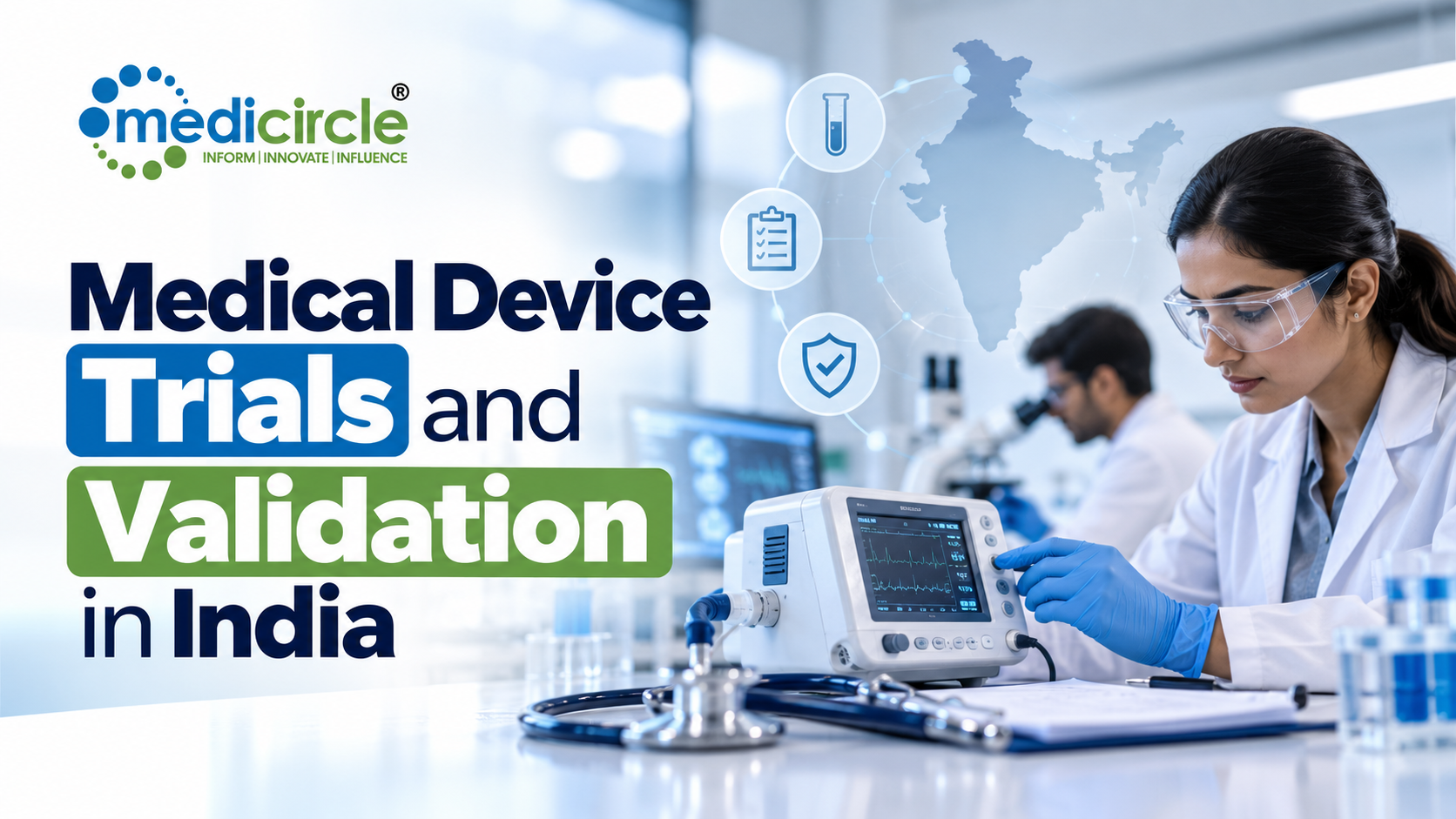
 This article examines medical device trials and validation in India from a practical Medicircle perspective, covering the key considerations, implementation or decision points, and ways the topic can support clearer outcomes.




A medical device can be technically impressive and still need careful evaluation before routine use. Engineering performance, usability and clinical performance answer different questions, which is why verification, validation and, for relevant devices, clinical investigation are important parts of development.
For India's growing MedTech ecosystem, the quality of evidence matters as much as the novelty of the technology. Evaluation should be tied to the device's intended use and the people and settings in which it will operate.
Verification and validation answer different questions
Verification asks whether the device meets specified technical requirements. Validation asks whether the resulting device is appropriate for its intended use and users. Passing one does not automatically establish the other.
This distinction helps hospital buyers and readers look beyond a feature list and ask whether the evidence matches the real clinical purpose.
When clinical investigation matters
For devices that require clinical investigation under the applicable framework, studies help generate evidence about performance and safety in human use. The design should match the clinical question and the device's risk profile.
Ethical review, participant protection and appropriate documentation remain central. Evidence is only useful when it is generated responsibly.
Why real-world workflow matters
Hospitals are complex environments. A device may need to be cleaned, positioned, interpreted, maintained and integrated with other systems. A technically accurate device can still create problems if the workflow is confusing or unrealistic.
Evaluation should therefore involve representative users and tasks wherever appropriate. Human factors and workflow fit belong alongside technical specifications.
How evidence supports adoption
Healthcare buyers need evidence that helps answer practical questions about safety, performance, training, maintenance and intended use. Transparent limitations are as important as headline claims.
Hospitals can review evidence as part of procurement and clinical governance. Manufacturers can reduce uncertainty by building evaluation into development rather than treating it as a final step.
What this means for Indian innovation
A mature evidence culture helps Indian MedTech grow on a stronger foundation. Manufacturers, clinicians, researchers and regulators each contribute to making device evaluation relevant to real healthcare environments.
Medicircle can translate these technical ideas into accessible analysis that connects technology with evidence, safety and responsible adoption.
Relevant Internal Reading
Medicircle medical device ecosystem coverage
Things to Keep in Mind
- Separate verification from validation.
- Match clinical investigations to intended use and risk.
- Include user and workflow factors in evaluation.
- Review evidence alongside procurement and governance needs.
- Treat evaluation as part of the innovation process, not an afterthought.
Frequently Asked Questions (FAQs)
What is medical device validation?
It evaluates whether a device is suitable for its intended use and user context, complementing technical verification.
Are clinical investigations required for every device?
Requirements depend on device type, classification, intended use and the applicable regulatory framework.
Why does usability matter?
A device is used by people within real workflows, and usability can affect safety even when technical performance is sound.
Why is evidence important for procurement?
It helps buyers assess whether a device's claimed performance and intended use fit the clinical and operational setting.
Wrapping It Up
Medicircle connects healthcare innovation with evidence, regulation, patient impact and responsible communication.
For healthcare audiences, the most useful approach is one that makes evidence, process and professional judgement easier to understand. Responsible communication should add context without overstating what the available information can prove.
Resources
CDSCO - Medical device resources: https://cdsco.gov.in/
ICMR: https://www.icmr.gov.in/
Interlinking Keywords
Medicircle medical device ecosystem coverage: https://www.medicircle.in/how-medicircle-guides-global-medical-devices-into-india
Medicircle blog archive: https://www.medicircle.in/medicircle-blog
Editorial / Medical Disclaimer
This article is intended for informational and educational purposes only. It does not constitute medical advice, diagnosis, treatment or a substitute for professional clinical judgement. Medical decisions should be made with a qualified healthcare professional. Where factual or regulatory information is discussed, readers should consult the latest authoritative guidance because requirements and evidence can change.





-23-300x250.png)

.jpeg)
.jpg)
.jpg)
.jpg)
.jpg)
.jpg)
.jpg)
.jpg)
.jpg)
.jpg)