Friday, October 23, 2026
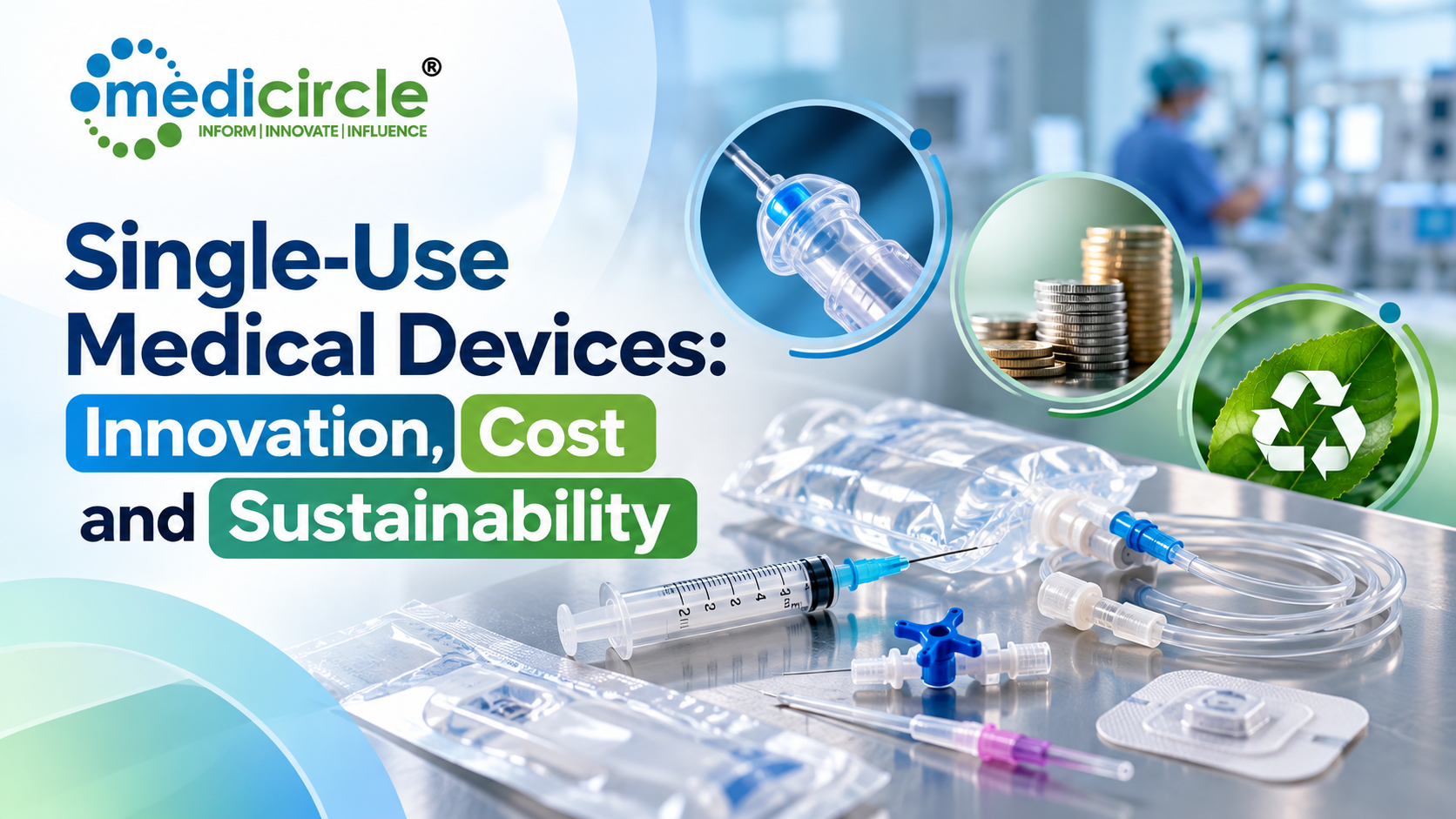
 Single-use medical devices drive innovation and infection control in Indian healthcare, but managing their cost implications and environmental footprint requires coordinated policy, manufacturing, and clinical practice.





Introduction
Healthcare delivery across the world rests on a foundation of safety, precision, and reliability. At the core of this foundation lies an often-underappreciated category of tools: single-use medical devices. These are instruments, accessories, and consumables designed to be used once, on a single patient, during a single procedure, and then safely discarded. From syringes and catheters to surgical gloves, endoscopic accessories, and diagnostic kits, single-use devices have quietly become an indispensable part of modern clinical practice.
In India, the single-use medical device segment is growing rapidly. With the country's healthcare infrastructure expanding through both public schemes such as Ayushman Bharat and private hospital investment in tier 1 and tier 2 cities, the demand for reliable, infection-safe, and affordable medical devices has never been higher. At the same time, the rise in biomedical waste and the environmental consequences of disposable healthcare products have sparked serious conversations about sustainability and long-term responsibility.
This article examines the innovation driving the single-use medical device sector, the cost dynamics shaping adoption across Indian hospitals, and the sustainability challenges that policymakers, healthcare leaders, and device manufacturers must address together.
Understanding Single-Use Medical Devices
A single-use medical device, also called a disposable medical device, is defined as a device intended to be used on one individual patient and then discarded. It is not intended to be reprocessed, re-sterilised, or used again for any subsequent procedure on any other patient. This definition, consistent with guidance from regulatory bodies including the Central Drugs Standard Control Organisation (CDSCO) and international frameworks from the World Health Organization (WHO), is critical to patient safety.
The category spans an enormous range of products:
- Injection devices: syringes, needles, lancets, and insulin pens
- Vascular access devices: peripheral IV cannulas, central venous catheters, and arterial lines
- Respiratory devices: endotracheal tubes, breathing circuits, and oxygen masks
- Surgical accessories: disposable drapes, gowns, scalpels, and trocar sets
- Diagnostic devices: rapid test kits, glucose test strips, and single-use urinary catheters
- Specialty devices: single-use bronchoscopes, colonoscope sheaths, and electrophysiology catheters
The medical devices market in India was valued at approximately USD 11 billion in 2023 and is expected to grow significantly by 2030, with single-use consumables constituting a substantial share. Domestic manufacturing has received a strong push through the Production Linked Incentive (PLI) scheme for medical devices under the Ministry of Chemicals and Fertilizers, positioning India as a potential global hub for affordable medical device production.
The Innovation Wave Reshaping the Sector
The evolution of single-use medical devices is no longer limited to basic consumables. Innovation in this space has accelerated dramatically, driven by advances in materials science, miniaturisation, digital health integration, and infection control engineering.
Advanced Biomaterials and Smart DesignsDevice manufacturers are now developing single-use instruments with biomaterials that offer superior performance while reducing manufacturing costs. Antimicrobial coatings on catheters, pressure-sensitive adhesives on wound dressings, and ultra-thin polymer membranes in diagnostic devices represent a new generation of disposables that combine clinical efficacy with safety. For Indian hospitals dealing with high patient volumes, these improvements translate directly into better clinical outcomes.
Single-Use Endoscopy and Complex Procedure InstrumentsOne of the most significant recent innovations is the introduction of single-use flexible endoscopes and bronchoscopes. Traditionally, endoscopes were reusable instruments that required rigorous, time-consuming reprocessing between patients. However, contamination during reprocessing has been linked to outbreaks of multidrug-resistant organisms in several healthcare settings globally. Single-use endoscopes eliminate this reprocessing step entirely. For tertiary hospitals in India handling oncology, pulmonology, and gastroenterology patients, this is a meaningful patient safety advantage.
Digital Integration and ConnectivitySeveral single-use diagnostic devices now incorporate digital connectivity features. Point-of-care testing devices designed for single use can transmit results directly to electronic health record (EHR) systems, supporting India's Ayushman Bharat Digital Mission (ABDM) framework. This integration strengthens the continuity of care and enables real-time monitoring, particularly in remote settings and government health facilities.
Cost Dynamics: Balancing Upfront Expense with Total Value
The cost conversation around single-use devices is nuanced and frequently misunderstood. At first glance, the per-unit cost of a disposable device appears higher than the per-use cost of an equivalent reusable device. However, this comparison does not account for the full picture of cost and risk.
Total Cost of OwnershipFor reusable devices, the actual cost per use must include sterilisation and reprocessing costs (labour, equipment, utilities, and consumable cleaning agents), storage and inventory management, maintenance and repair, device failure risk due to wear, and the financial and clinical cost of healthcare-associated infections (HAIs) linked to inadequate reprocessing.
When these costs are factored into analysis, the economic case for single-use devices strengthens considerably. Studies published in peer-reviewed journals, including those indexed on PubMed, have demonstrated that the true total cost of ownership for reusable devices in high-volume settings often matches or exceeds that of single-use alternatives, once infection-related costs and complications are included.
The Indian Healthcare Cost ContextFor Indian public hospitals and government health schemes, cost sensitivity is acute. However, a growing body of evidence suggests that deploying single-use devices strategically, particularly for high-infection-risk procedures, can reduce the downstream financial burden of treating HAIs, which are a documented challenge in Indian healthcare facilities. The National Centre for Disease Control (NCDC) and the Indian Council of Medical Research (ICMR) have both highlighted the need for stronger infection prevention and control (IPC) measures in Indian hospitals, and single-use device adoption is a meaningful part of that strategy.
Private hospitals in major cities including Mumbai, Delhi, Bengaluru, and Hyderabad are increasingly building single-use device usage into their clinical protocols as part of NABH (National Accreditation Board for Hospitals and Healthcare Providers) accreditation and Joint Commission International (JCI) compliance requirements.
Price Regulation and the CDSCO FrameworkThe Medical Devices Rules 2017, enforced by CDSCO, govern the importation, manufacture, sale, and distribution of medical devices in India. The National Pharmaceutical Pricing Authority (NPPA) also plays a role in price regulation for certain essential devices. Ensuring that regulatory oversight keeps pace with innovation, without stifling it, is one of the key policy challenges in this space.
The Sustainability Challenge: Medical Waste and Environmental Responsibility
The convenience and safety benefits of single-use medical devices come with a significant and growing environmental cost. Indian hospitals generate approximately 600 to 900 tonnes of biomedical waste per day, according to estimates from the Central Pollution Control Board (CPCB). A considerable proportion of this waste consists of single-use plastic-based medical devices.
Biomedical Waste Management in IndiaIndia's Biomedical Waste Management Rules 2016, amended in 2018 and 2019, provide a framework for the safe collection, segregation, transportation, treatment, and disposal of biomedical waste. Single-use devices that have come into contact with patients are categorised as hazardous biomedical waste and must be processed through authorised common biomedical waste treatment and disposal facilities (CBWTFs). Compliance, however, remains uneven across healthcare settings, particularly in smaller clinics and nursing homes in tier 2 and tier 3 cities.
Greener Alternatives and Sustainable InnovationThe medical device industry is beginning to respond to sustainability pressures. Manufacturers are exploring biodegradable polymers, reduced-packaging designs, and recycled material use for components that do not come into contact with patients. Some international device companies are also introducing take-back programmes and recycling initiatives for certain non-contaminated device components. In India, scaling such initiatives will require coordination between device manufacturers, hospital administrators, waste management authorities, and the Ministry of Environment, Forest and Climate Change.
The Reuse ProblemIn resource-constrained healthcare settings across India, the informal reuse of devices labelled as single-use remains a safety concern. Whether driven by supply shortages, cost pressures, or inadequate training, reusing disposable devices exposes patients to risks including device failure, cross-contamination, and life-threatening infections. Strengthening supply chains, improving device affordability, and reinforcing professional training programmes through bodies such as the Nursing Council of India and the National Medical Commission (NMC) are essential steps toward addressing this challenge.
The Regulatory Landscape and the Path Forward
India's regulatory framework for medical devices has matured considerably over the past decade. The classification of medical devices under CDSCO now covers risk-based categories (Class A through Class D), with Class C and Class D devices subject to the most rigorous pre-market assessment. Single-use devices across multiple classes are now required to carry clear labelling, including the single-use symbol (a circle with the number 2 crossed out), consistent with international standards.
The government's push toward domestic manufacturing through the PLI scheme and the establishment of medical device parks in Andhra Pradesh, Telangana, Uttar Pradesh, and Tamil Nadu signals a long-term commitment to building India's position as a major device manufacturing nation. This creates an opportunity for Indian manufacturers to embed sustainability and safety principles into device design from the outset, rather than retrofitting them later.
For Medicircle's readers who are part of India's healthcare ecosystem as clinicians, hospital administrators, healthcare brand leaders, or informed patients, this is a space worth watching closely. The choices made today around device innovation, cost management, and environmental responsibility will shape the quality and sustainability of Indian healthcare for decades to come.
Frequently Asked Questions
Q1: What are single-use medical devices?
Single-use medical devices are instruments or tools designed and labelled for use on a single patient during a single procedure and then discarded safely. They range from basic syringes and gloves to advanced single-use endoscopes and diagnostic kits.
Q2: Are single-use medical devices more expensive than reusable ones?
The upfront cost of a single-use device may appear higher, but the total cost of ownership must include sterilisation, storage, maintenance, and the financial cost of managing healthcare-associated infections linked to reusable devices. When calculated comprehensively, single-use devices are often economically comparable or advantageous.
Q3: What is the environmental impact of single-use medical devices in India?
Single-use medical devices are a significant contributor to India's biomedical waste burden, estimated at 600 to 900 tonnes per day nationally. Safe disposal under the Biomedical Waste Management Rules 2016 is mandatory, and the industry is exploring biodegradable and reduced-plastic alternatives to address long-term environmental concerns.
Q4: How does India regulate single-use medical devices?
In India, single-use medical devices are regulated under the Medical Devices Rules 2017 by the Central Drugs Standard Control Organisation (CDSCO) under the Ministry of Health and Family Welfare. Devices are classified by risk level, and single-use labelling requirements are aligned with international standards.
Q5: Can single-use medical devices be safely reused in Indian hospitals?
Reuse of single-use devices is not recommended and poses significant risks, including device failure, cross-contamination, and serious infection. Indian regulatory guidelines do not permit the reuse of devices labelled as single-use, and healthcare facilities are expected to comply with biomedical waste management norms for their safe disposal.
Resources
- Central Drugs Standard Control Organisation (CDSCO): The primary national regulatory authority for medical devices in India under the Ministry of Health and Family Welfare, governing device classification, approval, and labelling.
- World Health Organization (WHO) India Country Office: Publishes guidance on healthcare-associated infections, medical device safety, and health systems strengthening relevant to Indian healthcare contexts.
- Central Pollution Control Board (CPCB): The statutory authority under the Ministry of Environment, Forest and Climate Change responsible for biomedical waste management rules and implementation in India.
- Indian Council of Medical Research (ICMR): India's apex body for biomedical research, which publishes evidence-based guidelines on infection prevention, clinical protocols, and healthcare quality improvement.
- PubMed, National Library of Medicine: An authoritative open-access database of peer-reviewed biomedical literature, useful for accessing clinical studies on single-use device safety, cost-effectiveness, and innovation.
Interlinking Keywords
Single-use medical devices India, biomedical waste management India, CDSCO medical devices, healthcare-associated infections, medical device regulations India, infection prevention and control, NABH accreditation hospitals, Ayushman Bharat Digital Mission, medical device manufacturing PLI scheme, disposable devices in Indian hospitals
Last reviewed by:
Dr. Manthan Tripathi, Medicircle Editorial and Medical Advisory Team on 29, September 2026.
Disclaimer
The content published in this article is intended for general informational and educational purposes only. It does not constitute medical advice, diagnosis, or treatment. Readers should always consult a qualified and registered medical professional before making any decisions related to their health, medical care, or treatment options. Medicircle does not endorse any specific medical device, product, brand, or manufacturer. All factual claims in this article are based on publicly available information from government bodies, regulatory authorities, and peer-reviewed sources at the time of writing.





-23-300x250.png)

.jpeg)
.jpg)
.jpg)
.jpg)
.jpg)
.jpg)
.jpg)
.jpg)
.jpg)
.jpg)