Tuesday, October 27, 2026
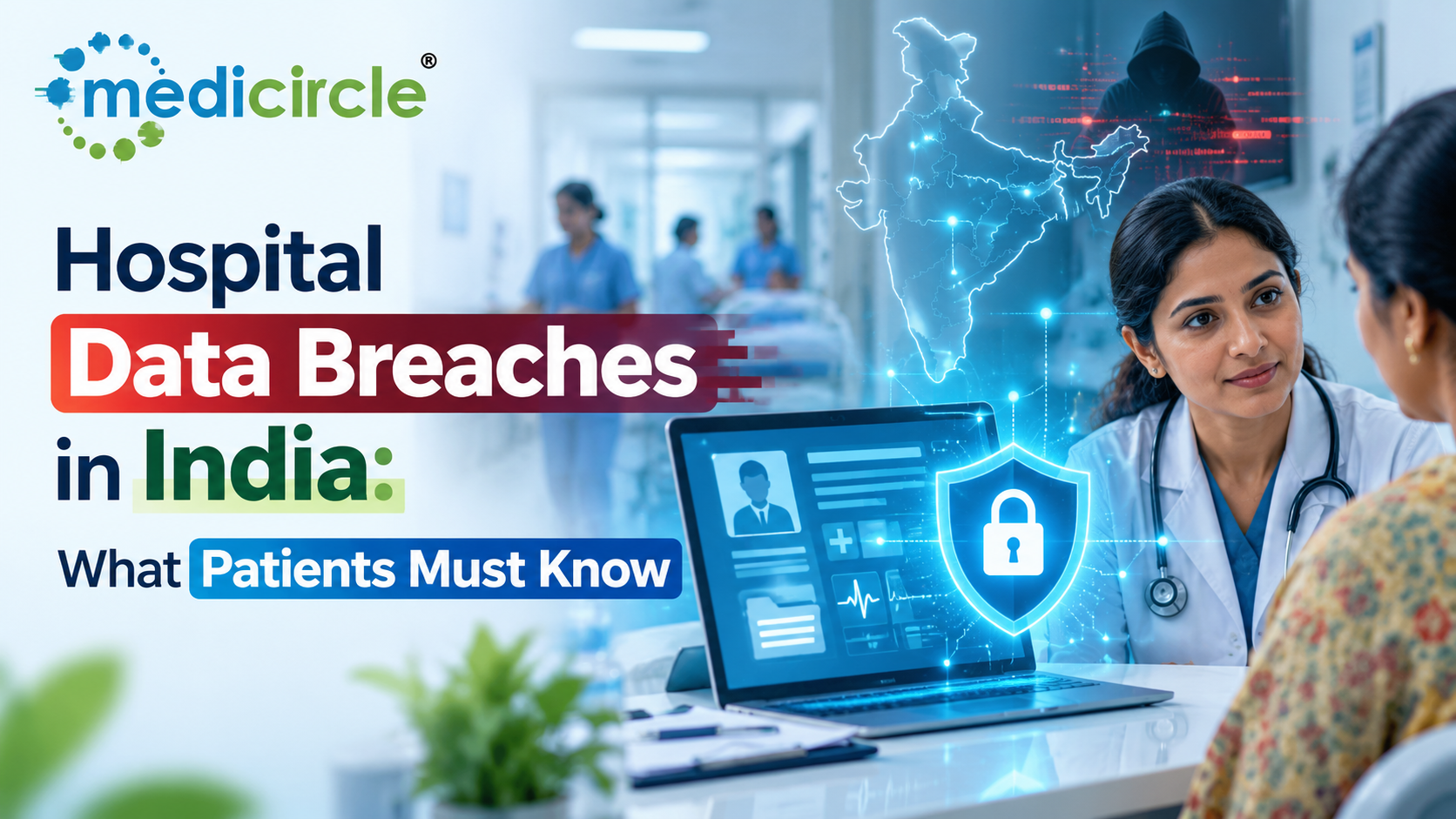
 Hospital data breaches in India are escalating, putting patient identity, medical history, and insurance data at serious risk. Awareness, proactive steps, and evolving legal frameworks offer meaningful protection.





Introduction
India's healthcare sector is digitizing rapidly. From electronic health records and teleconsultation platforms to Ayushman Bharat Digital Mission (ABDM) integration and hospital management software, millions of patients across the country now have their most sensitive personal and medical information stored in digital systems. This transformation has brought immense benefits in terms of speed, accessibility, and care coordination. However, it has also introduced a serious and growing threat: hospital data breaches.
In recent years, several major Indian healthcare institutions have suffered significant cybersecurity incidents that exposed the private records of thousands of patients. These are not isolated technical failures. They represent a systemic vulnerability in the way Indian hospitals handle, store, and protect digital health information. For patients, the consequences can range from embarrassment and reputational harm to financial fraud and identity theft.
Understanding what a hospital data breach is, how it happens, what data is at risk, and what patients can legally do about it is no longer optional knowledge. It is essential healthcare literacy for anyone who has ever received treatment at a digitally connected facility in India.
What Is a Hospital Data Breach and Why Does It Matter
A hospital data breach occurs when patient information held by a healthcare provider is accessed, disclosed, stolen, or misused without authorization. This information may be exposed through external cyberattacks, internal negligence, accidental sharing, or deliberate theft by insiders.
What makes healthcare data particularly sensitive is the nature of the information it contains. Unlike a compromised bank account that can be closed and reissued, a person's medical history cannot be changed. Chronic illness records, mental health diagnoses, HIV status, reproductive health information, and surgical histories are permanent facts that, once exposed, can affect a person's employment, insurance eligibility, personal relationships, and social standing.
In India's social context, this carries an additional dimension. Health conditions that carry stigma, such as psychiatric disorders, sexually transmitted infections, infertility, or addiction histories, can have devastating personal consequences if disclosed without a patient's consent. The harm caused by a data breach in Indian healthcare is therefore not limited to financial damage alone.
The Growing Scale of Hospital Cyberattacks in India
India has seen a notable increase in cyberattacks targeting healthcare institutions. The All India Institute of Medical Sciences (AIIMS) in New Delhi suffered a widely reported ransomware attack in late 2022 that paralyzed hospital operations for nearly two weeks and potentially exposed the health records of millions of patients, including senior government and public figures. Several other hospitals, diagnostic chains, and health insurance platforms have reported similar incidents in subsequent years.
According to data from CERT-In (the Indian Computer Emergency Response Team), the healthcare sector has consistently ranked among the top targeted industries for cyberattacks in India. Ransomware, phishing, and unauthorized access to hospital servers are the most commonly reported attack vectors.
The increased adoption of digital health infrastructure under ABDM has expanded the potential attack surface. As patient data is increasingly consolidated across platforms, the consequences of a single breach become significantly more far-reaching.
What Patient Data Is Typically at Risk
When a hospital's systems are compromised, the data at risk falls into several broad categories. Patients deserve to know exactly what information hospitals hold about them and why that information is valuable to cybercriminals.
Demographic and identity information such as full name, date of birth, address, mobile number, and Aadhaar number forms the foundation of most patient records in Indian hospitals. This data alone is sufficient for identity fraud.
Medical records including diagnostic reports, lab test results, prescription histories, surgical notes, and discharge summaries are highly sensitive. In the wrong hands, this information can be used to manipulate insurance claims or exploit patients through targeted scams.
Health insurance details, including policy numbers, claim histories, and insurer information, are increasingly attractive to fraudsters. With the integration of Ayushman Bharat PM-JAY beneficiary data into hospital systems, the scale of potentially exposed insurance information has grown considerably.
Financial data, including billing records, payment histories, and in some cases banking details used for hospital payments, may also be stored within hospital management systems and are vulnerable in a breach.
Login credentials for patient portals, health apps, and teleconsultation platforms round out the exposure profile, as these can be used to access further personal information or conduct account takeover fraud.
How Hospital Data Breaches Happen in India
Understanding the mechanisms of hospital data breaches helps patients and institutions alike recognize the warning signs and take appropriate precautions.
Ransomware attacks are the most publicized form of healthcare cybercrime. In these incidents, attackers infiltrate hospital networks, encrypt critical data, and demand payment in exchange for restoring access. The AIIMS incident is the most prominent Indian example, but smaller hospitals across tier 2 and tier 3 cities have also been targeted, often with far fewer resources to manage the fallout.
Phishing and social engineering attacks target hospital staff through deceptive emails, messages, or calls designed to obtain login credentials or install malicious software. Overworked clinical staff in busy Indian hospitals are particularly vulnerable to these tactics due to time pressure and limited cybersecurity training.
Insider threats, whether from negligent employees or malicious actors with internal access, account for a significant proportion of healthcare data leaks globally and in India. An employee with authorized access to patient records who shares, sells, or improperly handles that data can cause a breach without any external attack occurring.
Insecure third-party integrations pose an additional risk. Indian hospitals frequently use multiple software vendors for different functions, from radiology systems to pharmacy management to billing platforms. A vulnerability in any one of these vendor systems can expose the broader hospital database.
Weak cybersecurity infrastructure, particularly in smaller private hospitals and nursing homes operating without dedicated IT security teams, leaves systems running outdated software with unpatched vulnerabilities that attackers can exploit with relative ease.
The Legal and Regulatory Framework Protecting Indian Patients
India's legal framework around data protection has been evolving, and healthcare data specifically is now receiving greater regulatory attention.
The Digital Personal Data Protection Act (DPDPA) 2023 is the most significant recent development. Under this legislation, healthcare providers who function as "data fiduciaries" are required to implement appropriate technical and organizational safeguards to protect personal data, including health information. The Act mandates breach notification to the Data Protection Board of India and to affected individuals in the event of a breach.
CERT-In issued its Cyber Security Directions in 2022, which require healthcare organizations to report cybersecurity incidents within six hours of detection. These directions also mandate the maintenance of IT and communication logs for a period of 180 days.
The ABDM framework, which governs the creation and use of ABHA (Ayushman Bharat Health Account) health IDs, includes provisions requiring consent-based data sharing and security standards for health information exchanges.
While these frameworks represent meaningful progress, enforcement remains a challenge. Many smaller hospitals are not yet fully compliant with CERT-In directions or ABDM data governance standards. Patients should not assume that legal frameworks alone guarantee the safety of their data.
What Patients Can Do to Protect Themselves
Patients are not powerless in the face of hospital data breaches. There are practical steps every individual can take to reduce their risk and respond effectively when a breach occurs.
Before sharing data with any healthcare provider, patients have the right to ask how their information will be stored, who will have access to it, whether it will be shared with third parties, and what security measures are in place. Exercising this right is not intrusive; it is responsible.
Patients should be cautious about providing Aadhaar-linked details unless strictly necessary for treatment or government scheme enrollment. While Aadhaar verification has legitimate uses in healthcare settings, blanket collection of biometric and identity data beyond what is required should be questioned.
Monitoring health insurance accounts and linked bank transactions regularly is important. Unusual claims or transactions may be the first visible sign that personal data has been misused following a breach.
If a hospital or healthcare platform communicates that a breach has occurred, patients should act promptly. This includes changing passwords for patient portals and health apps, informing their insurer, and reporting the matter to the National Cyber Crime Reporting Portal at cybercrime.gov.in if identity theft or financial fraud is suspected.
Requesting a copy of personal health records held by a hospital is a legal right under evolving data protection frameworks. Patients who believe their data was mishandled have recourse through the Data Protection Board of India once the DPDPA implementation framework is fully operationalized.
What Hospitals and the Healthcare Sector Must Do Better
Accountability in hospital cybersecurity cannot rest solely on patients. Healthcare providers at every level, from large tertiary hospitals to district-level clinics adopting digital systems, have an obligation to implement and maintain robust data protection practices.
At a minimum, hospitals should conduct regular cybersecurity audits, train all staff on data handling and phishing awareness, implement role-based access controls so that patient data is visible only to those who require it for direct care, and maintain encrypted, regularly backed-up health records.
Healthcare organizations seeking NABH accreditation are already expected to meet information management standards, but broader regulatory compliance needs to be actively monitored and enforced. CERT-In and the upcoming Data Protection Board will play a critical role in creating accountability structures that incentivize investment in cybersecurity rather than treating it as an optional expense.
Conclusion
Hospital data breaches in India are not a distant risk. They are a current and escalating reality that touches millions of patients whose health records sit within increasingly targeted digital systems. The digitization of Indian healthcare is a necessary and beneficial evolution, but it must be matched by an equal commitment to protecting the sensitive information that patients entrust to healthcare providers.
Every patient has a right to know that their medical history, identity details, and insurance information are being handled responsibly. The legal framework is developing, awareness is growing, and patients who understand their rights and take proactive steps can meaningfully reduce their personal exposure. Platforms like Medicircle continue to play a vital role in ensuring that complex developments in healthcare cybersecurity, policy, and digital trust are communicated clearly and responsibly to both healthcare professionals and the patients they serve.
Frequently Asked Questions
Q1: What types of patient data are most commonly stolen in hospital data breaches in India?
The most commonly stolen data includes Aadhaar numbers, contact details, medical history, diagnostic reports, insurance information, and prescription records. Financial data linked to hospital billing systems is also frequently targeted.
Q2: Is there a law in India that protects patient data in hospitals?
The Digital Personal Data Protection Act 2023 is the primary legislation governing personal data in India, including health data. Healthcare providers are required to implement reasonable security safeguards and notify affected individuals in the event of a data breach.
Q3: How do patients find out if their hospital data has been breached?
Patients may receive direct communication from the hospital, notifications from government authorities, or discover unusual activity in linked financial accounts or insurance claims. In many Indian cases, breaches are first reported by cybersecurity researchers or journalists.
Q4: Can a hospital data breach affect a patient financially?
Yes. Stolen health insurance details and Aadhaar-linked financial data can be used for fraudulent insurance claims, identity theft, and unauthorized financial transactions. Patients should monitor their bank accounts and insurance records closely after any breach notification.
Q5: What should a patient do immediately after learning their hospital data was breached?
Patients should contact the hospital for confirmation and details, monitor their financial accounts for suspicious activity, report identity theft concerns to CERT-In or the National Cyber Crime Reporting Portal, and consider requesting updated contact or login credentials where applicable.
Resources
- CERT-In (Indian Computer Emergency Response Team): Official cybersecurity incident reporting body for India, issuing directions and advisories for critical sectors including healthcare.
- Ministry of Electronics and Information Technology (MeitY): Governing authority for the Digital Personal Data Protection Act 2023 and digital governance frameworks.
- Ayushman Bharat Digital Mission (ABDM): National digital health initiative establishing consent-based health data sharing standards and ABHA health ID governance.
- National Cyber Crime Reporting Portal (cybercrime.gov.in): Government portal for citizens to report cybercrime, including identity theft and data misuse arising from breaches.
- NABH (National Accreditation Board for Hospitals and Healthcare Providers): Accreditation body establishing information management and patient safety standards for Indian hospitals.
Interlinking Keywords
hospital data breach India, patient data privacy India, healthcare cybersecurity India, DPDPA 2023 health data, ABDM data security, AIIMS cyberattack, CERT-In healthcare, Ayushman Bharat digital health records, health data protection India, patient rights India digital health
Last medically reviewed by:
Dr. Manthan Tripathi, Medicircle Editorial and Medical Advisory Team on 12, September 2026
Disclaimer
This article is intended for general informational and educational purposes only. It does not constitute legal, medical, or cybersecurity advice. Readers are advised to consult qualified legal professionals for guidance specific to their personal data protection rights and to follow the most current advisories issued by CERT-In, MeitY, and their healthcare providers. Medicircle does not endorse any specific cybersecurity product, legal service, or healthcare institution mentioned in this content.





-23-300x250.png)

.jpeg)






.jpg)
.jpg)
.jpg)
.jpg)
.jpg)
.jpg)
.jpg)
.jpg)
.jpg)