 Thursday, October 08, 2026
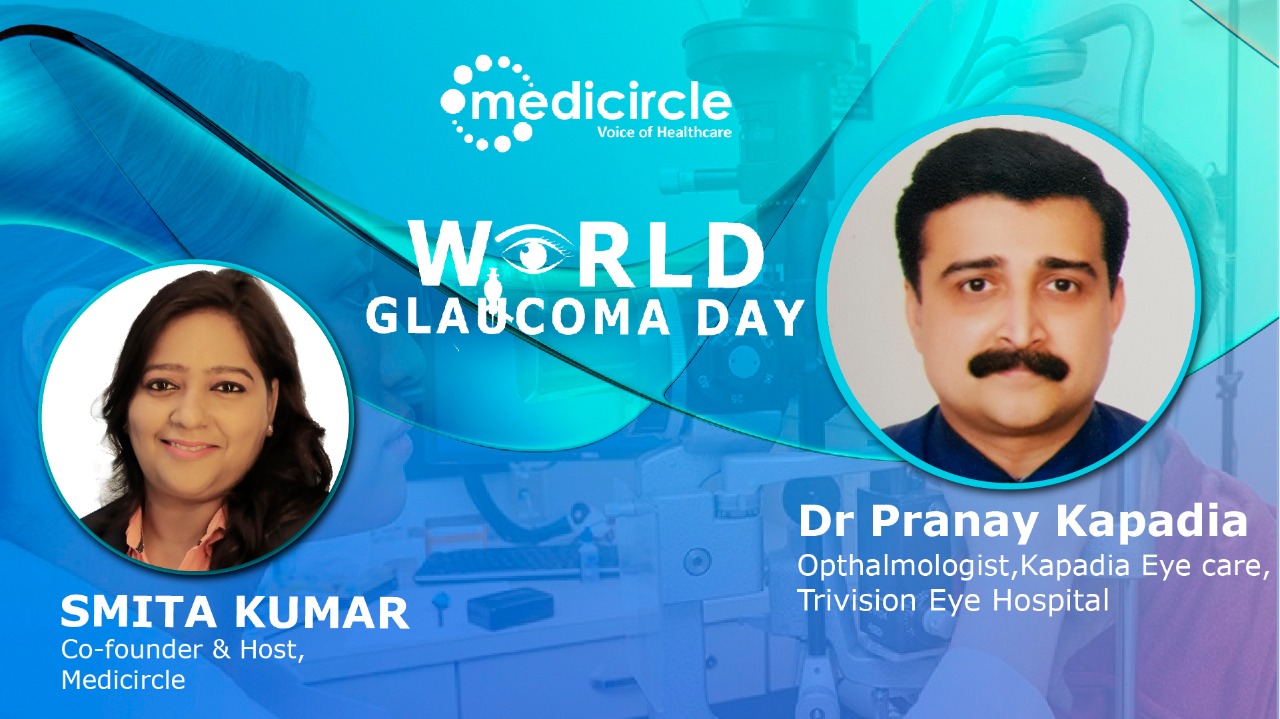
 “A regular eye checks up with a Qualified Eye Surgeon is a must for everyone.” Professional advice from the Expert Ophthalmologist Dr. Pranay Kapdia, Chairman and Medical Director of Kapadia Eye Care





The eyes are one of the most important senses. As age advances, preserving your vision must be of utmost importance. Loss of eyesight is one of the important concerns, especially in old age. Protecting your eyes will help reduce blindness and vision loss. A glaucoma is a group of eye conditions that damage the optic nerve, the health of which is vital for good vision. Combined with an aging population we can see an epidemic of blindness booming if we don't raise awareness about the importance of regular eye examinations to preserve vision.
At Medicircle, we are conducting an awareness series on Glaucoma with Eminent Ophthalmologists for the World Glaucoma Day to boost awareness and educate people about eye health.
Dr. Pranay Kapadia is Chairman and Medical Director of Kapadia Eye Care hospital which is the chain of eye care clinics offering laser eye surgeries. Dr.Kapadia is also a Designated Partner of Laser Vision International Center which is the top LASIK center located in Bandra Mumbai. He is also one of the leading laser eye surgeons in Mumbai practicing for 2 decades. He is experienced with more than 50,000 NO INJECTION laser eye surgeries for cataracts and Lasik.
Aging increases the chances of glaucoma
Dr. Pranay Kapadia says, “Glaucoma is a silent thief of the sight. The reason behind this is that the age of 40 and above naturally predisposes to glaucoma. So nearly half of the world’s population is at risk of glaucoma. More than half of this population is not diagnosed with glaucoma. As the age increases, the chances of glaucoma increases. There are certain risk factors for glaucoma which are:
1)Age
2) Family history: If any one of your family members suffers from glaucoma, there the chances of glaucoma increase.
3) Medicines like steroids and other drugs
4) Past eye injury eg. vascular eye injury
5) Certain diseases like myopia, thin cornea, and vascular diseases
6)Systemic diseases like blood pressure and diabetes
Prevention of Glaucoma
Dr.Kapadia explains, “Preventing the sight loss is very important for glaucoma. It should be detected at an early age so that we can prevent blindness. Detecting the disease at an early stage so that the patient never gets blind is very important. Glaucoma is a disorder where I need to counsel the patient that you are on the road to blindness if not treated. We can stop and delay the progression of the disease so that it does not deteriorate further. At whatever stage the glaucoma is detected, it should be kept stationary and you should not allow glaucoma to progress. So in a way, it is important in glaucoma to prevent vision loss. The patient has to undergo a certain specialized test. These specialized tests are very important to detect the early stage of glaucoma. So it is not a completely preventable disease but detecting at the early stage is important and can help.”
Regular eye check-up is a must for better eye health
Dr. Kapadia informs,
“Regular eye examination: In our country, we are not used to going for preventive health checkups to doctors. Just like we have cars that go regular checkups and servicing, similarly, we should not avoid health checkups. These diseases are silent diseases that need regular routine examinations to get picked up at an early stage.
Eye pressure checking by Qualified Eye Surgeons: If any of the patients have any risk factors mentioned above, then the patient has to go for a yearly check-up after the age of 40 years.
Specialized test: Here, it is important to note that the peripheral field of vision is affected in cases of glaucoma. So imagine that if I look straight and the periphery vision gets affected, this loss of peripheral vision gets detected after there is 25% vision loss. And the vision loss is irreversible. Specialized test should be done like:
Field vision test which is called Perimetry Tonometry involves measuring intraocular pressure Scan of the optic nerve Measurement of corneal thickness called Pachymetry Measurement of the inner angle of the eye called GonioscopyThese tests are not routinely done. The patient may say that we have checked our eyes with the optician which is not enough.”
Frequency of eye health check-up
Dr.Kapadia recommends, “ A general body checkup with eye check-up every year. If not possible, then an eye check should be done once in two years. The patients who are at high risk must get their eye checkup done once in six months.”
Glaucoma is irreversible
Dr. Kapadia informs, “Glaucoma cannot be reversed. The optic nerve gets damaged in glaucoma. Further, pressure on the optic nerve will result in the death of cells. Whenever pressure is exerted on any organ, the cells of that particular organ start dying. There are few half-dead cells when the pressure is exerted. At this stage, if circulation is improved, then the cells may turn functional again. Some amount of improvement is definitely seen when we start treatment for glaucoma after detecting it. Vision recovery from 2 -3 % or maybe sometimes up to 5-10% is possible.”
Glaucoma treatment: Surgery OR Medications?
Dr.Kapadia informs, “About 25 years back, when I was studying in KEM, glaucoma was equated with surgery. But now there are wonderful medications available where the patient has to use eye drops once at night during bedtime to prevent glaucoma progression. It is important to take these medications regularly. It is just like having diabetes and high blood pressure problems which can be controlled with medications.
Glaucoma is not curable but controllable. As long as you are doing regular eye checkups with medication, you will not need surgery for glaucoma. Be safe, be healthy and take care of your eyes.” says Dr.Kapadia
(Edited by Dr. Rati Parwani)





.jpeg)








.jpg)
.jpg)
.jpg)
.jpg)
.jpg)
.jpg)


.jpg)
.jpg)
.jpg)