 Saturday, October 10, 2026
 The next big thing in Medicine is the ‘Gut Microbiome’: Dr. D. Nageshwar Reddy, Chairman and Chief of Gastroenterology, AIG Hospitals. If you have never consumed alcohol but still get caught in drunken driving, you must know your Gut Health.
Like Blood, Breast Milk banks, and stool banks are coming up to address Gut Health: Experts
The next big thing in Medicine is the ‘Gut Microbiome’: Dr. D. Nageshwar Reddy, Chairman and Chief of Gastroenterology, AIG Hospitals. If you have never consumed alcohol but still get caught in drunken driving, you must know your Gut Health.
Like Blood, Breast Milk banks, and stool banks are coming up to address Gut Health: Experts




If you are following a strict diet, doing the required amount of exercise and still not reducing weight, it may be due to bad bacteria and need to know about Gut Health: Experts
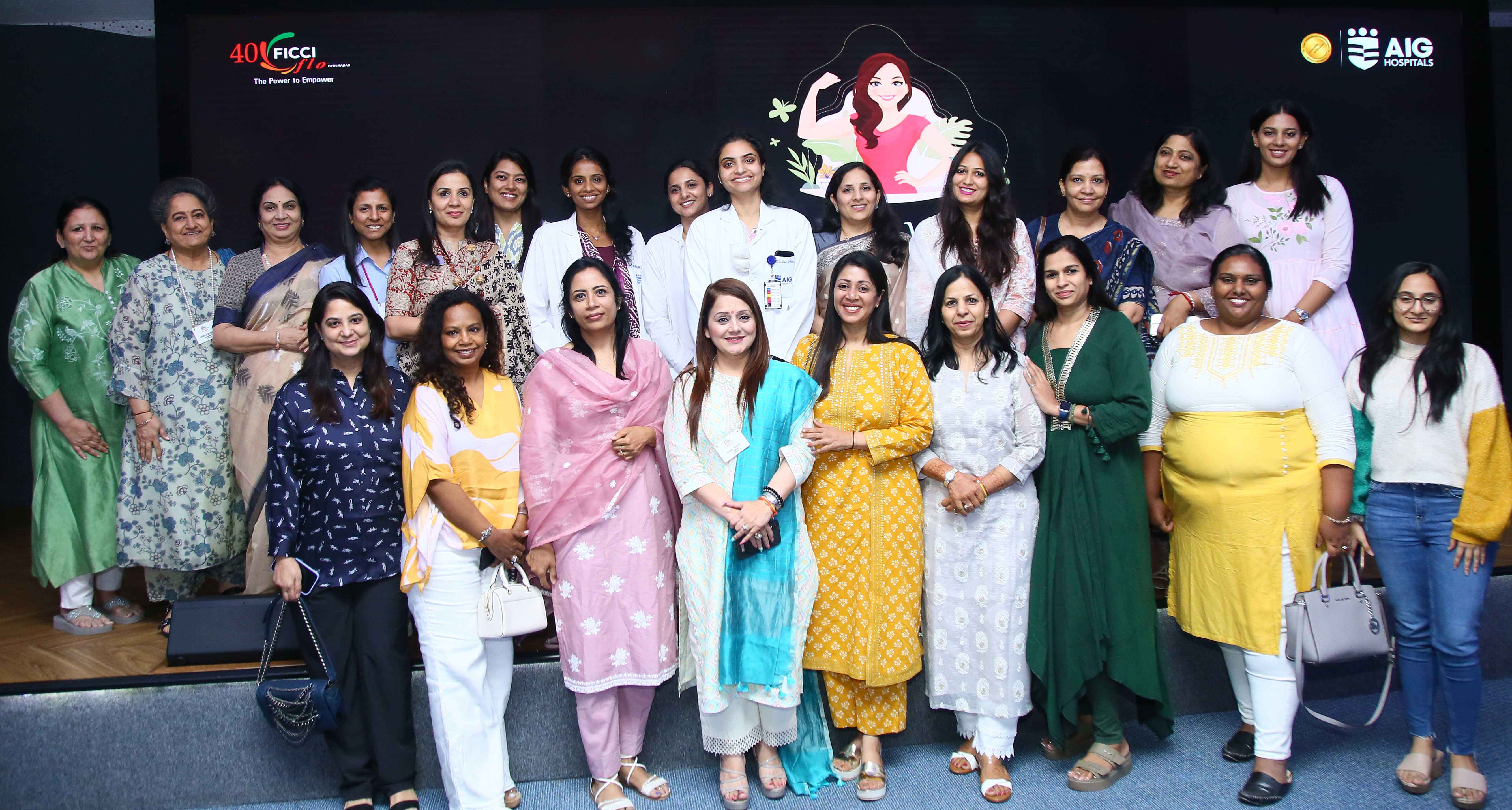
Hyderabad, October 20, 2023.......FICCI Ladies Organisation (FLO), Hyderabad Chapter organised a “Healthier Women, Healthier Society”, a colloquium on women's health in association with AIG Hospitals at its premises in Gachibowli on Friday. It was organised as part of sustaining her health initiative of FLO, said its chairperson Ritu Shah, while giving her welcome address.
Dr. D. Nageshwar Reddy, Chairman and Chief of Gastroenterology; Dr Pragnya Chigurupati, Consultant Breast Surgeon; Dr Sujana Priya, Consultant Radiation Oncologist and Dr Indraja Siripurapu, Consultant Medical Oncologist participated in the colloquium.
The Next big thing in Medicine is the Gut Microbiome, said Dr D. Nageshwar Reddy, Chairman and Chief of Gastroenterology, at AIG Hospitals while addressing the session.
The gut breaks down the foods we eat and absorbs nutrients that support the body's functions. The importance of the gut to our overall health is a topic of increasing research in the medical community now. Research is showing us that our gut microbiome can affect every organ in our body, added Dr Reddy.
One of my friend's daughter was once caught in drunken driving. But to the rude shock of everybody she never touched alcohol in her life but this has happened. She had to pay the fine and got out. Subsequently, we found that it happened because of a medical condition called ‘Auto Brewery Syndrome’. This means her stomach had a brewery factory. Subsequently, we produced this in court and got over the problem, said Dr Nageshwar Reddy.
But now Gut Health is the topic of the world. Our stomach is full of bacteria both good and bad. The stomach has billions of bacteria. It has 1000 species in the intestine, ten times more than our body. In my friend’s daughter’s case, she acquired bad bacteria in childhood.
A lot of us squire bad bacteria may be due to an unnecessary caesarean section, not breastfeeding the baby, or excessive usage of antibiotics. If both bacteria good and bad in the stomach fight each other and if the bad bacteria win, it leads to many health problems. Profiles of good bacteria and bad bacteria can be done by testing stool. Probiotics are good bacteria. Yoghurt is a good source. Commercial yoghurt may not be good. Homemade yoghurt is good. Prebiotics which are found in vegetables and fruits are good. Almonds which contain Tyrosine are also good sources for bacteria.
If you are obese, following a strict diet, exercising sufficiently still if you are not losing weight, bad bacteria may be the reason Dr Nageshwar Reddy said. Some Bacteria make us lazy and some make us active for exercise, he explained.
Speaking further the well-known gastroenterologist in the country said diet influences bacteria. The best food to eat is the Mediterranean. We developed an IndMed Diet mix of Indian and Mediterranean food with the help of the world’s best nutrition institute in Israel, he said.
Faecal transplantation is a procedure to collect feces, also called stool from a healthy donor and introduce them into a patient's gastrointestinal tract. The procedure can control an infection called Clostridium difficile by adding healthy bacteria into the recipient's intestines.
Patients who used odourless freeze-dried stool from healthy donors had a significant improvement in the health of their gut bacteria in a small study. This helps in treating hard-to-treat infections, Dr Reddy informed
I noticed in one of my visits abroad to the Asian Stool Bank. Similar Blood Bank, Breast Milk Bank, and Stool Banks have come up now. These stool banks freeze, preserve and bank donor stool which improves the condition of the patient. Stool banks safely collect, store, and distribute stool products for treatment, Dr Nageshwar Reddy shared much to the surprise of the audience.
The Asia Microbiota Bank (AMB) is a Hong Kong-based social enterprise. Based out of Hong Kong it is one of the first cities in Asia to offer this innovative treatment, and the first in Asia to have an organized stool bank.
Following his talk was a panel discussion on Women's Health. Dr Pragnya Chigurupati, Consultant Breast Surgeon; Dr Sujana Priya, Consultant Radiation Oncologist and Dr Indraja Siripurapu, Consultant Medical Oncologist, Ritu Shah, Dr Shwetha, Ms Arshiya Afsar participated
They spoke about why breast cancer is spreading at an alarming rate.?
Some of the reasons Dr Pragnya said were partly due to diet, stress, workload, sedentary lifestyle, avoiding breastfeeding etc and others.
Now women of 25 to 40 years are suffering from cancer, observed one of the speakers.






.jpeg)










.jpg)
.jpg)
.jpg)
.jpg)
.jpg)
.jpg)


.jpg)