 Thursday, October 08, 2026
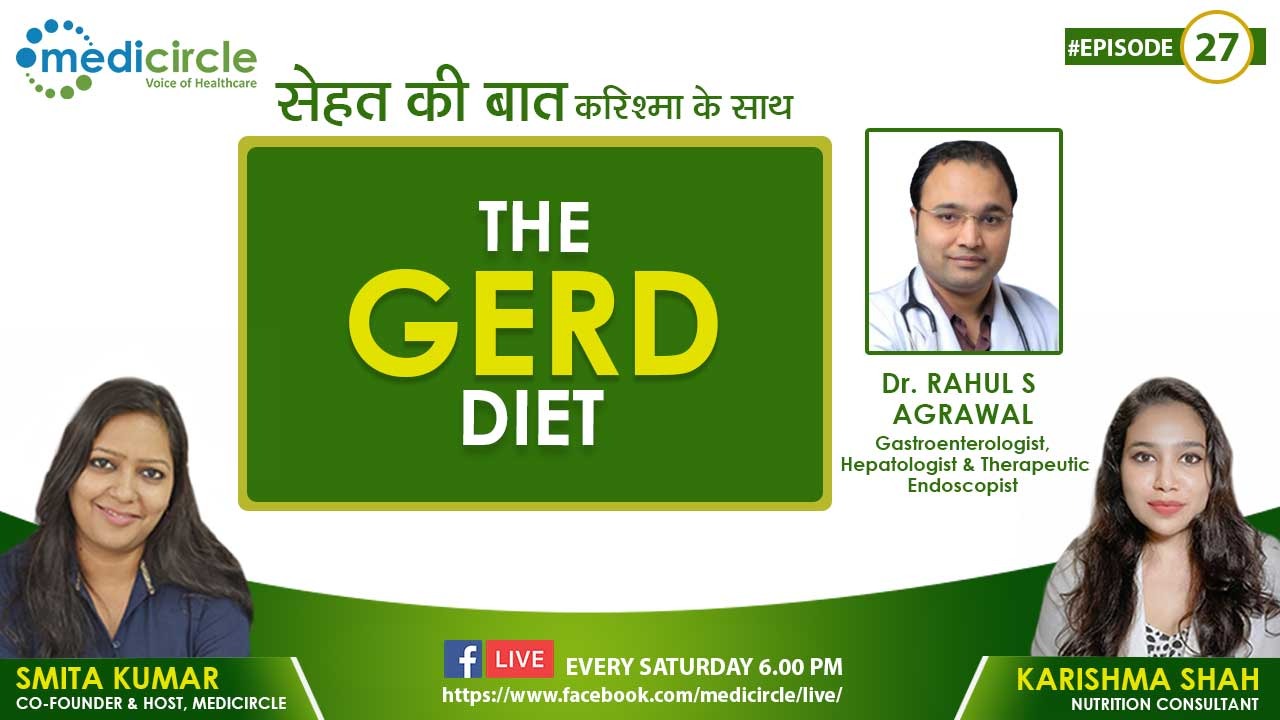
 Adapt and incorporate healthy diet and lifestyle for GERD to defeat it right away
Listen to this special conversation of Karishma Shah which will help you in taking care of GERD symptoms with healthy dietary modifications and find a solution to acid reflux right away!
Adapt and incorporate healthy diet and lifestyle for GERD to defeat it right away
Listen to this special conversation of Karishma Shah which will help you in taking care of GERD symptoms with healthy dietary modifications and find a solution to acid reflux right away!





Gastroesophageal reflux disease (GERD) occurs when stomach acid repeatedly backs up into the tube connecting your mouth and stomach. GERD is mild acid reflux that occurs at least twice a week, or moderate to severe acid reflux that occurs at least once a week.
Some of the main reasons for having GERD are improper food timing, consumption of high fat and oily food and eating high quantities of food at one go, etc. Heartburn is the most frequent – but not the only – symptom of GERD. Other common signs and symptoms of GERD include Chest pain, Difficulty swallowing, Regurgitation of food or sour liquid & Sensation of a lump in your throat.
Treatment should usually be maintained on a long-term basis even after the symptoms are under control.
To control your symptoms, you can start by eliminating these food items from your diets – such as high-fat foods, tomatoes and citrus fruit, chocolate, garlic, onions, and spicy foods, mint, etc.
If one has too much acid, you can incorporate these specific foods into your diet to manage symptoms of acid reflux like Vegetables, Ginger, Oatmeal, Non-citrus fruits, including melons, bananas, apples, and pears, Lean meats and seafood, Egg whites, etc
Facts:
Research shows that increased fiber intake, specifically in the form of fruits and vegetables, may protect against GERD. A study shows 'Prevalence of GERD higher in males' at 58.46 pc. As per research, people residing in urban communities were more vulnerable to GERD than those in the rural community
At Medicircle, we are presenting the Ask The Expert Series for health awareness to understand facts and find solutions related to them. We have come up with a series of Sehat Ki Baat, Karishma Ke Saath. Let’s interact with Expert Karishma Shah about the GERD diet
Karishma Shah is a Renowned Nutritionist and Plant Diet based Food Coach. She is also a Weight Loss Expert, Diabetes and PCOS Educator & Certified in Psychology of Eating
All you need to know about GERD
Karishma Shah says, “GERD is Gastro-Esophageal Reflux Disease. There are many symptoms like -
Acid reflux Feeling the acid in the mouth Digestive issues.
There is a muscular tube which is a food pipe. This food pipe known as the esophagus connects the mouth to the stomach and intestine through which food passes down and does not move upwards. There is a sphincter agent which works and the blocking agent. This does not allow the food to come back. This leads to churning and digestion in the stomach by shutting the sphincter and shit down.
In GERD, the sphincter does not shut well which leads to acid reflux.”
Do and Don’t for GERD Diet
Karishma Shah says, “Avoid the following foods-
Oily food Spicy food Chilli and pepper powder Processed food Red meat like kinds of bacon, sausage Cheese Alcohol Tomato-based and ketchup Citrus and lemon juices Chocolate Carbonated drinks.”
The high-risk factor for GERD
Karishma informs, “ The people consuming nonveg and spicy food are at high risk of GERD. It is important to avoid chili and spicy food. Consuming moderation is important when it comes to red meat and spicy food.”
IS GERD genetic?
Karishma informs, “GERD is not genetic and can happen due to lifestyle issues. There are various triggers like -
Improper diet - wrong food choices Lack of exercise Improper lifestyle Spicy food
It is recommended to pregnant women to eat less spicy food during pregnancy and take in an alkaline diet like-
Banana Cucumber Zucchini Fennel seeds Nuts Water foods Lettuce Vegetable soups and broth Herbal teas
These help form acid reflux in pregnancy.”
Lifestyle Changes for GERD
Karishma informs, “Antacids are medicines to control acid levels. This is a temporary solution. The sustainable solution is making lifestyle changes and a good healthy routine.
There are 3 gunas according to Ayurveda which helps in the regulation of proper lifestyle.
Satvik stage - Eating alkaline and simple food like grains, vegetables, and fruits, mind, and body remains sound and balanced
Spicy and oily foods along with caffeine products are stimulants in nature and aggravate the gunas in the body. It causes more acidic problems. So, follow this routine-
Simple healthy food Exercise Yoga
This will help to solve the GERD problems.”
(Edited by Dr.Rati Parwani)





.jpeg)








.jpg)
.jpg)
.jpg)
.jpg)
.jpg)
.jpg)


.jpg)
.jpg)
.jpg)