 Thursday, October 08, 2026
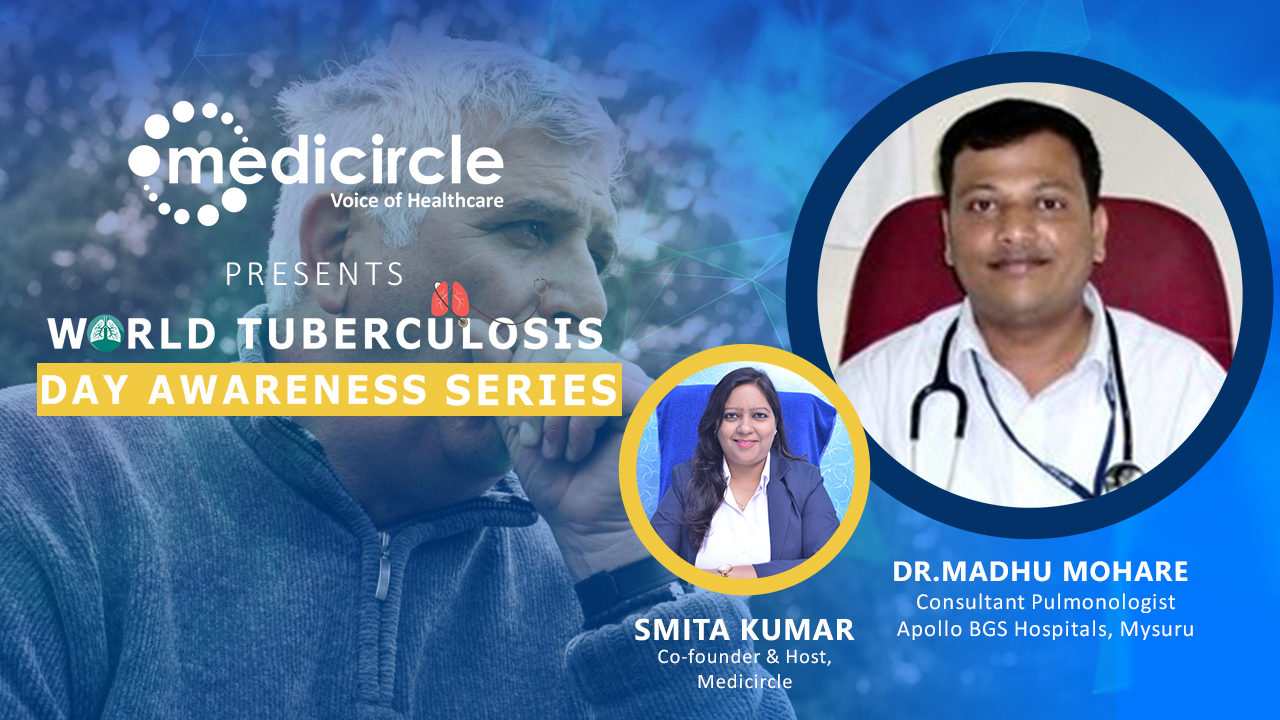
 Tuberculosis is a curable disease provided the person does not leave the treatment in the middle and maintains immunity and nutrition levels. If proper care is not taken then tuberculosis can get reactivated. It takes a longer time to get cured if TB gets reactivated, says Dr. Madhu Mohare, Consultant Pulmonologist, Apollo Hospitals.




Tuberculosis is caused by the bacteria known as mycobacterium tuberculosis. The bacteria usually attack the lungs but they can attack any other part of the body as well such as the kidney, spine, and brain. Awareness about the disease, its diagnosis, and treatment among the public will help in the elimination of TB. Medicircle presents World TB Day Awareness Series featuring eminent clinical pulmonologists, immunologists, and chest physicians treating tuberculosis. We aim to create awareness and educate the people about the vast impact of TB around the world.
Dr. Madhu Mohare is a Consultant Pulmonologist at Apollo Hospitals, Mysore. His specialties are interventional pulmonary medicine, bronchoscopy, thoracoscopy, sleep medicine, intensive care, pulmonary rehabilitation, and lung transplantation.
Apollo Hospitals is a premium multi-specialty hospital of India and is one of the largest integrated healthcare groups. With a team of world-renowned doctors, support staff and medical administrators, it makes good health easier and smoother with equal care and attention for the smallest to the biggest health issues.
Tuberculosis does not just affect the lungs but can affect any other organ of the body too
Dr. Mohare explains, “Cough and fever are the most common symptoms of TB. Especially after this covid 19 pandemic, most of us are scared about respiratory ailments but tuberculosis is a disease that has been there for many years and we are still struggling to eradicate it. It can affect almost any organ of the body. The most heralding symptoms of tuberculosis are extended days of cough, fever over an extended period of time, loss of weight, loss of appetite, weakness, easy fatigability, etc. All these symptoms along with cough are mostly associated with Pulmonary TB affecting the lungs. Symptoms depend on the affected organ e.g., if it is the intestine it could be altered bowel habits, loose motion, constipation. If it is genitourinary tuberculosis, it could be infertility in young men or women and if it is brain tuberculosis it can be accompanied by high-grade fever, seizures, epilepsy, altered level of consciousness, etc. The constitutional symptoms would remain the same that are fever, loss of weight, and muscle fatigue. The most significant symptoms as the brand ambassador Mr. Amitabh Bachchan is also showcasing in advertisements is loss of weight, loss of appetite and fever and especially cough for more than two weeks,” says Dr. Mohare.
There is a Difference Between TB Infection and TB Disease
Dr. Mohare emphasizes, “TB infection and TB disease are different because being in a country like India almost 90 to 95% people are exposed to TB infection. TB infection does not mean that we have TB disease. The infection will manifest into disease when our immunity goes down and when the bacteria start attacking the organ and place of the disease. TB infection can be diagnosed by skin tests that we normally call Mantoux Test or PPD and blood test depending on the symptoms. So, when our immunity goes down, when our nutrition is not proper or there is a cardiac problem, kidney problem, diabetes, high steroid intake, then the TB infection can turn into TB disease. The overriding symptoms of the TB disease are again only low-grade fever running for many days, loss of weight, loss of appetite, cough and other symptoms depending on the affected organ,” explains Dr. Mohare.
Connection between TB and HIV
Dr. Mohare emphasizes, “There is a connection between HIV and TB. Due to the resurgence of HIV in the 1990s, TB has come back. Till then TB was kind of getting eradicated. HIV is a human immunodeficiency virus that lowers immunity and due to this, there has been a resurgence in TB. So, even the normal TB infection, can flare up and cause tuberculosis disease in HIV patients. It may not manifest in the normal way in HIV patients because of their lowered immunity. They may not have the common symptoms of high-grade fever or loss of weight, loss of appetite, but we have to keep keen eye for suspicion for tuberculosis in HIV patients as they are very much prone to tuberculosis. It can affect any organ of the body in HIV patients, says Dr. Mohare.
Risk Factors of Tuberculosis
Dr. Mohare explains, “Predisposing factors for tuberculosis are malnutrition and lowered immunity, which could be acquired or it could be inherent. Some children may be born with errors of metabolism or reduced immunity, or some patients may be taking steroids for a long time which are immune-compromising medicines. Transplant patients or connective tissue disease patients, rheumatoid arthritis patients, patients who have chronic kidney disease, those who require regular dialysis, or chronic heart disease patients with heart failure are prone to TB. Nowadays organ transplants have been increasing very much. So post-transplant patients like people with kidney transplants, liver transplants, heart transplants, bone marrow transplants, blood disorders are all at risk of acquiring the tuberculosis infection later resulting in tuberculosis diseases. HIV and AIDS are one of the most important reasons for the resurgence of tuberculosis because of the lowered immunity in affected patients. So, all these are the risk factors. And of course, with our changing lifestyle, when we don't have proper nutrition, when we skip our diet and when we are exposed to various stress factors, then in healthy people also TB is getting detected.
Tuberculosis in Other Organs of the Body
Dr. Mohare points out, “I have seen that when patients complaining of blurred vision undergo retina evaluation, many times after the evaluation, they are found to be positive for tuberculosis. Though these cases are not very high still there is the possibility of this type of TB as well. Other organs can also get affected by TB like there can be brain tuberculosis, bone tuberculosis, genitourinary tract tuberculosis, lymph node tuberculosis, etc,” says Dr. Mohare.
Tuberculosis is Curable
Dr. Mohare assures, “TB is a curable disease. If the evaluation is done on time, medications are taken throughout treatment then TB can be cured in 6 months to 1 year. Stopping medication in the middle of the treatment would lead to drug-resistant TB which increases the duration of cure up to 2 years. So, if it’s the first time, the disease is easily curable provided that one takes all measures. The other thing is that it’s not that if TB has happened once, it cannot happen again. It can reactivate in immune compromising condition, with improper nutrition or stopping of medication. Personal protection is also something that needs to be taken care of especially in TB of the lungs. The use of masks especially in the first 2 months of the disease is extremely helpful in preventing friends and relatives from getting affected.
(Edited by Amrita Priya)





.jpeg)










.jpg)
.jpg)
.jpg)
.jpg)
.jpg)
.jpg)


.jpg)