 Thursday, October 08, 2026
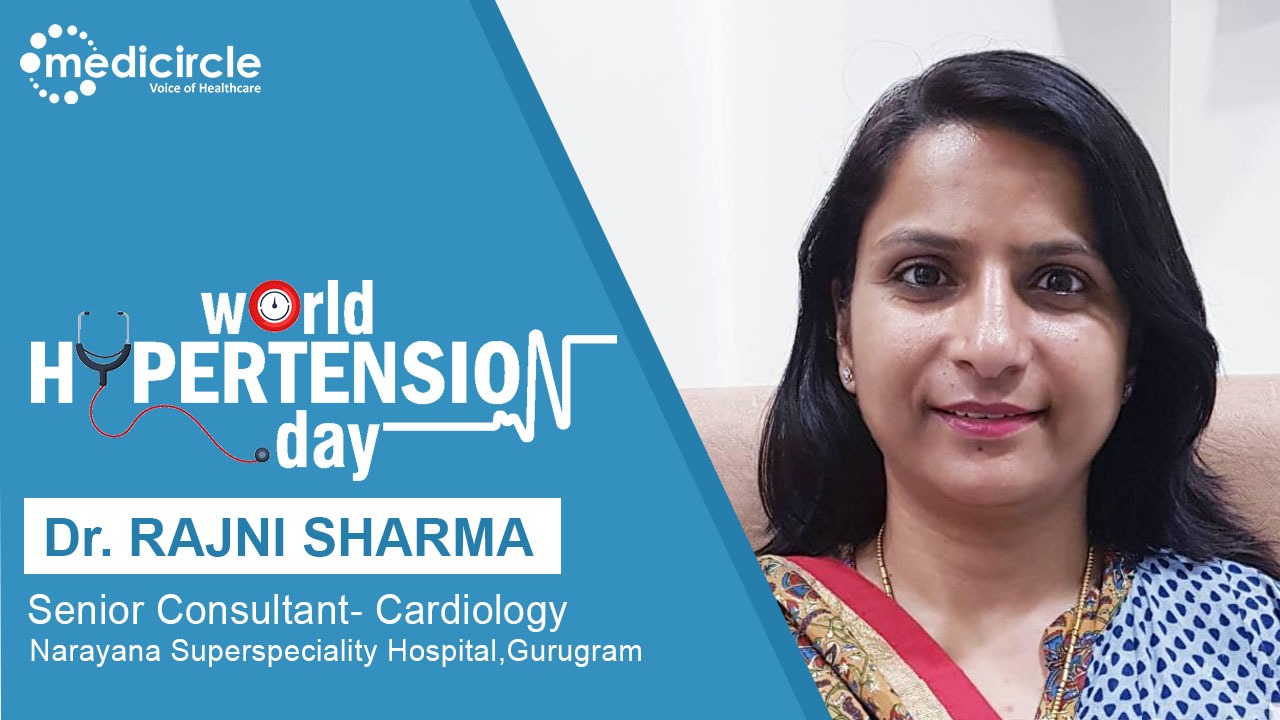
 Dr. Rajni Sharma Sehgal talks about hypertension and how prevalent it is in our society. She highlights why keeping hypertension in control is necessary and provides insights about measures of doing so. She touches upon the impact of Covid infection on hypertensive individuals.





Hypertension is also referred to as "high blood pressure" and these two terms are very common in everyday conversations. If left untreated or uncontrolled, hypertension can result in severe complications. It slowly develops over the years and causes sudden life-threatening conditions like stroke, heart failure, or damage to vital organs of our body. Medicircle is conducting an exclusive series to make people aware of hypertension so that they get reliable information, directly from experts.
Dr. Rajni Sharma is a Cardiologist who is associated as Senior Consultant, Narayana Superspecialty Hospital, Gurugram. She is proficient in all aspects of coronary interventions including Primary Angioplasty, Rota Ablation, IVUS & Complex High-Risk Coronary Interventions. She has performed in more than 3,000 angioplasties to date. She is also an expert in vascular interventions, valvuloplasty, and device implantations. She has expertise in echocardiography, TEE for valvular and congenital heart disease.
30-40% of Indians suffer from blood pressure
Dr. Rajni explains, “Hypertension is a common term but many myths are surrounding it. To give a clear picture of what hypertension is, let's understand what blood pressure is. It is the blood pushing against the lateral walls of our artery. There is a certain range of blood pressure that is suitable for the vital organs of our body and beyond that treatment is required so that the organs do not get damaged. The blood pressure range equal to or below 120/80 is considered the normal range and if it is above that, it comes in the range of hypertension or high blood pressure. Further staging is done and it is classified into class1 or class2, depending upon its severity and accordingly, treatment is done. We normally test blood pressure through sphygmomanometers or ambulatory reading machines. In the urban population hypertension or high blood pressure is so prevalent that in every 10 adults, 3-4 people would be suffering from it.”
If you want to be healthy, control hypertension
Dr. Rajni points out, “Most common problems associated with hypertension are coronary heart disease and diabetes. These are the comorbidities. Vital organs like the kidney get very quickly affected, both high and low BP affect it. It can get damaged or there can be any kidney disease. There are chances of stroke. It can 5-10% times increase if a person is suffering from hypertension and if there has been inadequate treatment. There can be a heart attack or vision damage as well.”
Measures to keep hypertension in control
Dr. Rajni lists down following measures to keep hypertension in control:
- “If one is genetically predisposed for example if parents are hypertensive, then regular health check-ups after 20-25 years of age is required. Otherwise, if there is no genetic predisposition or there is not much pressure in personal and professional life, regular health check-ups after the age of 30 are recommended.
- Lifestyle modifications from a sedentary lifestyle to an active lifestyle are required and either yoga, brisk walking, or aerobics for 30-40 mins every day is recommended.
- Diet modification, lowering down of salt intake,” advises Dr. Rajani.
If hypertension patients get affected by corona, then chances of morbidity and mortality are high
Dr. Rajni mentions, “There is no causal relationship between hypertension and Covid. However, if a person infected by Covid is suffering from hypertension and other comorbidities like diabetes, then there are chances of the infection maturing into a moderate or severe condition, particularly when the age of the person is above 40 years. A good regime and early diagnosis are beneficial in controlling the situation. However, if the patient enters the later stage or when he starts experiencing complications that usually occur in the second week, then the chances of morbidity and mortality are high,” says Dr. Rajni.
(Edited by Amrita Priya)





.jpeg)










.jpg)
.jpg)
.jpg)
.jpg)
.jpg)
.jpg)


.jpg)