 Thursday, October 08, 2026
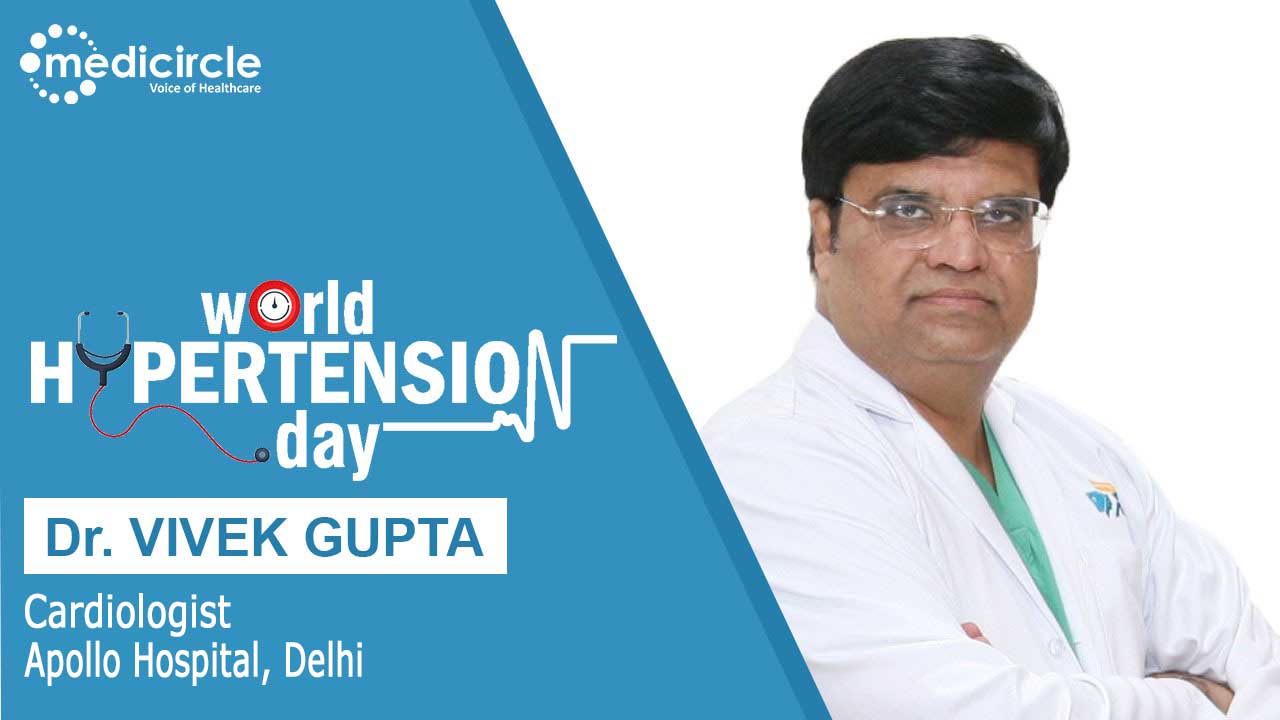
 Dr. Vivek Gupta shares his expertise in a healthy diet and monitoring blood pressure is important for this pandemic. He informs hypertensive patients to take their medications regularly





Hypertension is a condition in which blood pressure in the arteries is persistently elevated. High BP is also a major risk factor for stroke, heart diseases. Lifestyle changes and medications can lower blood pressure and the risk of health conditions. At Medicircle, we are presenting World Hypertension Day Awareness Series wherein we are featuring eminent Cardiologists to create awareness amongst the general population about their preventive action.
Dr.Vivek Gupta is a cardiologist in Delhi. He has 27 years of experience in the field of cardiology. Hee currently works as a Senior Interventional Cardiologist at Indraprastha Apollo Hospitals in New Delhi since 1998 where he has carried out clinical and invasive work for Coronary Balloon Angiography Stenting and pacemakers. He worked in France in association with Dr.Alan. He has extensively worked on COVID diseases and organized 19 webinars with one of the participants with an American European Cardiologist. He is frequently invited on TV channels for COVID talks. As a COVID expert, he is widely socially known among the popular circle of bureaucrats and ministers likewise in India. He is also actively associated with International NGOs as a Founder President of an NGO named International Heart and Healthcare Foundation. Dr.Vivek Gupta is also Founder and Chairman of the International Cardiology Teaching course i.e European Course on Revascularization which is organized in London, Paris, Amsterdam, and Switzerland
Causes of Hypertension
Dr. Vivek Gupta says, “High Blood Pressure is a very common disease affecting 1 billion population out of 6.5 billion. The normal level of blood pressure is 120/80 mm of hg as mentioned by the American Heart Association (AHA) and the European Society of Cardiology. Also, 140/90 mm of hg is considered ad the cut-off value for normal blood pressure. Secondary hypertension is quite uncommon. The common causes of hypertension are as follows:
Genetic Lifestyle Smoking Alcohol consumption Obesity Mental stress Hormonal changes Blockage of artery
A healthy diet is important for hypertensive patients
Dr. Vivek Gupta informs, “Diet does not make any major difference. A healthy diet is important and you should include the following in your diet :
Vegetarian food Less of carbohydrates More of protein Fruits and vegetable Avoid junk food Avoid fats Eat at the right time Salt reduction It is important to focus on the quality of food.
Antihypertensive medicines have no major side effects and must be taken regularly
Dr. Vivek Gupta informs, “ Blood pressure medications have minor side effects. The basic psychology of the hypertensive patient is to avoid BP medicines. Their major concern is lifelong medicines. Let me tell you honestly if somebody is suffering from hypertension, they need to regulate their blood pressure all the time.
So there are various types of antihypertensive medicines
Calcium channel blockers Beta-blockers ACE inhibitors Angiotensin Receptor Blocker
Most of them do not have major side effects and this is very important to know. The patient taking blood pressure medications should know that there are no side effects and must take their medicines regularly. Some calcium channel blockers might have side effects like pedal edema which is swelling of the lower feet. There is no need to panic as blood pressure medications have no side effects. If the patients feel and think that blood pressure medications have side effects, they might stop taking them.
Blood pressure awareness is very important among the patients
Dr. Vivek Gupta states, “It is very important to control blood pressure. Out of 1 billion population suffering from it, 50 % are left undiagnosed. The real reason behind this is that hypertension is a silent killer. 90 % of patients will not have headaches so they will not know about any symptoms of hypertension. It is important to educate people this World Hypertension Day to let them know to check their blood pressure at least once in six months. When you clinically encounter your physician especially during pregnancy or routine check-ups, it is important to check your blood pressure. So blood pressure awareness is very important.”
Complications of Uncontrolled Hypertension
Dr. Vivek Gupta emphasizes, “Hypertension is a silent killer. The reason behind silent killers is any patient who has a prolonged history of blood pressure has a higher chance of stroke. Stroke means blockage of arteries or hemorrhage of vessels supplying the brain. It can paralyze the patient for the entire life. Paralysis is a disabling condition. The chance of stroke is increased if you have uncontrolled blood pressure. Hypertension can lead to :
Atherosclerosis Angina Kidney disease Vision loss
These 4 things are very important if you have uncontrolled hypertension.”
Controlling hypertension is important this COVID
Dr. Vivek Gupta says, “COVID has been a disaster to the entire world. We had the first case which was in Kerela. This year in Jan 2021, there were lesser incidences of COVID cases. Suddenly after the Holi festival, the second wave of COVID arrived. This wave is causing more death due to the coronavirus which is more virulent and contagious. Controlling hypertension and diabetes is very important in this COVID. Keep checking your blood pressure and sugar levels irrespective of your diet and medicines.”
(Edited by Dr.Rati Parwani)





.jpeg)










.jpg)
.jpg)
.jpg)
.jpg)
.jpg)
.jpg)


.jpg)