 Thursday, October 08, 2026
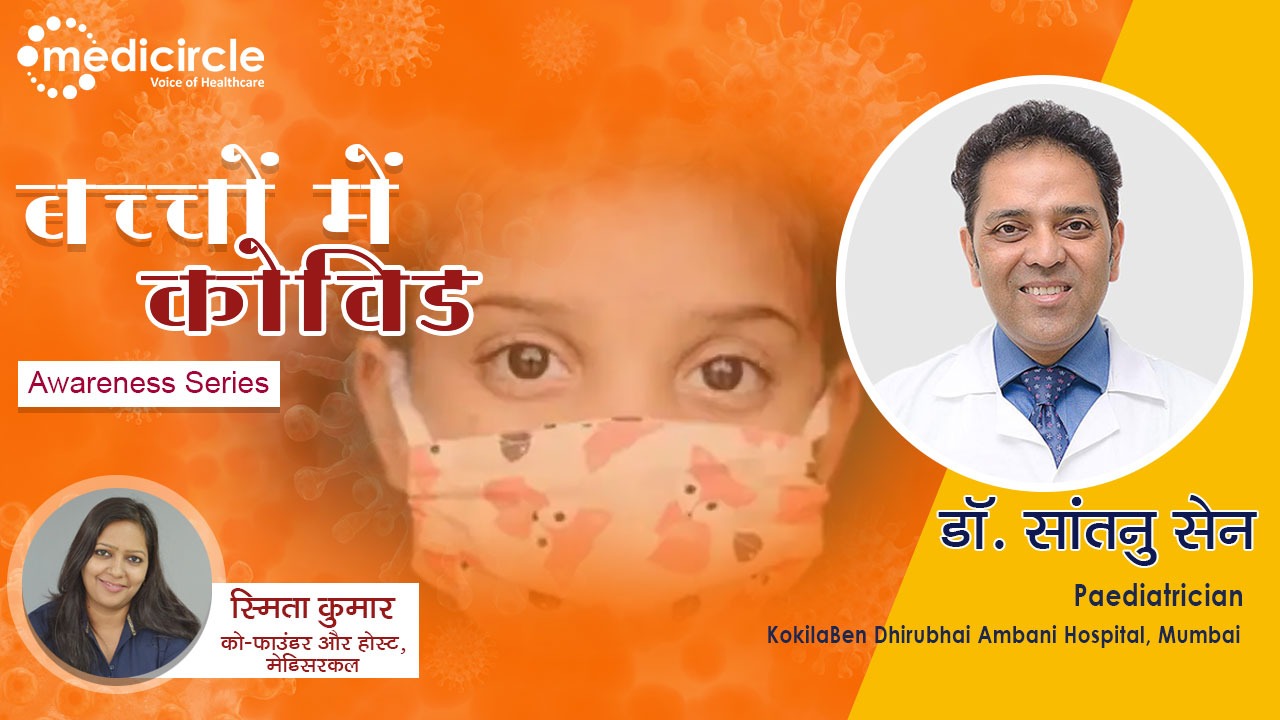
 Dr. Santanu Sen with his valuable clinical expertise states the importance of isolating the COVID positive child with the mother. His kind humanity towards kids and suggestion that kids should not be isolated alone is truly incredible.





Lesser cases of Covid were detected in the children last year, however, this is not the case today. In the second wave of COVID-19, many children have tested positive for the infection. As innocent minds are unaware of the seriousness of the situation, their guardians must be more conscious and aware of the details regarding COVID in children. At Medicircle we are presenting a series of “COVID in children” where we aim to raise awareness about the impact of COVID-19 in children.
Dr. Santanu Sen is an experienced Stem Cell Transplanter and the only internationally accredited BMT unit inspector in India. He started his career in Pediatric Hematology and Oncology in the UK and after working there for 12 years, he set up a similar service at Kokilaben Hospital which is now acknowledged to be one of the best in the region. A teacher and examiner for the Royal College of Pediatrics, UK, he has numerous publications and has been an invited faculty to various International and National conferences. He has been chosen as one of the “Top Doctors in Mumbai” in 2019 & 2020 who consistently strives to provide cure and best possible care to his patients. He has 30 years and above experience in practice.
COVID in children during the second wave of pandemic
Dr. Santanu Sen says, “Last year, there was no impact of COVID in children. Any child having COVID symptoms experienced mild symptoms last year. But, this year the picture is very different. There are many cases of COVID in children which are spreading very rapidly. We expected the COVID symptoms to be mild in children but that is not the case this year. There is a cause of concern of severe cases of COVIDin children.”
COVID measures must be followed with children
Dr. Santanu Sen informs, “Children learn from their parents by observing them and tend to copy them. Maintaining appropriate COVID measures such as wearing a mask on stepping out of the house, regularly sanitizing hands, physical and social distancing should be maintained. Following these measures by kids can be difficult. The nature of kids is very friendly where they like to play. Parents find it very difficult for the kids to explain and make them follow COVID measures. Kids above 10 years and above are very clever to understand these COVID measures. Kids in the age group of 5 - 10 years of age can be explained about COVID measures. Teaching such kids in form of an act makes it easier for kids as well as parents. Below 5 years of age, it becomes difficult to explain to them about COVID measures.
My message to every parent is to explain to your child about COVID safety measures and do it on behalf of the children. Keep them safe by wearing masks and sanitizing hands. Also, make sure that children stay at home. We have to keep them isolated at home during this pandemic. "
Isolating COVID positive child alone is not right
Dr. Sen states, “Isolating the child alone is not right. Children like to stay with their mothers generally. So isolating a child with a mother is a better option if the kid is COVID positive. It is very important to protect other family members as well. Parents should also isolate them. Leaving a child alone at home for isolation is cruel and kids won't be able to handle it. The best friend of the child is the mother and let the mother be with the child.”
COVID positive case in thalassemia child
Dr. Sen explains, “After a BMT transplant in a child, the patient experienced symptoms of cold and cough and was tested COVID positive. It was important to isolate that child in the hospital to protect her as well as continue treatment. For children who are COVID positive and under any other form of treatment, it becomes necessary to treat for COVID symptoms. Patients with thalassemia are also finding it difficult to get blood donors for this pandemic. Thalassemia patients are more prone to COVID infection. Multi-System Inflammatory Disease (MSID) seen in children is a serious and strange illness post COVID. The child might suffer from a sudden inflammatory response leading to MSID which is very important to treat this pandemic.”
Guidelines for treatment
Dr. Sen states, “ICMR and AIMS doctors are working on guidelines. Following treatment according to guidelines mentioned by ICMR is very important. It is important to know about new cases to treat them well.”
The third wave of coronavirus needs to be taken care
Dr. Sen informs, “It is very tough as we are right in the middle of the second wave which is very dangerous. We are predicting a third wave in October- November which might attack children. We cannot lower our guard. We have to move forward and fight the third wave by protecting ourselves against viruses regularly. Towards the next wave, we will have a better understanding to treat this coronavirus in terms of medications. Each and every time, we see a new variant of coronavirus coming through, there are different sets of symptoms. This results in a change of knowledge and treatment as well. Younger people are more affected with coronavirus infection in the second wave. Vaccinations should be given at a younger age and we have to vaccinate our children. All our populating needs to be vaccinated as soon as well and this is very important. ”
(Edited by Dr. Rati Parwani)
Contributed By: Dr.Santanu Sen, Pediatric Hematologist and Oncologist





.jpeg)










.jpg)
.jpg)
.jpg)
.jpg)
.jpg)
.jpg)


.jpg)