 Wednesday, October 28, 2026
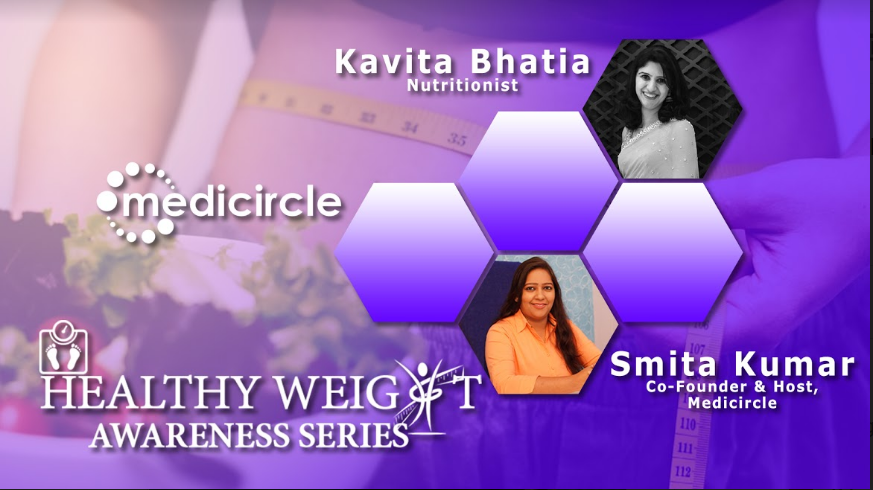
 Traditional Indian food is One of the Most Balanced Diets to Lose Weight points out Kavita Bhatia, Clinical Dietitian.




Health and fitness have always been a priority, but for the past few months, it made us understand that it is very valuable and we need to take care of it and understand things from the experts and not from search engines. Maintaining a healthy weight is important for overall health and can help you prevent and control many diseases. It helps you feel good about yourself and gives you more energy to enjoy life. Medicircle has come up with a healthy weight awareness series to present guidance and advice from experts and bring forward correct and relevant information directly from them.
Kavita Bhatia is a qualified clinical dietitian and a member of the Indian Dietetics Association with more than 14 years of experience offering dietary advice in hospitals and the healthcare industry. She has also undergone training for prescribing Ketogenic diet therapy under the guidance of Dr. J. Nathan. During this tenure, she has achieved a diploma in Hospital and Healthcare Administration and also in Clinical Research. She designs care plans to meet nutritional requirements and correct poor nutritional status to help people develop healthier diets and lifestyles.
Weight is Not the Only Parameter for Health
Kavita emphasizes, “Weight plays a very important role. But it is not the only criteria of health. Being healthy does not imply that being lean is good than being overweight. It’s not as if you are looking chubby, that means you are unhealthy. Maybe a person is lean but the lifestyle is not good. The food habits are erratic, the sleeping pattern might not be good. They might have disturbed sleep and things like that. While on the other hand if someone is looking chubby might be healthy from within and maybe having a good food choice or good habits like no drinking, smoking or anything like that and might be a healthier person than a leaner person. So, it is not just weight, we look at the height, waist circumference, waist to hip ratio, lifestyle, good food choices, etc. to assess overall health and whether he/she is prone to diseases like cardiac diseases or diabetes, etc. Choosing a good portion size and having the right kind of food would not only lead to weight loss but would lead to fat loss, inch loss etc. which can’t be seen on the weighing scale but is important too,” says Kavita.
Give Your Body Time
Kavita recommends giving your body time. “People get very obsessed about resolutions and goals and keep stepping on the weighing scale every day. You have to give up on that. It has taken you decades to be to where you are today and then suddenly one fine day you are deciding you want to have a healthy weight and go back to where you were decades ago very quickly. That’s not possible. Give your body some time, take one small step at a time and that will help you get good results,” she says.
Don’t Run After Fancy Food and Control Portion Size
Kavita advises, “Don't go for very fancy things around. Go to the basic traditional Indian food that we have. When you look at our plate, it is so balanced with rice, chapati, dal, vegetables, salad, and curd. It’s a complete meal. So traditional Indian diet is the best diet when you want to lose weight. Keep it simple, go for something that you understand. And something which you can sustain for a longer period of time. So, keep eating the food that you've been eating right since childhood, the one that you have been born and brought up with. Remember the portion size should be right. We can have all kinds of fruits and foods in the right portions instead of gulping big portions. Anything in moderation is good. It's very easy for a person to indulge in unhealthy food practices because it is very easy and hassle-free to opt for something that is junk and right out of food packets. It's very convenient. But the practice of choosing healthier food options will not only give you good health for now but for the long term. Keep it simple, keep it local,” says Kavita.
Keep Yourself hydrated
Kavita points out, “We tend to ignore the fact but it is very important to stay hydrated. The best way to understand whether you are well hydrated or not is from the color of your urine. If you are well hydrated, the color of the urine will be colorless. But if the color of your urine is very dark, that means you need to have more water than what you are having.”
Make a Healthy Plate
Kavita mentions, “fill your plate with groups of salads, sprouts, veggies, more of roughage, pulses, protein and nuts rather than just having roti subzi. If you bring small changes in diet and lifestyle and work on short-tem goals rather than planning to work on annual resolutions, you will be able to achieve healthy weight and good health.”
Go to Experts Not to the Search Engines
Kavita emphasizes, “Technology has its own pros and cons. We have a lot of information available online, but some of them will be inappropriate or some of them will be partly correct. You won’t get 100% of what is required or what is right for you. Ensure you go to a qualified person. Check the qualification of the person so that when you have a concern, you go to the right person, to the right resource for information. Every individual will have different requirements for e.g., a person with diabetes can get hundreds of ways to treat diabetes on google but that person might be having other issues as well like he maybe suffering from adrenal issue, cardiac issue, thyroid issue, etc. A qualified person will take care of all the things together and come up with a customized meal plan for you rather than doing just a basic thing. And there is nothing like what works for me will work for you as every individual is different. Every individual's needs are different. So, it cannot be a thumb rule that this will work for all. So please go for the personalized health plan to authorized personnel,” suggests Kavita.
You may get in touch with Kavita at:
Mob: 9869123736
(Edited by Amrita Priya)




-23-300x250.png)

.jpeg)








.jpg)
.jpg)
.jpg)
.jpg)
.jpg)
.jpg)
.jpg)
.jpg)
.jpg)

