 Thursday, October 08, 2026
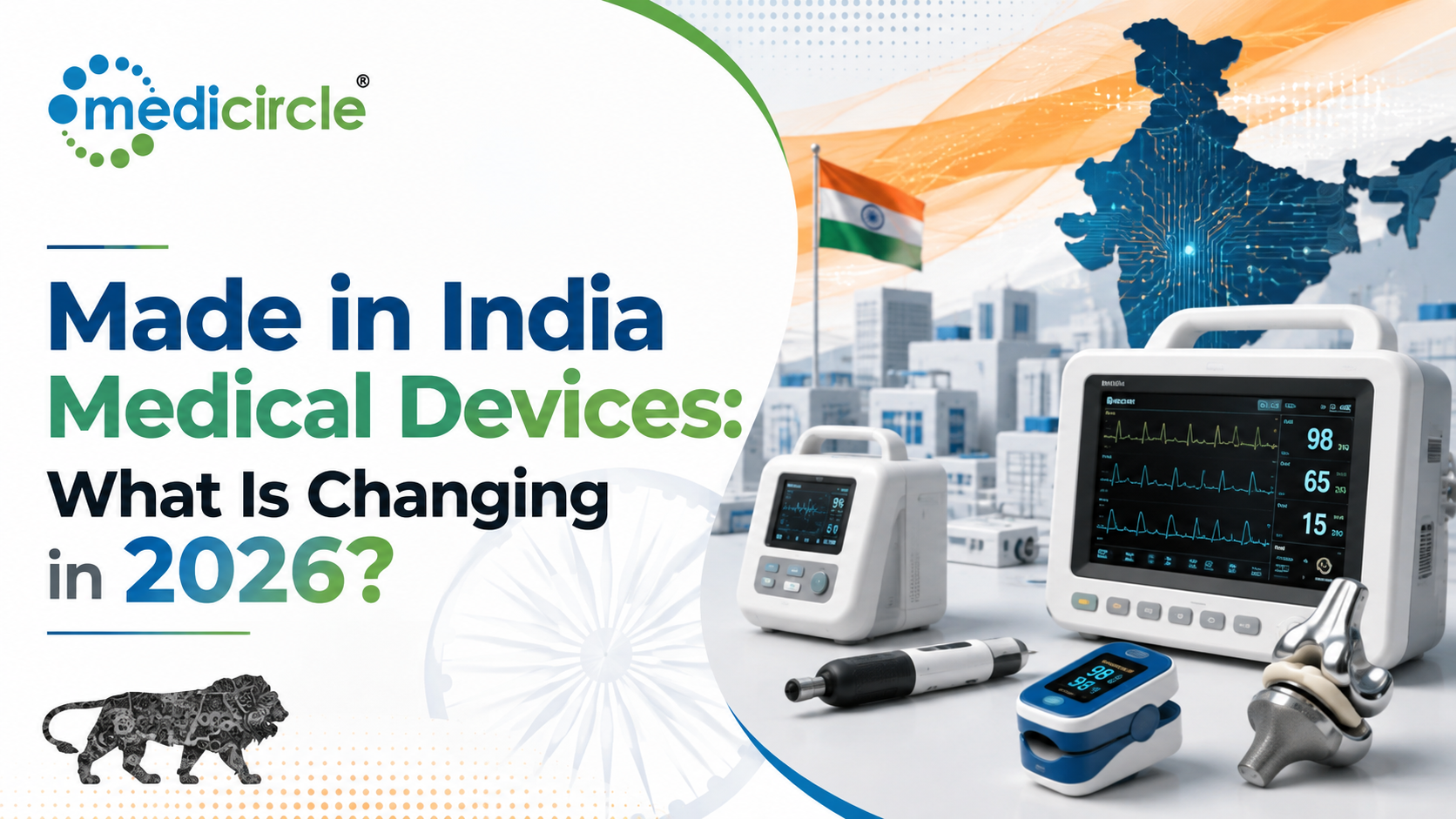
 India's medical devices sector is transforming in 2026 through PLI-driven manufacturing, CDSCO regulatory modernisation, AI integration, and strategic export ambitions under the Viksit Bharat vision.





Introduction
India's medical devices sector has reached a defining moment in 2026. For decades, the country depended heavily on imported equipment for everything from diagnostic imaging to cardiac stents, leaving hospitals and patients at the mercy of global supply chains and foreign pricing. That picture is now beginning to change in a meaningful and measurable way.
India's medical devices market is valued at approximately 16 billion US dollars, while the global market exceeds 600 billion US dollars, a gap that makes the opportunity for domestic manufacturers both enormous and urgent. Policymakers, regulators, and industry leaders are no longer simply talking about import substitution. They are building an ecosystem that is designed to manufacture, innovate, and export at scale.
The shift is visible across multiple dimensions: government policy, regulatory reform, technology integration, infrastructure development, and the emergence of Indian startups building devices that were previously considered beyond domestic capability. For healthcare professionals, hospital administrators, patients, and investors, understanding what is changing in 2026 is not just useful. It is essential.
Understanding the Landscape: Where India's MedTech Sector Stands Today
India's medical devices industry has historically been an assembly-led and import-dependent sector. The Drug Controller General of India, Dr. Rajiv Singh Raghuvanshi, has acknowledged that India's medical devices sector is undergoing a fundamental transition from an import-based market to a domestic manufacturing-based ecosystem. This transition is being driven by a combination of policy incentives, regulatory modernisation, and genuine industrial ambition.
The scale of the challenge remains significant. Import dependence continues to be high, particularly for high-technology segments such as diagnostic imaging equipment, oncology devices, implants, and critical care systems. However, the direction of travel is now unmistakable.
The Department of Pharmaceuticals Secretary, Manoj Joshi, has stated that in the last five to seven years, a lot of imports have shifted to assembly within the country, and the government is now pushing for deeper domestic value addition rather than just assembly operations. The target being discussed at the policy level is achieving 40 to 45 percent domestic value addition in medical devices, a significant upward shift from where the sector currently stands.
The PLI Scheme: Turning Policy into Production
The Production Linked Incentive (PLI) Scheme for medical devices has been the centrepiece of India's manufacturing push, and 2026 is its most consequential year yet in terms of real on-ground output.
India's PLI Scheme for Medical Devices has attracted actual investments of Rs. 1,153.07 crore, with 27 projects approved under the scheme, including 14 MSMEs. The approved projects have commenced domestic manufacturing of high-end medical technologies, including MRI and CT equipment, linear accelerators (LINACs), mammography systems, C-arms, ultrasound equipment, heart valves, stents, and dialysis products.
The PLI Scheme carries a budgetary outlay of Rs. 3,420 crore and is supporting domestic manufacturing across key product segments, encouraging investment and enhancing India's global competitiveness.
What makes 2026 particularly significant is that approved projects are no longer at the planning or construction stage. Manufacturing lines are operational, and products are moving from Indian facilities into Indian hospitals and, increasingly, into export markets. The inclusion of 14 MSMEs in the approved projects list is also an important signal. It indicates that the transformation of India's MedTech sector is not limited to large corporations. Smaller manufacturers are building capability in specialised segments, which strengthens the depth of the domestic supply chain.
Three dedicated Medical Device Parks are being developed in Greater Noida in Uttar Pradesh, Ujjain in Madhya Pradesh, and Kanchipuram in Tamil Nadu, each receiving a central grant of Rs. 100 crore for shared infrastructure and testing facilities. These parks are designed to reduce manufacturing costs and make it easier for smaller companies to participate in the sector.
Regulatory Modernisation: A Clearer, Faster Framework
One of the most significant changes in 2026 is the transformation of India's regulatory environment for medical devices, particularly for software-based and AI-driven technologies.
In October 2025, CDSCO released a draft Guidance Document on Medical Device Software, the most comprehensive regulatory clarification India has issued for software-based devices. It establishes a clear distinction between two categories: SiMD (Software in a Medical Device), which is software embedded in and inseparable from a physical device, and SaMD (Software as a Medical Device), which is standalone software performing a medical function independently, including diagnostic apps, AI-based imaging tools, remote patient monitoring platforms, and clinical decision support systems.
CDSCO finalised this guidance on July 23, 2026. The guidance introduces new expectations for technical documentation, usability validation for Indian clinical workflows, risk management for cybersecurity and AI bias, and the mandatory Software Bill of Materials (SBOM).
This is a landmark development for India's digital health industry. For the first time, companies building AI-powered diagnostic tools, cloud-based clinical platforms, and mobile health applications have a structured regulatory pathway that tells them exactly what is required for market approval in India. The clarity this provides reduces the time and uncertainty that previously discouraged investment in software-driven medical technologies.
The DCGI has also stressed the need to strengthen indigenous capabilities in high-end Class C and Class D medical devices and in vitro diagnostics, while ensuring prompt, transparent, and predictive regulatory approvals. The emphasis on regulatory predictability is a direct response to feedback from manufacturers who have cited opaque timelines as a barrier to investment.
Innovation at the Device Level: Indian Companies Building What Was Previously Imported
Beyond policy and regulation, 2026 is seeing Indian companies and startups build devices that were once considered exclusively in the domain of global multinationals.
VoxelGrids, a Bengaluru-based startup backed by Zoho, has announced a homegrown, helium-free MRI scanner, marking a potentially transformative shift in India's medical devices journey. A domestic MRI scanner matters enormously for India because MRI availability remains critically low outside major metropolitan hospitals. Most MRI systems in Indian hospitals today are imported, expensive to procure, and costly to maintain. A domestically developed, helium-free alternative could significantly change the economics of diagnostic imaging, particularly for Tier 2 and Tier 3 cities.
Key areas where Indian manufacturers are now active include:
- Cardiac stents and heart valves developed and produced by Indian companies under the PLI programme
- CT scanners and ultrasound equipment assembled and increasingly designed in India by global companies with significant local content
- Dialysis machines being manufactured domestically for the first time at meaningful scale
- AI-based radiology tools built by Indian healthtech startups seeking CDSCO approval under the new SaMD framework
Under the PLI scheme, projects approved by the government include Philips Global Business Services for MRI coils; Meril Healthcare, Envision Scientific, and Bio India Interventional Technologies for manufacturing implantable electronics; and Allied Medical, Deck Mount Electronics, and Microtek New Technologies for anaesthetic and cardiorespiratory medical devices.
AI and Software as a Medical Device: India's Emerging Opportunity
The emergence of AI in medical imaging, diagnostics, patient monitoring, and clinical decision support is creating a new category of medical device innovation in India, and 2026 is the year the regulatory framework has finally caught up with the technology.
Software as a Medical Device refers to software that performs a medical function on its own, without being part of a physical medical device. It covers the software used for diagnosing, monitoring, preventing, or treating diseases, and operates through mobile applications, web-based, or cloud-based systems. Typical examples include AI-driven diagnostic systems, radiology image processing applications, patient monitoring applications, and clinical decision support systems.
For Indian healthtech companies, this regulatory clarity is a significant enabler. A risk-based classification system from Class A to Class D now defines the compliance requirements for different types of software. Lower-risk tools face lighter regulatory burdens, while high-stakes diagnostic software requires deeper validation, cybersecurity certification, and lifecycle management documentation.
A dedicated session at the India Medical Device 2026 conference focused on the use of AI in healthcare and the emergence of India as a SaMD powerhouse, reflecting the seriousness with which policymakers and industry leaders are treating this opportunity. India's combination of engineering talent, large patient datasets, and a growing digital health infrastructure positions the country to become a significant exporter of AI-based medical software tools to global markets.
Export Ambitions and the Path to a Global MedTech Hub
The most strategic shift in 2026 is the reframing of India's MedTech ambitions from inward-looking import substitution to outward-looking global competitiveness.
At the India Medical Device 2026 conference, policymakers, regulators, and industry leaders placed export competitiveness, deeper domestic value addition, and innovation at the centre of India's medical device manufacturing agenda.
Department of Pharmaceuticals Secretary Manoj Joshi emphasised that India must move beyond the import substitution approach and build an export-oriented industry that serves global markets.
India's manufacturing advantages in cost efficiency, skilled labour, and a growing quality infrastructure make this ambition credible. The challenge lies in moving from assembly to full-value manufacturing, which requires investment in component production, raw materials sourcing, and testing infrastructure. The government is actively working to address this by encouraging localisation of components, which are currently still largely imported even when the final device is assembled in India.
What This Means for Indian Hospitals, Doctors, and Patients
For the Indian healthcare ecosystem, the transformation of the domestic medical devices industry carries direct and meaningful consequences.
Affordability is the most immediate benefit. When critical devices such as stents, dialysis equipment, and diagnostic tools are manufactured in India, the cost structure changes. Hospitals in smaller cities that could not afford imported equipment at imported prices can access domestically produced alternatives. For patients, this can mean the difference between receiving timely diagnostic care and going without it.
Quality assurance is equally important, and 2026 brings significant progress on this front. The new CDSCO regulatory frameworks, BIS certification requirements, and the emphasis on testing infrastructure within Medical Device Parks all contribute to a more rigorous quality ecosystem. A Made in India device in 2026 carries a much stronger quality signal than it did five years ago.
For doctors and healthcare professionals, the domestication of medical technology also means stronger service and maintenance support. Imported equipment has historically been expensive to service in India, with long waiting times for spare parts and limited local technical expertise. As manufacturing moves onshore, service and maintenance ecosystems are developing alongside it.
Conclusion
India's medical devices story in 2026 is one of genuine and accelerating progress. The combination of PLI-driven manufacturing investment, regulatory modernisation under CDSCO, the arrival of AI-powered devices under a clear SaMD framework, the development of Medical Device Parks, and the strategic ambition to build an export-oriented industry represents a coherent and credible transformation.
The country is moving from a buyer of the world's medical technology to a builder of it. This shift carries significant implications for healthcare access, patient affordability, clinical quality, and India's position in the global health economy. Platforms like Medicircle remain committed to bringing these developments to the attention of healthcare professionals, hospital leaders, and the wider public, because understanding this transformation is the first step toward benefiting from it.
Frequently Asked Questions
Q1: What is the current value of India's medical devices market in 2026?
India's medical devices market is valued at approximately 16 billion US dollars in 2026, compared to a global market of over 600 billion US dollars, highlighting the significant growth opportunity available to domestic manufacturers.
Q2: What is the PLI Scheme for medical devices and how is it performing?
The Production Linked Incentive Scheme for medical devices carries a budgetary outlay of Rs. 3,420 crore and offers a 5 percent incentive on incremental sales of domestically manufactured devices. As of July 2026, it has attracted Rs. 1,153.07 crore in actual investment, with 27 projects approved, including 14 MSMEs. Manufacturing has begun for products such as MRI equipment, CT scanners, heart valves, stents, and dialysis machines.
Q3: What is SaMD and why does it matter for India's healthcare industry?
SaMD stands for Software as a Medical Device. It refers to standalone software that performs a medical function such as diagnosis, monitoring, or treatment support, without being part of a physical device. In 2026, CDSCO finalised comprehensive guidance for SaMD regulation in India, creating a clear compliance pathway for AI-driven diagnostic tools, remote patient monitoring apps, and clinical decision support systems.
Q4: What are the Medical Device Parks being developed in India?
Three Medical Device Parks are being developed in Greater Noida in Uttar Pradesh, Ujjain in Madhya Pradesh, and Kanchipuram in Tamil Nadu. Each park receives a central grant of Rs. 100 crore for shared infrastructure, testing facilities, and manufacturing support. These parks are designed to reduce costs and improve competitiveness for domestic manufacturers, particularly MSMEs.
Q5: How will the growth of Indian medical device manufacturing benefit patients?
Domestic manufacturing of medical devices reduces dependence on costly imports, which can lower the price of critical equipment such as stents, dialysis machines, and diagnostic tools. This makes quality healthcare more accessible, particularly in Tier 2 and Tier 3 cities. Stronger local service and maintenance ecosystems also ensure that medical equipment performs reliably over time.
Resources
- Department of Pharmaceuticals, Ministry of Chemicals and Fertilizers, Government of India: Official source for PLI Scheme updates, Medical Device Park progress, and India Medical Device 2026 conference proceedings
- Central Drugs Standard Control Organisation (CDSCO): Regulatory authority for medical devices in India, including the finalised Medical Device Software guidance released in July 2026
- FICCI Medical Devices Committee: Industry body co-organising the India Medical Device conference series and publishing sector position papers
- NITI Aayog - Policy think tank providing strategic direction on healthcare manufacturing under Viksit Bharat 2047
- Bureau of Indian Standards (BIS): Governing body for IS certification of medical devices under the Omnibus Technical Regulation, with BIS Scheme X compliance deadline set for September 2026
Interlinking Keywords
PLI scheme medical devices India, CDSCO SaMD regulation 2026, Made in India MedTech, Atmanirbhar Bharat healthcare, medical device manufacturing parks India, AI in Indian healthcare, Software as a Medical Device India, India medical device exports, DCGI medical device approval, Viksit Bharat medical devices
Last Medically Reviewed by:
Medicircle Medical Editorial Board on August 27, 2026
Disclaimer
The information provided in this article is intended for general awareness and educational purposes only. It does not constitute medical, regulatory, legal, or investment advice. Readers are advised to consult qualified healthcare professionals, regulatory experts, or legal advisors before making clinical, business, or compliance decisions related to medical devices. Medicircle does not endorse any specific company, product, or government scheme mentioned in this article.






.jpeg)








.jpg)
.jpg)
.jpg)
.jpg)
.jpg)
.jpg)


.jpg)
.jpg)
.jpg)