Friday, October 23, 2026
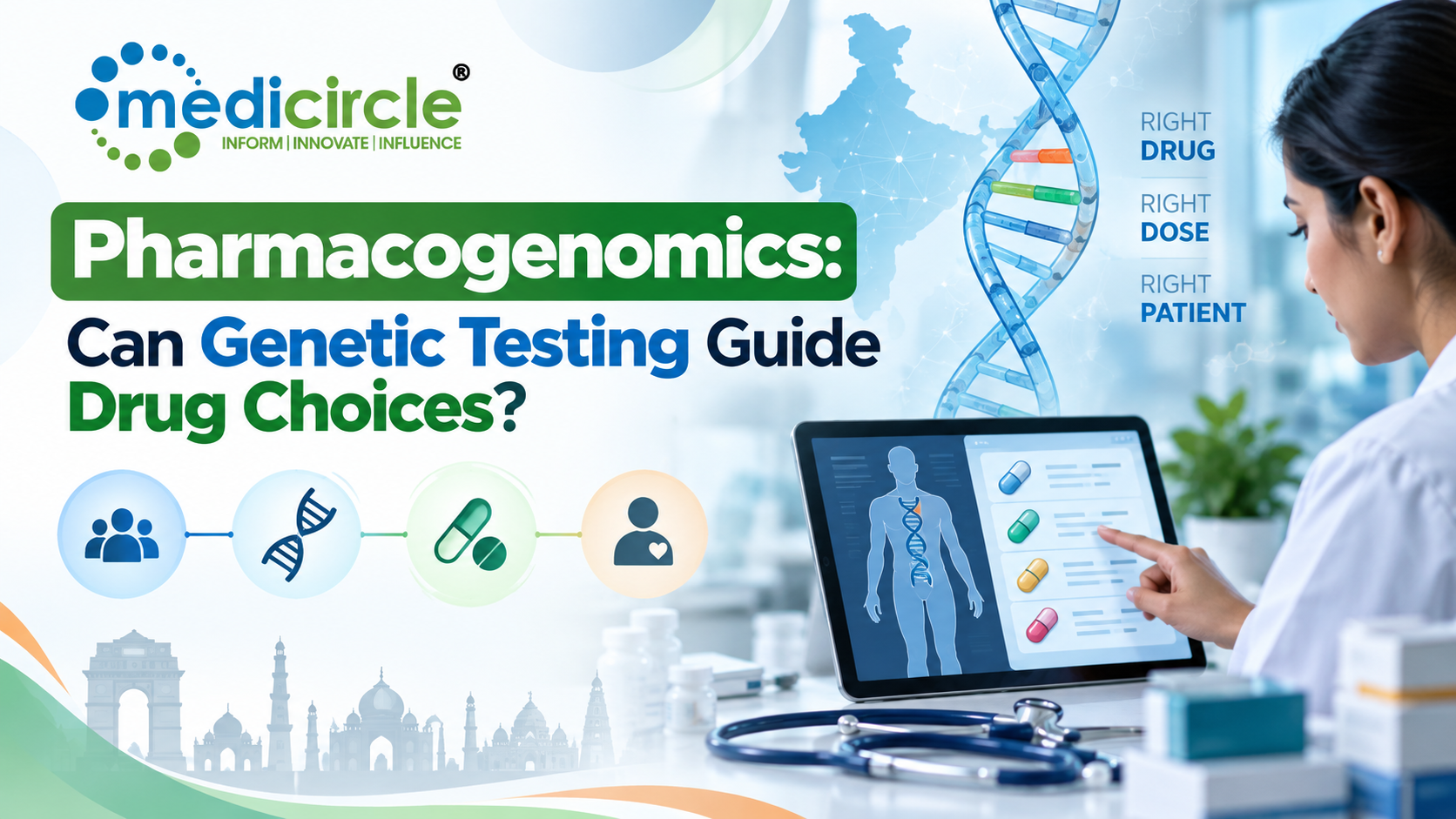
 Pharmacogenomics uses genetic data to help doctors prescribe safer, more effective drugs. This article examines its clinical relevance, Indian context, and future potential.





Introduction
Every person who has ever taken a prescription medication has experienced one of medicine's most persistent uncertainties. The doctor writes the prescription, the pharmacist dispenses the drug, and yet the outcome remains, to some degree, unknown. Will this medication work? Will it cause side effects? How long will it take before the patient feels better? For decades, these questions were answered largely by clinical experience, trial and error, and population-level statistics.
Pharmacogenomics offers a different path. It is the science of understanding how a person's genetic makeup determines the way their body processes, responds to, and tolerates specific drugs. By analyzing certain genes before prescribing a medication, doctors can move closer to a personalized prescription rather than a standardized one. For India, a country carrying one of the world's largest burdens of chronic disease alongside a massive and diverse genetic population, this field holds genuine promise.
Understanding Pharmacogenomics: The Science Behind the Prescription
The human body metabolizes drugs through a complex series of biological processes. Enzymes break down medications, transport proteins carry them through cells, and receptor proteins determine how the body responds at the cellular level. All of these processes are controlled, at least in part, by genes. When there are variations in those genes, known as polymorphisms, the biological behavior of a drug can change significantly from one person to the next.
Pharmacogenomics maps these genetic variations and connects them to drug outcomes. The most well-studied family of genes in this context is the cytochrome P450 (CYP) enzyme family, which is responsible for metabolizing the majority of drugs in clinical use today. Variants in genes like CYP2D6, CYP2C19, and CYP2C9 can classify a patient into categories such as:
- Poor metabolizers, who break down a drug very slowly, causing it to accumulate and potentially reach toxic levels
- Rapid or ultra-rapid metabolizers, who process a drug so quickly that standard doses become ineffective
- Normal or intermediate metabolizers, who respond in line with typical clinical expectations
Understanding where a patient falls on this spectrum before prescribing can meaningfully change the doctor's approach to treatment.
Why This Matters: The Problem with One-Size-Fits-All Prescribing
The conventional approach to drug prescribing relies heavily on population averages. Clinical trials determine dosages that work well for most people in a study group, and those dosages become the standard. The fundamental limitation is that individuals are not averages. Genetics, age, body weight, organ function, and co-existing conditions all influence how a drug behaves inside a specific person's body.
Adverse drug reactions (ADRs) represent one of the most significant and underappreciated patient safety concerns globally. According to the World Health Organization, ADRs are among the leading causes of hospitalization and mortality worldwide. In India, where polypharmacy is common, particularly among elderly patients managing multiple chronic conditions, the risk is compounded. A 2019 study published in a peer-reviewed Indian pharmacology journal found that a substantial proportion of ADR-related hospital admissions could be linked to predictable, genetically influenced drug-metabolism problems.
The reality is that a significant number of adverse drug reactions are not random or unpredictable. They are, in many cases, genetically foreseeable. Pharmacogenomics exists precisely to convert that foreseeable risk into actionable clinical information.
Key Clinical Areas Where Pharmacogenomics Is Already Making a Difference
Pharmacogenomics is not a future concept. It is already being applied across several medical specialties with measurable clinical benefit.
Psychiatry and Mental Health Antidepressants and antipsychotic medications are among the drugs most influenced by genetic variation. CYP2D6 and CYP2C19 variants affect how the body processes drugs like fluoxetine, citalopram, escitalopram, and several tricyclic antidepressants. In a country where mental health awareness and psychiatric care are expanding rapidly, particularly post-pandemic, getting the first prescription right matters enormously for patient adherence and outcomes.
Cardiology Clopidogrel, a widely used blood-thinning drug given after heart attacks and stent placements, requires conversion to its active form by the CYP2C19 enzyme. Patients with certain CYP2C19 variants cannot activate the drug effectively, rendering it far less protective against clot formation. In a country where cardiovascular disease is the leading cause of death, this is not a minor pharmacological footnote. It has direct implications for patient survival.
Oncology Cancer pharmacogenomics is one of the most advanced areas of personalized medicine. Biomarker testing before initiating chemotherapy is already standard practice for several cancer types. Variants in genes like DPYD affect the safe use of fluorouracil-based chemotherapy, while TPMT variants influence thiopurine toxicity in leukemia treatment.
Pain Management Codeine is converted to its active form, morphine, by CYP2D6. Ultra-rapid metabolizers can experience dangerous morphine accumulation from standard codeine doses, while poor metabolizers receive little to no pain relief. This genetic reality has led many international guidelines to recommend pharmacogenomic screening before codeine prescription, particularly in pediatric populations.
The Indian Context: Genetic Diversity and Pharmacogenomic Relevance
India's genetic landscape is extraordinarily diverse. The subcontinent is home to thousands of endogamous communities with distinct ancestral lineages, and research has consistently shown that the frequency of pharmacogenomically relevant gene variants differs significantly across Indian populations compared to European, East Asian, or African populations.
A 2020 review published in Pharmacogenomics and Personalized Medicine highlighted that certain CYP variants associated with poor drug metabolism are found at different frequencies in South Asian populations. This means that Western-derived prescribing guidelines, which are largely based on data from European populations, may not translate directly and reliably to Indian patients.
The Indian Council of Medical Research (ICMR) has recognized the need for India-specific pharmacogenomic data. Efforts are underway to map genetic variation across Indian populations through initiatives aligned with the IndiGen program, which sequenced the whole genomes of over 1,000 individuals across India to establish a reference dataset for Indian genetics.
How Pharmacogenomic Testing Is Done
The testing process is simpler than many patients expect. In most cases, it requires only:
- A saliva swab collected at the clinic or sent by mail
- A blood sample in some settings
- Laboratory analysis of specific gene variants relevant to the drugs being prescribed
Results are typically returned within a few days to a couple of weeks, depending on the testing panel and laboratory. The report translates genetic findings into actionable clinical recommendations, specifying which drugs are likely to work well, which should be used with adjusted dosing, and which should be avoided entirely for that patient.
In India, pharmacogenomic testing is available at select genetic diagnostic laboratories and specialized centers in cities including Mumbai, Delhi, Bengaluru, Hyderabad, and Chennai. Costs vary depending on the size of the panel tested, ranging from targeted single-gene tests to comprehensive multi-gene panels covering dozens of drug-gene interactions.
Challenges Facing Pharmacogenomics in India
Despite its clear potential, pharmacogenomics faces meaningful barriers to widespread adoption in the Indian healthcare system.
The first is awareness. A large proportion of physicians in India, particularly in Tier 2 and Tier 3 cities, have limited exposure to pharmacogenomic concepts during their medical training. Integrating this science into routine clinical practice requires education, institutional support, and updated prescribing infrastructure.
The second is cost and access. Comprehensive pharmacogenomic panels can be expensive, and health insurance coverage for these tests remains minimal in India. Affordability is a significant limiting factor for the majority of the population.
The third is the limited availability of India-specific reference data. Most pharmacogenomic databases and clinical guidelines have been developed using data from Western populations. Applying these guidelines to genetically distinct Indian subpopulations without sufficient local data introduces uncertainty.
The fourth is the regulatory and infrastructure gap. Genetic testing in India is governed by guidelines from bodies including the ICMR, but a dedicated regulatory framework specifically for clinical pharmacogenomic testing is still evolving.
The Road Ahead: Pharmacogenomics and the Future of Indian Healthcare
The convergence of falling genomic sequencing costs, India's digital health infrastructure under the Ayushman Bharat Digital Mission (ABDM), and growing awareness of personalized medicine creates a meaningful opportunity. As genomic data becomes integrated into electronic health records and as Indian-specific pharmacogenomic research matures, the clinical utility of this science will expand.
For healthcare providers, pharmacogenomics represents a practical tool to reduce preventable adverse drug reactions, improve treatment outcomes, and practice more evidence-informed, patient-centered medicine. For patients, it offers the possibility of a prescription that is designed with their biology in mind rather than built on population averages.
Platforms like Medicircle play a meaningful role in this transition by bringing credible, expert-led healthcare information to both medical professionals and the public, contributing to the awareness and education that responsible adoption of emerging medical science requires.
Conclusion
Pharmacogenomics is not a distant promise of precision medicine. It is a clinical science with real applications, validated by evidence, and already influencing prescribing decisions in forward-thinking healthcare settings around the world. For India, with its extraordinary genetic diversity, large disease burden, and expanding healthcare infrastructure, the relevance of this field is particularly significant.
The core message is straightforward. Genes influence how drugs work inside the body. Understanding those genetic influences before prescribing can help doctors make better, safer, and more effective treatment decisions. As awareness grows, costs fall, and India-specific research matures, pharmacogenomics has the potential to become a routine part of responsible medical practice in this country.
Frequently Asked Questions
Q1: What is pharmacogenomics and why is it important?
Pharmacogenomics is the study of how individual genetic variations influence a person's response to medications. It is important because it allows doctors to predict which drugs will be safe and effective for a specific patient, reducing trial-and-error prescribing and lowering the risk of adverse drug reactions.
Q2: Is pharmacogenomic testing available in India?
Yes, pharmacogenomic testing is available at select hospitals, genetic diagnostic labs, and specialized centers in major Indian cities including Mumbai, Delhi, Bengaluru, Hyderabad, and Chennai. The availability is growing, though it remains primarily concentrated in Tier 1 cities.
Q3: Which drugs are most affected by a patient's genetics?
Drugs commonly influenced by genetic variation include antidepressants such as fluoxetine and citalopram, blood thinners like warfarin and clopidogrel, certain chemotherapy agents, pain medications like codeine, and several cardiovascular and psychiatric drugs.
Q4: How is a pharmacogenomic test performed?
The test is typically performed using a simple saliva swab or a blood sample. The sample is sent to a laboratory where specific gene variants are analyzed. Results are returned as a report that guides the physician on appropriate drug selection and dosing for that patient.
Q5: Is pharmacogenomic testing covered by health insurance in India?
Currently, pharmacogenomic testing is not widely covered by health insurance policies in India. Most patients access it as an out-of-pocket diagnostic service. Costs have been declining as the technology becomes more accessible, and coverage may expand as adoption grows.
RESOURCES
- Indian Council of Medical Research (ICMR): Guidelines and research publications on genomics and personalized medicine in India
- World Health Organization (WHO): Global data and reports on adverse drug reactions and patient safety
- IndiGen Programme, CSIR-IGIB: India's national genomic reference initiative providing population-level genetic data
- PubMed, National Library of Medicine: Peer-reviewed research on pharmacogenomics, CYP enzyme variants, and clinical applications
- Ayushman Bharat Digital Mission (ABDM): India's national digital health infrastructure and health record integration framework
INTERLINKING KEYWORDS
pharmacogenomics in India, genetic testing for drugs, personalized medicine India, adverse drug reactions, CYP2D6 enzyme variants, precision medicine, drug metabolism genetics, ICMR genomics, IndiGen programme, Ayushman Bharat Digital Mission
Last medically reviewed by:
Editorial and Medical Review Team, Medicircle on 4, September 2026
Medical Disclaimer:
This article is intended for general informational and educational purposes only. It does not constitute medical advice, diagnosis, or treatment. Readers should consult a qualified and licensed medical professional before making any decisions related to genetic testing, medication changes, or healthcare management. Medicircle does not endorse any specific diagnostic test, product, or healthcare provider mentioned in this article.





-23-300x250.png)

.jpeg)
.jpg)
.jpg)
.jpg)
.jpg)
.jpg)
.jpg)
.jpg)
.jpg)
.jpg)