Friday, October 23, 2026
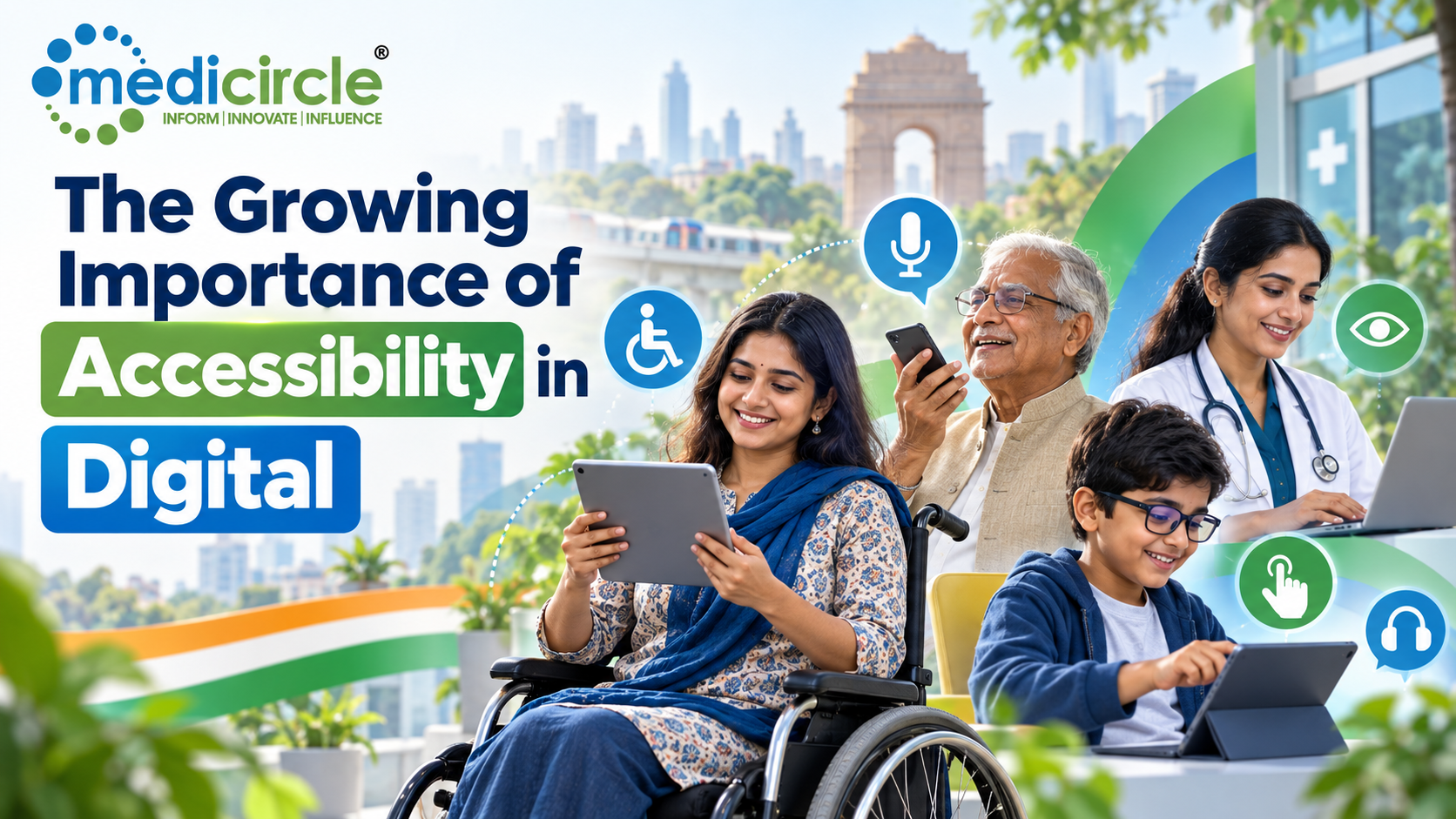
 This reader-friendly article from Medicircle explores the growing importance of accessibility in digital healthcare content, with a focus on practical considerations, common gaps, and repeatable ways to improve how the topic is handled in real-world settings.




The Growing Importance of Accessibility in Digital Healthcare Content
Healthcare, professional services, education, and workplace decisions increasingly depend on digital information that is easy to find and practical to use. The Growing Importance of Accessibility in Digital Healthcare Content is relevant because it connects that information to a real outcome. For Medicircle, the strongest content does more than repeat a general principle: it explains how the idea works, what to watch for, and how readers can apply it thoughtfully.
The goal is not to make the topic sound complicated. It is to break the subject into decisions that can be understood and reviewed. Readable typography, meaningful headings, captions, transcripts, keyboard-friendly navigation, and sufficient contrast. When the core requirements are clear, the next step is to build a process that people can follow consistently and improve over time.
What This Topic Means in Practice
The Growing Importance of Accessibility in Digital Healthcare Content. In practical terms, the starting point is to understand what changes when this principle is taken seriously. For Medicircle, that means moving beyond a surface-level idea and looking at the workflow behind it. Readable typography, meaningful headings, captions, transcripts, keyboard-friendly navigation, and sufficient contrast. This matters because a useful approach has to work in real situations, not only read well on paper.
A good implementation also keeps the user or professional experience in view. Plain language helps people with different health-literacy levels understand important information without removing necessary medical context. When these details are considered early, teams can make the process clearer, reduce avoidable friction, and create information or workflows that people can actually use.
Why It Matters
The value of this topic becomes clearer when small decisions are connected to the larger journey. Screen-reader compatibility and descriptive link text improve access for people who use assistive technologies. That connection is often where the practical benefit appears: better understanding, smoother coordination, stronger evidence, or a more predictable experience depending on the context.
There is also a quality dimension that is easy to miss. Mobile-first presentation matters because many people consume health information on smaller screens. A process can exist and still perform poorly if it is difficult to find, inconsistently applied, or disconnected from the people who rely on it. Good planning therefore looks at both the system and the day-to-day experience.
How to Build a Practical Approach
A useful approach can be built in stages rather than as one large project. Start by defining the audience, the decision or task they are trying to complete, and the information or capability they need at that point.
Next, make the key requirements visible and test them in the real setting. Accessibility should be considered during planning and editing rather than treated as a final compliance check. Use feedback to remove unnecessary steps, clarify instructions, and strengthen the parts that create the most value. This makes improvement continuous instead of dependent on a single launch.
Common Gaps to Avoid
A recurring mistake is treating a good idea as complete once it has been published, launched, or documented. In reality, maintenance, ownership, measurement, and user feedback determine whether the approach remains useful.
Another gap is assuming that one standard solution will suit every user or situation. Readable typography, meaningful headings, captions, transcripts, keyboard-friendly navigation, and sufficient contrast. The better approach is to define a clear baseline, identify where flexibility is necessary, and document exceptions rather than allowing them to become hidden workarounds.
Practical Takeaways
The strongest results usually come from simple, repeatable practices that people understand and can follow consistently.
Use the topic as a framework for better decisions, then review what happens in practice. When the process produces confusion, delays, low participation, or inconsistent quality, treat those outcomes as useful signals for the next improvement cycle.
- readable typography, meaningful headings, captions, transcripts, keyboard-friendly navigation, and sufficient contrast
- plain language helps people with different health-literacy levels understand important information without removing necessary medical context
- screen-reader compatibility and descriptive link text improve access for people who use assistive technologies
- mobile-first presentation matters because many people consume health information on smaller screens
- accessibility should be considered during planning and editing rather than treated as a final compliance check
A Simple Implementation Checklist
- Define the intended audience and the exact outcome the article, workflow, or resource should support.
- Identify the information, people, tools, or decisions involved from start to finish.
- Remove unnecessary steps and make important instructions easy to find and understand.
- Assign ownership for accuracy, updates, feedback, and follow-through.
- Review performance and user feedback regularly, then make targeted improvements.
Frequently Asked Questions (FAQs)
Why is the growing importance of accessibility in digital healthcare content important?
It matters because it can influence how people understand information, complete a process, make decisions, or participate in a professional setting. The exact benefit depends on the context, but the underlying principle is to make the experience clearer, more reliable, and more useful.
What is one practical step to improve the growing importance of accessibility in digital healthcare content?
Begin by defining the audience and the outcome you want to support. Then check the current process for avoidable friction, unclear information, and missing ownership. A focused improvement is easier to measure and maintain than a broad change with no clear success criteria.
What should organizations or individuals review regularly?
Review accuracy, usability, feedback, and whether the approach still matches current needs. Accessibility should be considered during planning and editing rather than treated as a final compliance check. Regular review helps prevent a process or resource from becoming outdated while still appearing complete.
Wrapping It Up
The Growing Importance of Accessibility in Digital Healthcare Content is ultimately about turning a useful principle into a dependable practice. The details may vary by organization, profession, or audience, but the fundamentals remain the same: clear information, defined ownership, practical usability, and regular review. By applying those principles consistently, teams and individuals can create stronger experiences without adding unnecessary complexity.
Resources
- Medicircle knowledge and service resources relevant to accessible digital healthcare content.
- Current official guidance or institutional documentation relevant to the subject.
- Internal policies, user feedback, and workflow data for implementation decisions.
Interlinking Keywords
accessible digital healthcare content, accessible digital healthcare content guide, Medicircle insights, practical accessible digital healthcare content strategies
Editorial Review and Disclaimer
Medical and healthcare information in this article is educational and general in nature. It does not replace advice, diagnosis, or treatment from a qualified healthcare professional.





-23-300x250.png)

.jpeg)


.jpg)
.jpg)
.jpg)
.jpg)
.jpg)
.jpg)
.jpg)
.jpg)
.jpg)