 Thursday, October 08, 2026
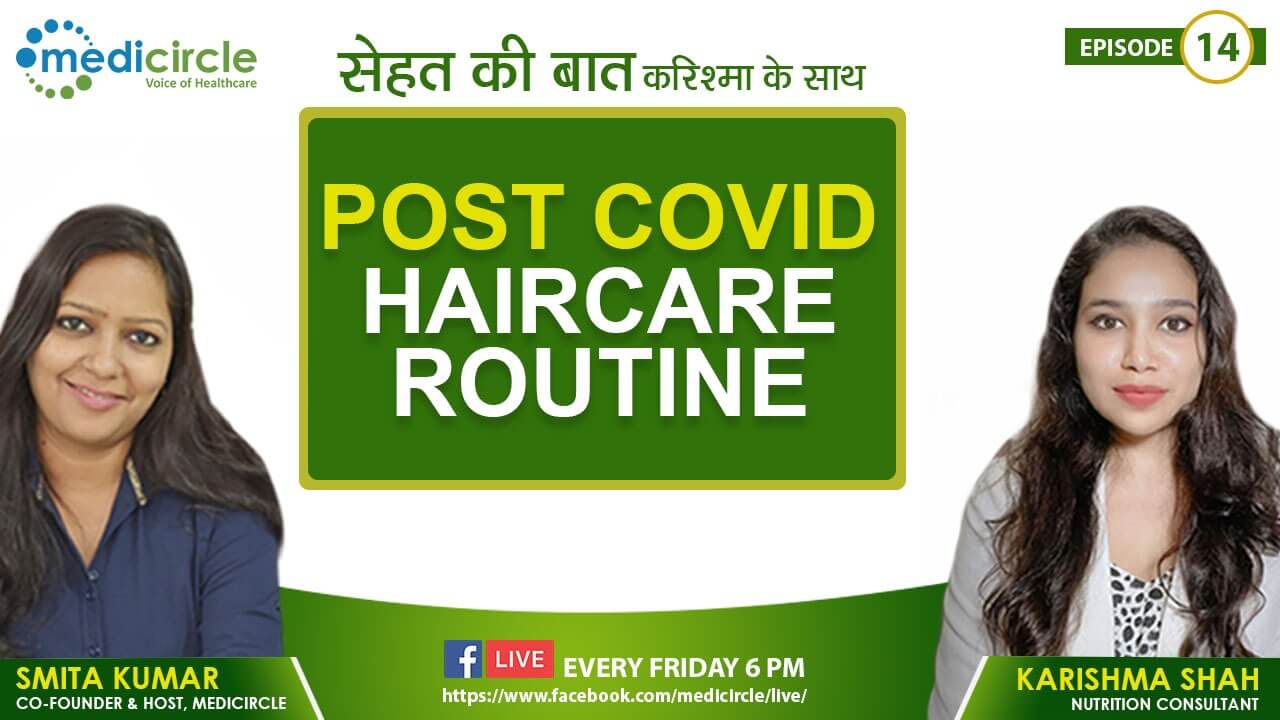
 Karishma Shah gives insights into the superfood options for healthy hair post-COVID recovery. She also informs that go for regular routine test for thyroid, iron levels to keep hair fall under check





Hair is a very important feature of our personality and everybody cares about it. There are many products and solutions available in markets for hair fall which creates a lot of confusion. Hair Fall is a common problem this pandemic has seen in post-COVID patients. Let us know from the expert Karishma Shah about the important tips to combat hair fall. Sehat ki Baat Karishma Ke Saath aims at providing you with valuable tips in regards to diet.
At Medicircle, we are presenting the Ask The Expert Series for health awareness to understand facts and find solutions related to them. We have come up with a series of Sehat Ki Baat, Karishma Ke Saath. Let’s interact with Expert Karishma Shah about hair fall this COVID
Karishma Shah is a Renowned Nutritionist and Plant Diet based Food Coach. She is also a Weight Loss Expert, Diabetes and PCOS Educator & Certified in Psychology of Eating
Care for hair fall post-COVID
Karishma Shah says, “Yoga helps in controlling and improving the problem of hair fall. The top part of your head needs blood circulation. Due to our posture and nature of work, the head is the last part of the body to receive blood circulation. Doing headstands and yoga can help to control hair fall by increasing blood circulation. This rejuvenates the blood cells of the hair and scalp. This is for people who have a lack of blood circulation.”
All you need to know about Telogen effluvium
Karishma says, “Today, the males and female pattern baldness is very common. Many patients are complaining of hair fall post-COVID recovery. There are many causes for the same.
There is a stage of our hair called Telogen effluvium. The cycle of regrowth of hair is every six months. Any stress or trauma related to hair crops up after six months. Hair Fall is not an immediate problem. Its evolution of hair fall is slow and gradual. You need to take care of every cycle of hair so that the next cycle is healthier for you. Our hair is the first thing to get affected when we get stressed out. Hair is made up of protein which is keratin. If your nutrition is deprived then there is hair fall. Nutritional deficiency causes hair fall, reduction in hair growth, and hair thinness.”
Facilitate new hair growth Post COVID
Karishma informs, “In COVID, your body is gone through certain stressors which can lead to hair fall. COVID increases inflammation in the body which is quite stressful to deal with. This results in hair loss. But the good news is that it is a temporary period. If you understand the reason behind hair loss, you can eliminate and treat it. You can facilitate the new hair growth by:
Focusing on diet: Eat well to get macronutrient and micronutrient Take supplements for nutritional deficiency Eliminate toxins Use products appropriately for hair Use sulfate-free shampoos for hair wash Use natural homemade products like amla, shikakai, Brahmi Invest in simple products for hair Use natural oils instead of serum Oil your hair regularly which are organic like coconut oil, almond oil
Blood flow is very essential for the scalp. With blood flow, not only nutrition but the chemical from products also gets absorbed results in hair fall. Our skin will absorb these chemical toxic products. There are many herbs in the market. Grind these herbs like Brahmi, shikakai, amla powder, bhringraj, and aloe vera gel can be used as a hair paste. Using natural oils like coconut oil is gold standard oil.
Hot oil massage for hair V/s Hair spa
Karishma states, “ When we step in the parlor, we generally opt for a hair spa. Opting for an oil massage instead of a hair spa that contains chemicals is the best option. Invest your time, money, and effort in hair oil massage. Keep the hair oil in your scalp for 3 -4 hours. Do not wash it off immediately. Keep it overnight. Once a month a hair massage is a must.”
Food is very important for hair fall
Karishma says, “ Nutritional deficiency leads to hair fall. Girls have many problems with nutrition. These are as followed
Iron: 80 % of women in India have iron deficiency. Ferritin levels are very important for good hair. Thyroid levels: Check for thyroid levels if you have hair fall Hormonal Imbalance problems like PCOS, infertility, and diabetes increase the androgen levels in the body, and this results in complications. This results in hair loss, hair thinning, premature greying
Hair is the last thing to get nutrients. First, your body absorbs all the nutrients, and then it is transferred to hair at last. Meet your doctor and nutritionist who is professional to help you get these parameters under check.”
Nutritional Superfoods for hair loss
Karishma states, “There are some nutritional superfoods for hair loss which can help to reprogram the entire cycle of hair
Coconut: Simply slice or grate it and consume coconut. Consume in form of energy balls Watercress seeds: These are very rich in folate and important food to consume by women Hair oiling is a must Sesame seeds: This is very important for hair. It is an important source of calcium. Flax seeds Chia seeds Nuts
Incorporate these simple things into your daily diet for healthy hair. Do the test regularly for healthy hair.
(Edited by Dr.Rati Parwani)





.jpeg)








.jpg)
.jpg)
.jpg)
.jpg)
.jpg)
.jpg)


.jpg)
.jpg)
.jpg)