 Saturday, October 10, 2026
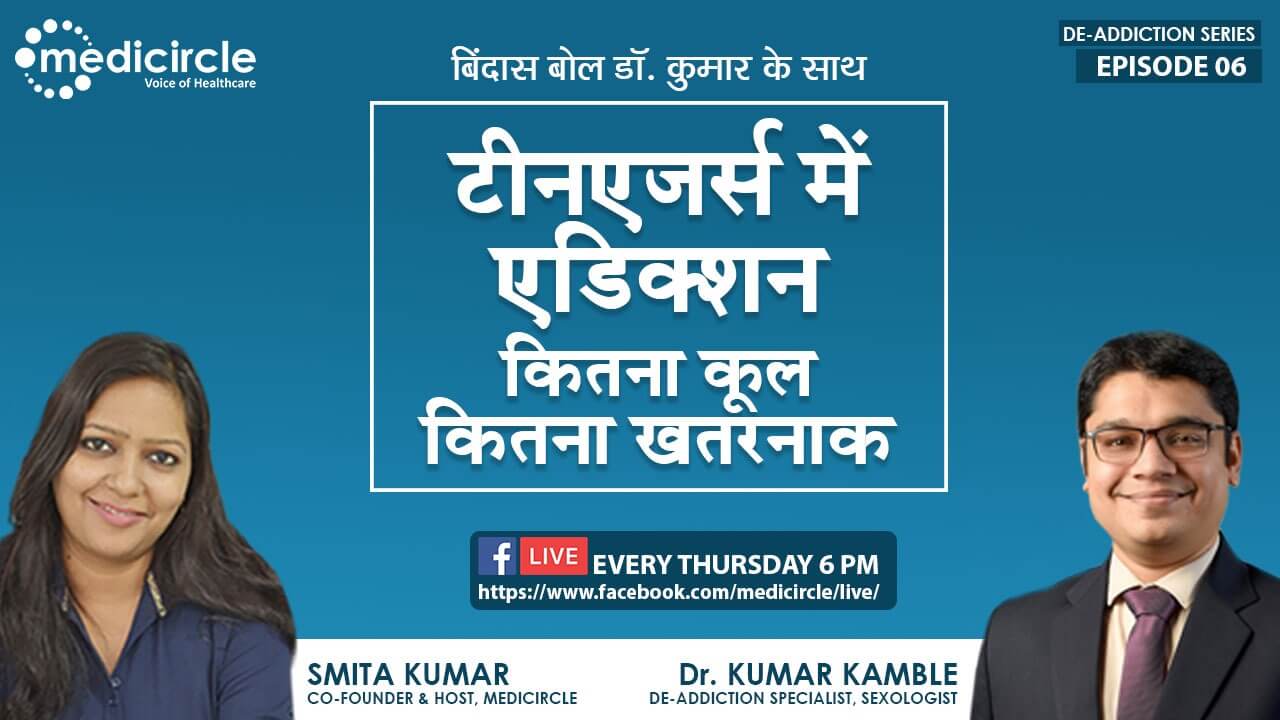
 Dr. Kumar Kamble gives the idea of how to deal with teenage addiction especially for parents and their children. He also explains the concept of assertive skills and learning to say “NO”





Our younger generation is getting affected by many problems of addiction. Let's accept the fact that when we were teenagers, we experimented with many different things. It is important to focus on our career being teenagers and to know the difference between right and wrong. To have a smart outlook, we might divert during adolescence and get prone to addiction. We will try to learn about psychology in teenagers for addiction. There are many reasons due to which teenagers get attracted and addicted to addictions like smoking, alcohol, and gambling.
At Medcircle, we are presenting the Ask The Expert Series on De-Addiction titled Bindas Bol with Dr. Kumar Kamble. Today, we are going to discuss addiction in teenagers. Let’s talk more with Dr. Kamble about how to get teenagers back on normalcy and correct track from addiction.
Every Thursday, we at Medicircle conduct a special series called Bindas Bol with Dr.Kumar Kamble. Dr.Kumar Kamble is not only a professional sexologist but also a de-addiction specialist. Dr. Kamble has special expertise and experience in working with the King Edward Memorial Hospital in the Deaddiction center for 4 years.
Dr.Kumar Kamble is an expert Psychiatrist, De-addiction Specialist, Sexologist, Speaker, Mental and Sexual Health Educator. He is also associated with the Umang Clinic. He has worked with King Edward Memorial Hospital in the Deaddiction center for 4 years as a Medical Office Coordinator. Based on his rich clinical expertise in de-addiction, we have come up with the next series on De-addiction.
Addiction of teenagers and its causes
Dr.Kumar Kamble says, “The age group of teenagers from the 13-19 is the growing phase where there are many psychological and social changes in the life. Teenage children become more social spending more time with their peers. They become part of their company or group of friends. They try to practice the same behaviors indulged and incorporated by their group and company of friends. There are many friends or peers who pressurize them to indulge in addiction in the form of smoking and alcohol. In such cases, teenage children come into contact with addiction. There is a lot of impact on the health of teenagers with different reactions. Some may like the experience of the first puff. Every teenager has a different reaction. Teenagers must be aware of various consequences and impacts on health.”
Novelty seeking is the “in-thing” among the teenage
Dr. Kamble informs, “During the teenage years, there is personality growth in an individual. They learn to react and behave to various things in given situations. Teenagers have regular behavioral patterns at the age of 16. There is a behavioral trait called “novelty Seeking” where the teenagers wish for new things. This novelty-seeking behavior may end up trying to smoke cigarettes or alcohol. Teenagers might get attracted to addiction at this age due to enthusiasm. Indulging in novelty-seeking among the young generation is leading to the attraction of addiction. Attraction is very common in teenagers. But how you act or react is a very important part."
The negative impact of teenage addiction
Dr.Kamble says, “Your upbringing since childhood and awareness about the habits is very important. Awareness about the consequences of addiction is very important. Mother and father must talk to their child about addiction and its consequences. Knowledge about addiction is very important among teenagers. This will impact their lifestyle to indulge in the addiction act. We should spread the message of addiction consequences among teenagers. During growing years, if you come in contact with drugs and addiction then it will hamper your growth and well-being. Addiction will hamper:
Impact the Brainpower Impact on Memory issues Lack of focus Lack of concentration Ill Effects of mind Hampering the studies Lack of hormone balance Lack of bone growth and development Lack of bodily growth
Addiction can have an impact on the growth journey which is the transition from childhood to adulthood. This can negatively impact growth. Awareness is very important among teenagers.”
Learn to say -NO- Assertive skills
Dr. Kamble informs, “Learn to say ‘NO” to your friends and peers. Assertive skills are very important in teenagers. If you do not wish to indulge or do something, it is important to say “NO” in the right manner. This should be taught by parents to their children during their growth years. “Peer pressure” must be dealt with with care. You can avoid peer pressure with assertive skills. Groupism is very popular among teenagers and it is for like-minded people. A healthy group must be welcome with good friendship and acceptance.”
Parents should deal with teenagers at an early stage before they fall prey to addiction
Dr. Kamble states, “We all have experienced and been exposed to peer pressure and the bad company of friends. Parents should interact with their children and educate them about the same. The parents should do the following things:
Do not shout or scream at your teenage child Understand the situation Try to avoid further damage Do let addiction overpower your teenager Make them understand about their values and morales
If you have come in contact with drug addiction in any form, do not get intimidated and scared. Avoid further relapse and re-indulgence in the addiction. Your addiction is still under control. Saying “no” is very important and it will have a good impact on your future." says Dr.Kamble
(Edited by Dr.Rati Parwani)
Contributed by Dr.Kumar Kamble, Psychiatrist, De-addiction Specialist, Sexologist





.jpeg)










.jpg)
.jpg)
.jpg)
.jpg)
.jpg)
.jpg)


.jpg)