Sunday, October 25, 2026
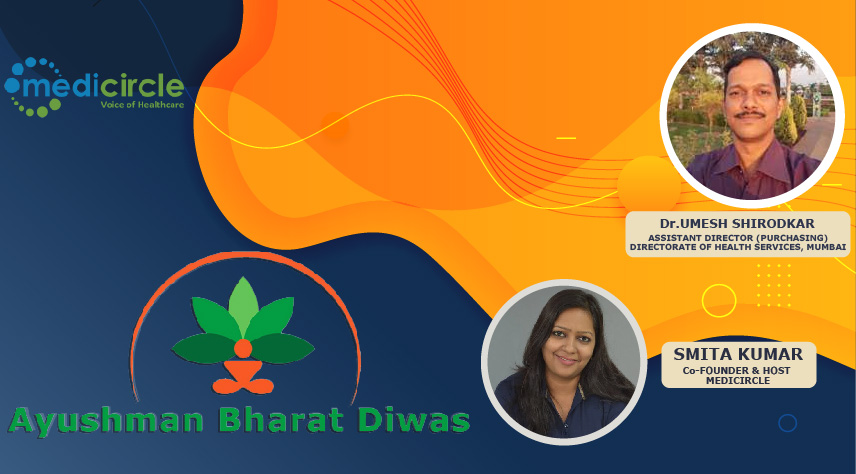
 People should be able to avail the facilities under the scheme without having to travel far. This is possible if maximum number of hospitals get empanelled to provide facilities and also media campaigns are necessary to spread awareness – Dr. Umesh Shirodkar.




Ayushman Bharat Pradhan Mantri Jan Arogya Yojna also referred to as Ayushman Bharat National Health Protection Scheme of the Government of India is initiated to provide free access to healthcare to the poorest of the poor. It got launched in the year 2018 by the Prime Minister under the Ministry of Health and Family Welfare. It is a centrally sponsored scheme funded by the federal government and the states. The government aims to provide Rs. 5 lakhs cover to the 10 crore poorest family of India. Through the Ayushman Bharat Diwas Series, Medicircle aims to raise awareness about the impact of this initiative, the latest developments on this front, and the areas in which there is some scope for improvements.
Dr. Umesh Shirodkar is the Assistant Director of the Directorate of Health Services, Maharashtra. He has been involved in Developing health MIS based on program wise health indicators, Publication of health department reports for State Assembly Sessions, Review and training of district-level health personnel in the monitoring of health programs, Analysis of health data for situation analysis, projecting trends and use in policy-level decisions, Supervision and monitoring of district public health laboratories, Running and management of postgraduate courses for medical officers across district hospitals in the state. He is currently working in Procurement section of Directorate of Health Services of Maharashtra since last one and half years
Between 3.5 – 4 crore people are beneficiaries of Ayushman Bharat Yojana in Maharastra
Dr. Shirodkar informs, “Number of beneficiaries of Ayushman Bharat Yojana is ascertained based on household survey data. According to that between 3.5 – 4 crore population in Maharashtra have so far been the beneficiaries of this scheme.”
Need of more awareness
Dr. Shirodkar mentions, “There is a need for more awareness in people to make this program successful. This is an ambitious scheme with lots of facilities. It is moving ahead phase-wise as it’s a recent scheme. Currently, mostly the government hospitals are empanelled. Private hospitals would get covered gradually. Awareness is going to help in the long run.”
Maximum no. of hospitals should be empanelled and media campaigns are necessary for its success
Dr. Shirodkar emphasizes, “Maximum number of hospitals should be empanelled under this scheme to make it successful as hospitals should be near the homes so that people can access the facilities in their localities without having to travel far. This should be the main strategy to make it more successful. Also, more media campaigns spreading awareness about the benefits of the scheme, treatment options available under the scheme, and names of the nearby hospitals that are empanelled in the scheme would help in making the ambitious vision reach its full potential,” says Dr. Shirodkar.
(Edited by Amrita Priya)




-23-300x250.png)

.jpeg)
.jpg)
.jpg)
.jpg)
.jpg)
.jpg)
.jpg)
.jpg)
.jpg)
.jpg)