Tuesday, October 06, 2026
 Clinical evidence for this device demonstrates safety and efficacy for people suffering from mitral regurgitation




Abbott, the global healthcare company, has launched its clip delivery system, a minimally invasive heart valve repair device to treat mitral regurgitation in India. This product puts new technology into the hands of physicians by giving them a life-saving treatment option that may be used for people suffering from mitral regurgitation due to a heart defect or as a result of heart failure.
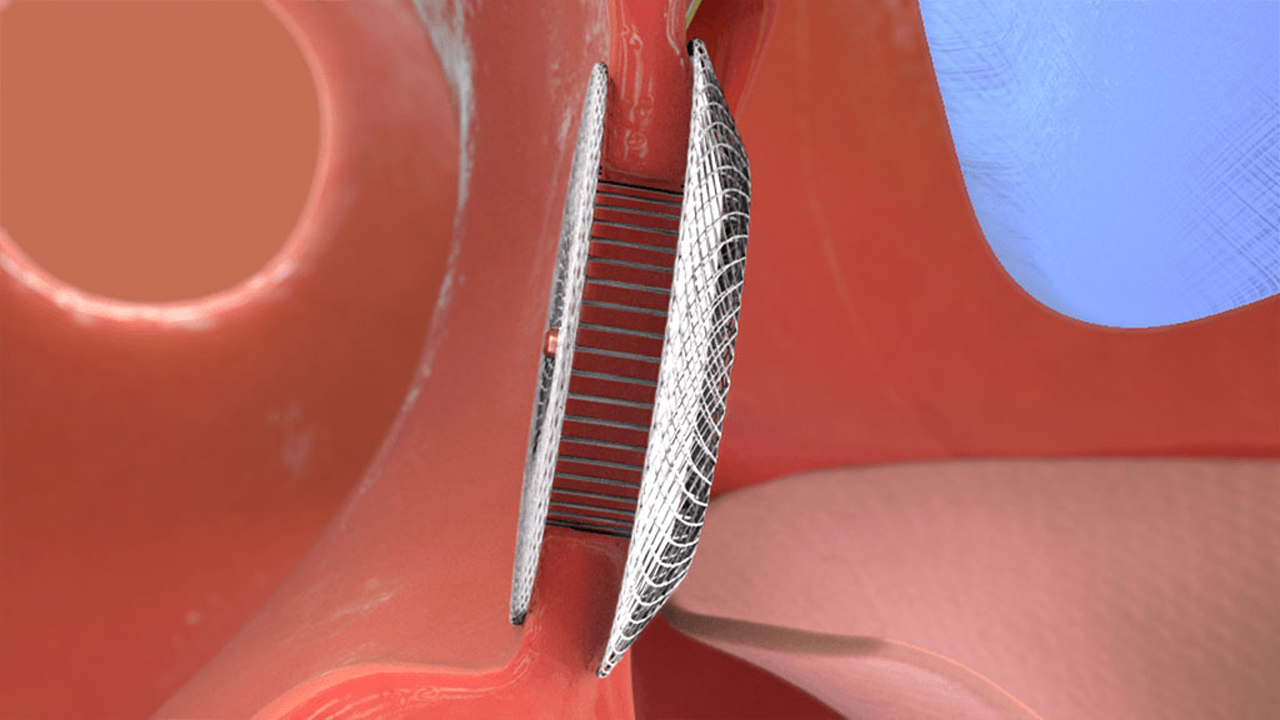
This clip device repairs leaky mitral valves without open-heart surgery and is delivered to the heart through a vein in the leg. The device clips portions of the leaflets, or flaps, of the mitral valve together to reduce the backflow of blood (known as mitral regurgitation, or MR), restoring the heart's ability to pump oxygenated blood more efficiently. To date, this product has helped treat more than 100,000 people worldwide suffering from MR and is supported by the industry's most extensive body of clinical evidence, including the results of the landmark COAPT Trial published in The New England Journal of Medicine in September 2018. In addition, the device’s safety and efficacy is also supported by 3 randomized clinical trials, over 30,000 people enrolled in clinical studies and 1000+ publications. With more than 16 years of clinical experience, Abbott’s mitral clip system is the first and only transcatheter mitral valve therapy with proven safety and survival, and durability of clinical outcomes.
Cardiac ailments affect more people than any other non-communicable disease in India. According to a study by The Lancet, cardiovascular diseases caused 28 percent of deaths in 2016, which was double the numbers reported in 1990 when it caused 15 percent of deaths in the country – from 1.3 million in 1990 to 2.8 million in 2016 in India.
“Heart disease” is a blanket term for several kinds of heart conditions. Of them, mitral regurgitation (MR), is the most common heart valve problem. The mitral valve is located between the heart's two left chambers. The mitral valve has two flaps of tissue, called leaflets, that open and close to ensure that blood flows in only one direction. When the mitral valve fails to close completely, blood leaks backward inside the heart, causing MR. About 1 in 10 people age 75 and older have MR.
“Abnormalities of the heart’s valves and chambers, known as structural heart conditions, affect millions of lives around the world”, said Payal Agrawal, general manager for Abbott’s structural heart division in India. “Abbott’s life-changing technologies improve how these conditions can be treated. We believe that innovative heart treatments have the potential to change the standard of care for patients. This transcatheter clip-based therapy can help make a difference as it is associated with less trauma and bleeding for a patient. It is a fascinating technology and we are happy to provide physicians this tool to tailor treatment options for their patients.”
Dr. Sai Satish, internationally renowned Senior Interventional Cardiologist from Apollo Hospitals, India, and practicing interventional cardiologist and Director Structural Heart (International) Gottsegen Institute of Cardiology, Budapest, Hungary, said, “This is truly a significant approval for a device that has already helped tens of thousands of people around the world. Physicians in India now have another option to treat advanced heart failure patients.”
Explaining the need for such technology, Dr. Sai who pioneered this treatment in India added, “Increasing life expectancy, higher incidence of hypertension, obesity and diabetes, all contribute to the staggering prevalence of about 4.6 million patients with heart failure in India alone. These patients have a poor quality of life and high mortality. Not all patients with a leaky mitral valve are suitable for open-heart surgery due to advanced age or other co-morbidities. Till now there was little we could do for them. This procedure is a non-surgical treatment option for these patients which has been proven to dramatically reduce symptoms and improve not just their quality of life, but also survival.”
Dr. Ravinder Singh Rao, MD, DM, FACC, Director, TAVI and Structural Heart Disease Program, Consultant Interventional Structural Cardiologist, Eternal Hospital, Jaipur said, “Mitral regurgitation with poor left ventricular function carries a poor prognosis. Medicines alone cannot cure this mechanical problem, and only help the heart tolerate it better. Open heart surgeries have risks for some patients. The clip which is catheter based enables a non-surgical mitral valve repair.”
Talking about two recent procedures that he performed, Dr. Rao added, “I used the clip technology on two patients last week. One was a 56-year-old woman with poor LV function and severe mitral regurgitation, while the second patient was a 72-year-old doctor who had poor LV function and MR. He had in fact had a heart attack in the past. Post procedure both patients are better, and we could confirm leakage reduction on the transesophageal echocardiogram. The procedure is safe and effective. Medical innovations such as these give our patients better odds at long-term survival and improved quality of life.”
MR can be either primary (or degenerative) or secondary (or functional). The primary form of the disease can be related to age, a birth defect, or underlying heart disease, while the secondary form is seen when the heart dilates, often as the result of advanced heart failure, atrial fibrillation (irregular heartbeat), or other ailments that damage the heart muscle and cause it to fail.
MR causes symptoms such as cough, fatigue, decrease in appetite, shortness of breath, fainting and accumulation of fluid in feet, ankles or lungs. The condition places an extra burden on the heart and lungs. Over time, some people may develop an enlarged heart because it has to work harder to pump blood through the body. If it is not treated, MR can cause other, more serious problems to the heart, such as heart failure, a condition that occurs when your heart can’t pump enough blood to meet the needs of the body.
Through a minimally invasive procedure, this clip restores normal function to the leaflets of the mitral valve by clipping them together, relieving MR and allowing the heart to pump blood more efficiently throughout the body. Data shows a significant improvement of symptoms and quality of life. Patients who were studied five years after the procedure continued to experience improvement in their heart function, quality of life and ability to perform day-to-day tasks.
Recently, this technology was recognized by the prestigious Galien Foundation and was honored with the 2020 Prix Galien USA Award for Best Medical Technology. The award is considered the industry’s equivalent of the Nobel Prize in biopharmaceutical and medical technology research, and each year recognizes scientific innovation that improves humankind in the pharmaceutical, biomedical and medical technology categories.





.jpeg)




.jpg)
.jpg)
.jpg)
.jpg)
.jpg)
.jpg)


.jpg)
.jpg)
.jpg)
.jpg)
.jpg)
.jpg)