 Tuesday, October 27, 2026
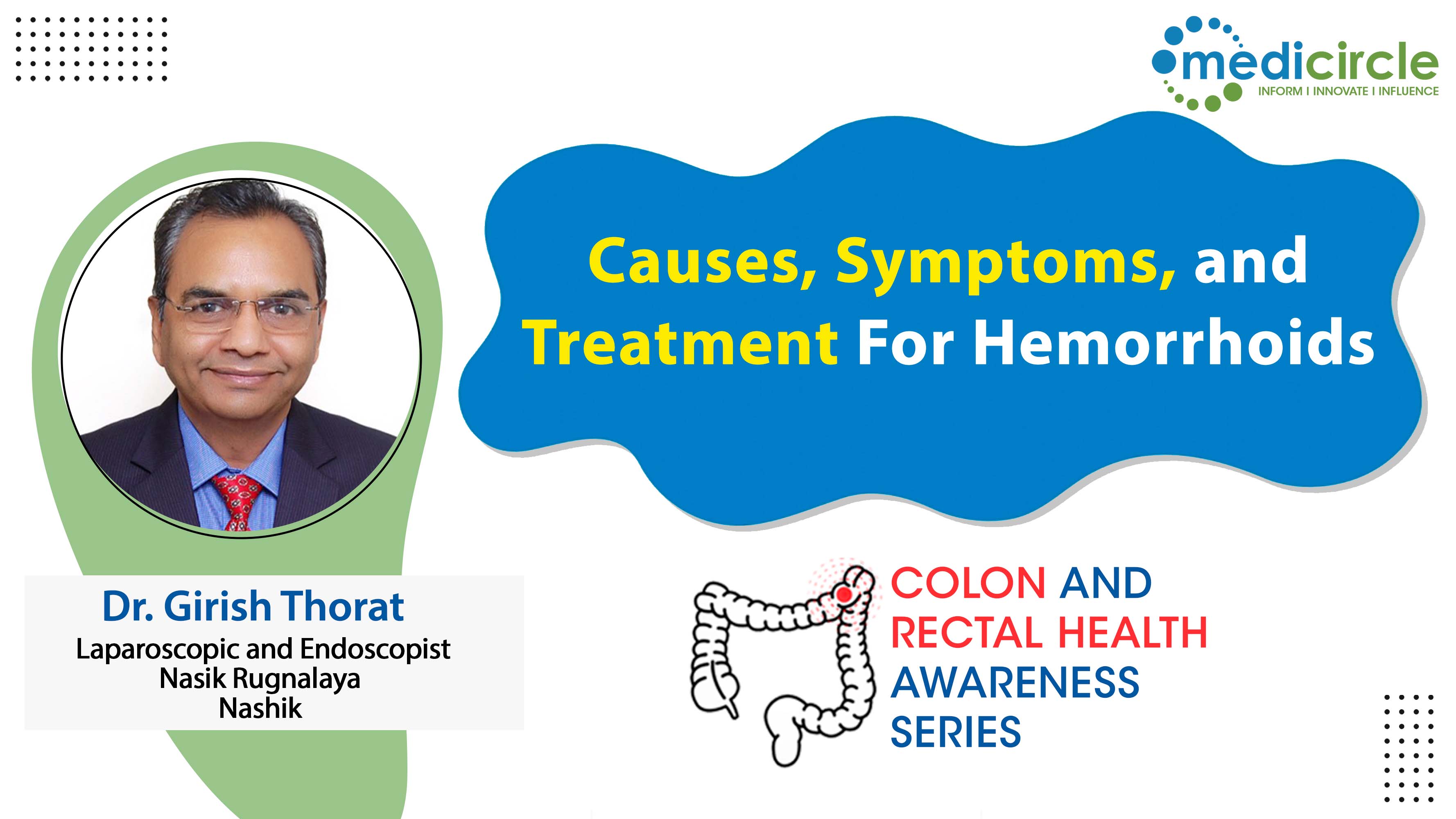
 Hemorrhoids can get complicated at times and need surgery. Learn from expert how to address hemorrhoids at an early stage for better recovery. Dr. Girish Thorat gives an overview on hemorrhoids with his expertise on causes, symptoms, treatment and effective solutions of hemorrhoids.




Every year, almost 10 million people in India suffer from the piles. This is spreading at a faster rate. Let us speak to the expert in regards to this.
Dr. Girish Thorat is a renowned Laparoscopic surgeon and endoscopist in Nashik and currently practicing in Sahyadri Hospital, Nashik. For the past 24 years, he has worked as a Laparoscopic surgeon and endoscopist.
Problem of Hemorrhoids
Dr. Girish Thorat informs, “Hemorrhoids are also known as piles. These mainly affect the lower rectum veins which causes increase in pressure and size. This may result in protruding piles or bleeding.”
Signs and symptoms of Hemorrhoids
Dr. Girish Thorat says, “The common signs and symptoms of hemorrhoids are as follows-
- Bleeding in stools
- Feeling of protrusion or mass from anus
- Painless bleeding
- Pain during bleeding may also result in fissure and hemorrhoids”
Causes of Hemorrhoids
Dr. Girish Thorat states, “The causes of hemorrhoids are as follows-
- Sedentary lifestyle
- Constipation and straining in tools
- Long time standing or taking weights
- Genetic factor
- Weakness of rectum nerves.”
Cure for hemorrhoids
Dr. Girish Thorat informs, “Hemorrhoids can be cured well. They can be treated by addressing the rectum nerves. The weakness of rectum nerves may relapse after sometime. The swelling and weakness of rectum nerves may cause hemorrhoids.”
Complications of Hemorrhoids
Dr. Girish Thorat states, “The complication of hemorrhoids are as follows-
- Low Hb levels
- Blood transfusion
- Weakness
- Poor quality of life
- Infection and sepsis
- Clotting of blood
- Thrombosed piles.”
Treatment for Hemorrhoids
Dr. Girish Thorat states, “The treatment of hemorrhoids depends on various stages which are as follows-
Stage 1 and 2 - Internal Hemorrhoids or bleeding hemorrhoids- Lifestyle changes to avoid constipation
- Drinking water
- Exercise
- Healthy Lifestyle
- Mild laxatives
- Fiber rich diet
Stage 3 - Clinic procedure
- Rubber band ligation
- Sclerotherapy
Stage 4- Advanced stage
- Surgery
Detecting at an early stage can help with better prognosis in case of piles.”
Rapid Fire
- Are Hemorrhoids genetic? Dr. Girish Thorat states, “Yes, it may be genetic to some extent.”
- Are Hemorrhoids painful? Dr. Girish Thorat states, “Not always, but depends on complication. Hemorrhoids with pain may cause fissure.Haemorrhoids alone are not painful ”
- Do Hemorrhoids need surgery? Dr. Girish Thorat states, “Early stages can be taken care with lifestyle modification. Late and advanced stages need surgery in case of hemorrhoids.”
Edited By: Dr.Rati Parwani
Contributed By: Dr. Girish Thorat, Laparoscopic surgeon & Endoscopist, Sahyadri Hospitals, Nasik




-23-300x250.png)

.jpeg)








.jpg)
.jpg)
.jpg)
.jpg)
.jpg)
.jpg)
.jpg)
.jpg)
.jpg)

