Tuesday, October 27, 2026
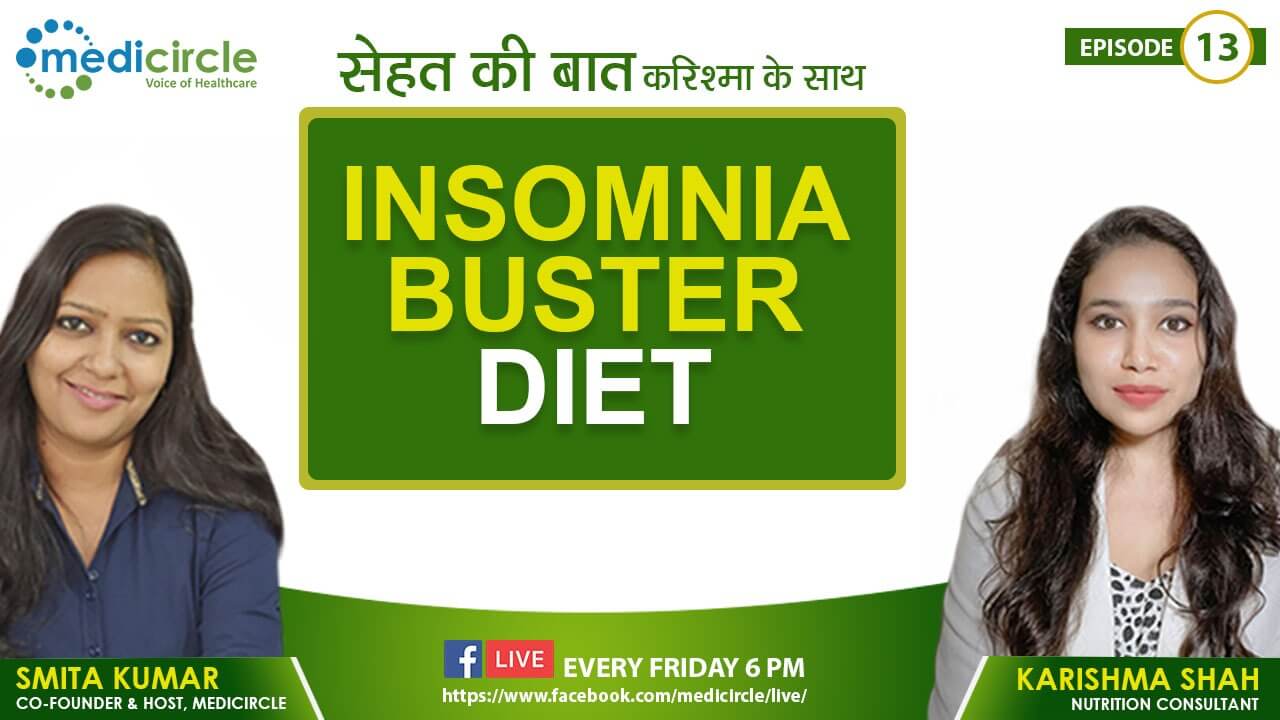
 Karishma Shah informs about the important connection between sleep and food. She also informs us of the important diet and superfoods for insomnia which can help facilitate sleep and keep us healthy. So embrace a healthy lifestyle with Karishma Shah.





Many people are suffering from sleeplessness because of this pandemic. The disorder of sleeplessness is also known as Insomnia. This can impact your health. Insomnia is prevalent in 1 in 3 people and can be commonly seen in youngsters as well. This episode of Sehat ki Baat- Karishma Ke Saath - Episode 13 revolves around the Diet and best foods to treat insomnia.
At Medicircle, we are presenting the Ask The Expert Series for health awareness to understand facts and find solutions related to them. We have come up with a series of Sehat Ki Baat, Karishma Ke Saath. Let’s interact with Expert Karishma Shah about Diet for Insomnia
Karishma Shah is a Renowned Nutritionist and Plant Diet based Food Coach. She is also a Weight Loss Expert, Diabetes and PCOS Educator & Certified in Psychology of Eating
The connection between sleep and circadian rhythm
Karishma Shah says, “All emotions in life are connected with sleep. There is a clear connection between our mind and sleep. Our day-to-day routine helps with our functioning of the body. This is also called Circadian Rhythm. Our ancestors had a simple life with no distractions. We were not technology savvy at that time. People used to wake up at sunrise and go to bed at sunset. There was a connection with nature. With time, we are changing. We prefer longer nights as we are less occupied and stress-free as compared to daytime. There is too much anxiety during the day due to work overload in our lives which we need to follow. 9 out of 10 people are suffering from sleeplessness during this pandemic. With anxiety, sleep disorders are on the high rise. This resulted in changes in the pattern of sleep.
Recover from stress through sleep
Karishma says, “The stress hormones (cortisol), happy hormones (serotonin), and the hunger hormones (leptin) also have a very thin line of connection. If you sleep late, the hormones go into imbalance. Sleep is very important for recovery. One should sleep for 8 hours/day to recover well. We have many stressors in our life. Technology has brought in a lot of stress. For a healthy lifestyle, you need to maintain your immunity with good recovery levels. For example, if you are admitted to the hospital, you tend to take more rest and sleep better which allows you to recover. This helps in rejuvenating your life. Recovery is important for stress.”
Sleeping late hampers circadian rhythm
Karishma says, “Sleeping late causes hormones to be active late. This may result in waking up unrefreshed due to lack of sleep. This can affect the circadian rhythm. You will not feel hungry which leads to skipping meals if you get up late. The entire hormone cycle goes for the toss. In the evening, you might fall for overindulgence in junk food. This is a common thing if you give up late. The hormones regulate our hunger cycle. You should give enough rest to your body to recover. Many people are following this trend of sleeping late and getting up late which leads to no control over the food. Skipping two meals in the day causes an increase in hunger during the last meal in the evening. The body will not work efficiently leading to weight gain. Following a routine and regular sleep cycle, this pandemic is very important.”
Important nutrients for good sleep
Karishma informs, “Anxiety causes sleepiness. Constant racing of thoughts can lead to sleep disorders. This results due to a lack of care for your daily routine. Skipping meals and not drinking water can affect you. The most important nutrients for healthy sleep are:
Magnesium Calcium Vitamin D Tryptophan Melatonin
According to research, people who do not get restful sleep at night suffer from a deficiency of these 5 nutrients. We need to have good food to keep these nutrients stable in the body.
Understand the science behind the Sleep Hormone: Melatonin
Karishma says, “Melatonin gives sleep to the body. On the basis of the circadian cycle, when there is sunset and darkness all around us, automatically the body starts producing melatonin which is a sleep hormone. This beautiful balance gives us restful sleep. This all the melatonin function to work aptly. Melatonin allows the body to sleep. Due to higher stress levels and anxiety, many people have unhealthy eating and a bad lifestyle.”
Super Foods rich in melatonin
Karishma Shah states, “Consuming foods rich in melatonin can help for better sleep and healthy lifestyle.
Pistachios
Consuming 10 pieces of Pistachios every evening is a good source of increasing melatonin in our body.
White rice
White rice is the biggest food group for good sleep. The basic desi local rice is very important for good melatonin. It contains natural tryptophan which can be consumed at night and helps in calming us down. Have rice when you want to unwind or chill out.
Banana
Bananas should be consumed every day which is great for prebiotic and probiotic levels. Bananas help in great sleep by providing a good amount of calcium and magnesium.
Choose ripe bananas which have maximum nutrients in the banana. The browner and full of spots, the banana has more nutrients.
Walnuts
One should consume 4 pieces of walnuts every day which are higher in omega fatty acids. Those of you who are vegetarians should consume walnuts for omega fatty acids and to increase the good fats in the body.
Almonds
Almonds are very important nuts rich in magnesium that help you stay calm. The deficiency of magnesium causes sleeplessness. So consume the nuts every day
Prunes
Prunes facilitate good sleep and digestion. Constipation issues are treated with prunes
Dark chocolate
The cocoa content is high in dark chocolate. Cocoa is an expensive food product. The higher cocoa content of about 85 % is a good magnesium source. Girls who have PMS symptoms must consume dark chocolate rich in magnesium.”
Start feeling calmer and facilitate good sleep with these superfoods.”
(Edited by Dr.Rati Parwani)




-23-300x250.png)

.jpeg)






.jpg)
.jpg)
.jpg)
.jpg)
.jpg)
.jpg)
.jpg)
.jpg)
.jpg)