 Monday, October 05, 2026
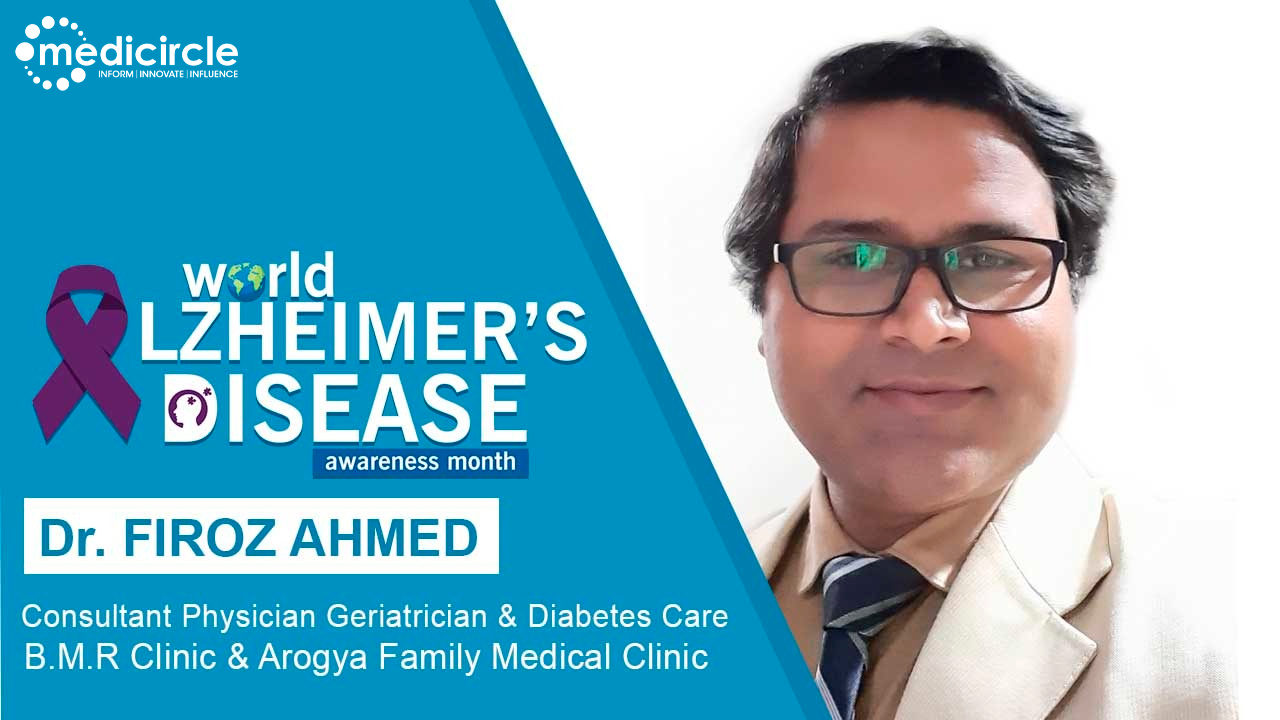
 Alzheimer's disease and Dementia need awareness and Dr. Firoz Ahmed sheds light on treatment by delaying the progress of dementia at an early stage. He gives valuable advice on lifestyle changes that can help with Alzheimer's disease and Dementia





The world celebrates Alzheimer’s Day to raise awareness about dementia. Dementia is a collective term for a cluster of symptoms. There are difficulties with memory, language, and other thinking-related skills. 70% of all dementia cases are Alzheimer’s, making it the most common form of dementia. According to WHO, 47 million people, or 5% of the elderly population suffer from dementia as of 2015. By 2030 the number of affected will rise to 75 million and by 2050 it will be 132 million. GlobalData estimates 16 countries where 6% of all 60 years old and above face dementia. India features in this. At least 4 million Indians suffer some form of dementia.
Dr. Firoz Ahmed has work experience of 10 + years as a clinician in private practice. He has worked in the fields of geriatric medicine and general medicine. He is working with Fortis hospital, New Delhi. He is also graduating in 2020 with MBA in hospital administration which is added to his merits apart from being a professional doctor.
Difference between Alzheimer's disease and Dementia
Dr. Firoz Ahmed says, “Dementia is the cause of mental disorders. In this dementia, the neurons of the brain are affected due to underlying disease. This causes-
Changes in intellect Changes in memory Changes in behavior
However, the consciousness is intact. It is commonly seen in the elderly above the age of 60 + years.
Whereas, Alzehoemeros is the most common cause of dementia, which is seen in 80 + years. Alzheimer's is a type of dementia. Because Of aging the neurons shrink in the brain. In Alzheimer's, the amyloids increase in the brain and cause excessive deposition. This will form plaques in the brain. This results in the loss of functions of storage and transmission of information. The function of the synapse gets affected resulting in lower levels of acetylcholine. Shrinkage of neurons causes shrinkage of the brain.
Causes of dementia-
Dr. Firoz Ahmed says, “Dementia is a group of diseases. There are 70 causes of dementia
Infection of brain Nutritional deficiencies The early history of depression Head injury Brain blood clot Brain infarcts which damage brain cells Liver disease Kidney failure Thyroid disorder Family history of dementia
Alzehiermer’s and Dementia
Dr. Firoz Ahmed says, “Alzheimer's and Dementia have the same characteristics. But, there is an additional neuronal loss in Alzheimer's which leads to damage of the brain after brain shrinkage. There is a part called the hippocampus which is the memory storage area. In Alzheimer's, the hippocampus gets affected. The warning signs of Alzheimer's are -
Memory loss Difficult in daily activities Problem on language Disorientation of time and space Confusion Poor judgment Impatient Forgetting thing Mood changes Depression Hesitation Anxiety
We need awareness about warning signs of Alzheimer's to be detected early. People with dementia have higher chances of Alzheimer's. “
Risk factors of dementia and Alzheimer's
Dr. Firoz Ahmed says, “The risk factors of Alzheimer's and dementia care-
Sedentary lifestyle Lack of physical activities Sleep deprivation- this causes an increase in amyloid shrinking the brain. Smoking alcohol Obesity and overweight Long term disease Uncontrolled diabetes and hypertension High cholesterol levels Head injury Cardiac diseases like stroke Brain hemorrhage Lack of nutrients Lack of social interaction Lack of use of brain Loneliness and introvert
Early age of Alzheimer's and Dementia
Dr. Firoz Ahmed says, “Dementia can be caused at an early age like forgetting small things. There is a possibility of dementia in the middle age group.
Challenges of Alzehiermer’s
Dr. Firoz Ahmed says, “ The major challenges in dementia care -
No specific medicines for 100 % cure Symptom-based treatment Medicines to halt dementia Lack of awareness Less family and social support Nuclear families Lack of proper old age homes Financial issues Retirement The problem in treating disease.”
Treatment of Alzheimer's
Dr. Firoz Ahmed says, “ The treatment of dementia involves
Lifestyle changes Better social life Treatment of depression and exercises Balanced diet Yoga Treatment of long-standing diseases Identify the cause behind dementia Treat the base cause Family counseling Homecare Nursing care Medications to stop the progression of the disease"
(Edited by Dr.Rati Parwani)





.jpeg)
.jpg)
.jpg)
.jpg)
.jpg)
.jpg)
.jpg)







.jpeg)

.jpeg)


.png)