 Tuesday, October 27, 2026
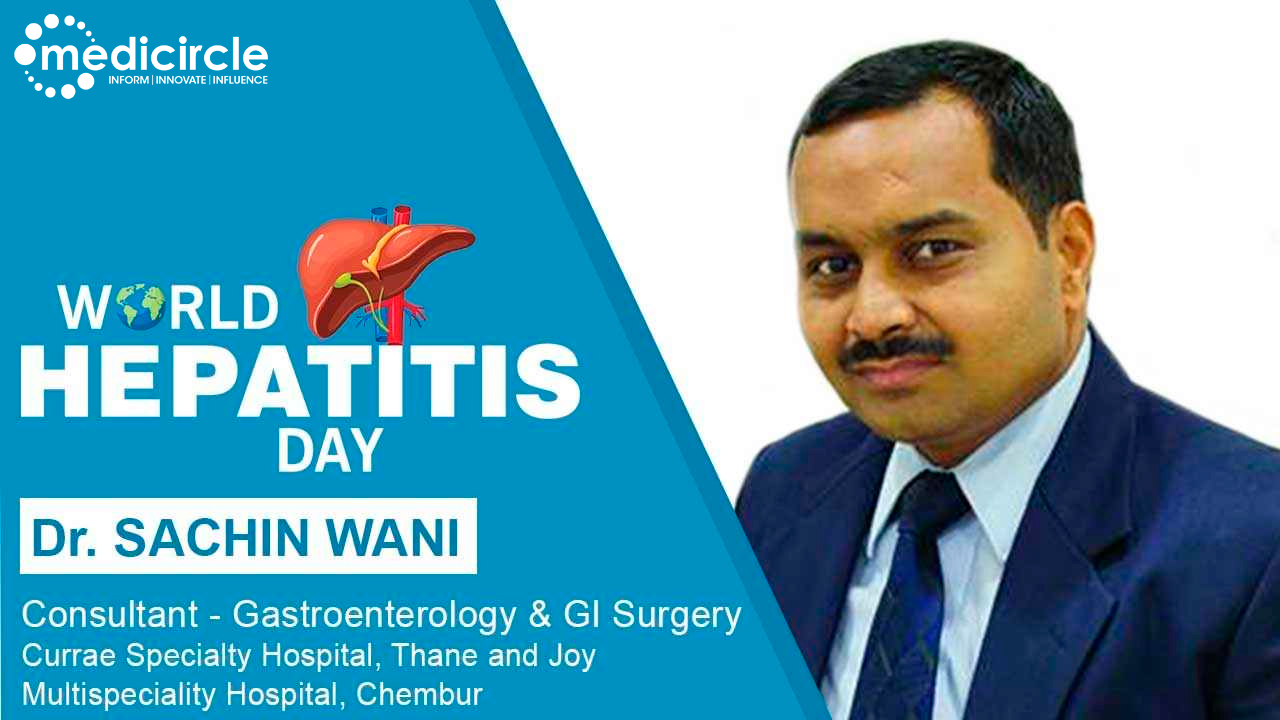
 Hepatitis is liver disease and is majorly categorized into 4 types – A, B, C, and E. Hepatitis A and E are acute whereas B and C are chronic. Hepatitis can be fatal as it damages the liver over a while if not detected and treated early - Dr. Sachin Wani, GI and HPB Specialist





With a person dying every 30 seconds from a hepatitis-related illness even in the current COVID-19 crisis, it is crucial to act on viral hepatitis. As we are aware that every year 8th July is Hepatitis Day. We at Medi circle are conducting Hepatitis Awareness Series. Through this series, we aim to raise awareness about what can be done to prevent the spread of it and educate people about many forms of it, which are preventable and can be treated if detected early.
Dr. Sachin Wani is currently working as a consultant GI, HPB Specialist, and Laparoscopic GI Oncosurgeon at Currae Specialty Hospital, Thane and Joy Multispecialty Hospital, Chembur. He specializes in Laparoscopic GI and HPB Surgery, Shunt Surgery for Portal Hypertension, Laparoscopic GI Oncosurgery and Colorectal Surgery, Laparoscopic liver resection, and liver transplantation. He has a lot of national and international papers and publications to his credit including an international publication in the journal of laparoendoscopy and advanced surgical techniques on one of the largest numbers of laparoscopic pancreatic necrosectomy in the world. He also has authored a text chapter on obstructed defaecation syndrome in the clinical GI Surgery textbook, which serves as a learning tool for general and GI Surgeons across India and the world.
Hepatitis - Introduction
Dr. Sachin explains, "Hepatitis is inflammation of liver not necessary to be an infection, tuberculosis or cancer. Hepatitis is of 4 different kinds – Hepatitis A, B, C, and E. Hepatitis A and E is caused by drinking contaminated water or eating contaminated food whereas hepatitis B and C are because of blood transmissions or body fluid transmission. Other reasons responsible for hepatitis are long-standing fatty liver, autoimmune hepatitis, and fat storage disorder.”
Hepatitis A, B, C, and E
Dr. Sachin emphasizes, "Hepatitis A and E are viral infections that come and go on their own. No treatment is required for this. Normally, only symptomatic treatment is required such as typhoid, weakness. It is self-limiting, the consequences of this infection depend on the immunity of the patient's body. Only severe patients need hospital admission because of some complications like bloody vomiting, liver failure, coma. 90% of the patient doesn't require hospitalization and can be easily treated at home. Only 10% of them require hospital admissions.”
Dr. Sachin adds, “Hepatitis B and C are chronic diseases. A body takes 15-20 years to show symptoms of hepatitis B and C. When your liver starts showing symptoms of hepatitis, then only you will get to know that you are suffering, or else you undergo routine check-ups or any surgery because these tests are basic markers for any operation. If any person is detected with hepatitis B and C, then the viral load is being tested. It is tried to get under control if it is too high from standard. This viral load can damage the liver in these 15-20 years. Hepatitis A and E are acute whereas the other two are chronic.”
Hepatitis, Pregnancy and Old age
Dr. Sachin informs, “The common symptoms of hepatitis are jaundice, loss of appetite, muscle weakness, malaise that calls for proper diagnosis. During pregnancy, a lot of hormonal changes are happening inside the body, and if at all pregnant ladies get infected with hepatitis, it can be fatal for growing embryos. Firstly viral load of the mother is tested, and if it is low then is not a matter of concern. After the baby is born, the first thing given is the hepatitis B vaccine. In some cases, immunoglobulin is also given to the newborn, in case the mother was having a high viral load during her pregnancy period. In old age, any disease is fatal due to the body's low immunity be it hepatitis or COVID. So, to fight any viral infection, the body's immunity plays an important role."
Hepatitis and COVID
Dr. Sachin says, “If a person is already having hepatitis B and C with the weak immune system, and then got infected with COVID infection, the condition will sum up to more deadly form. People who are mostly infected with COVID are the ones who are having co-morbidities. This infection can be overcome only with strong immunity and patient with chronic liver disease like hepatitis don't have such strong liver, immunity to sustain COVID infection. But yes, there are exceptions because the fatality rate depends on body immunity, viral load, and the status of the liver at that point. Liver status is determined by two tests – albumin test and PT test. These are the synthetic functions of the liver and lower values of this test confirm that the liver is not functioning properly."
(Edited by Renu Gupta)




-23-300x250.png)

.jpeg)








.jpg)
.jpg)
.jpg)
.jpg)
.jpg)
.jpg)
.jpg)
.jpg)
.jpg)

