Tuesday, October 06, 2026
 As per guidelines, Durga puja can be organised only in temples or at home without any theme decoration. There will be no entrance gates and open space will have to be kept on the temple premises except where Goddess Durga will be kept.




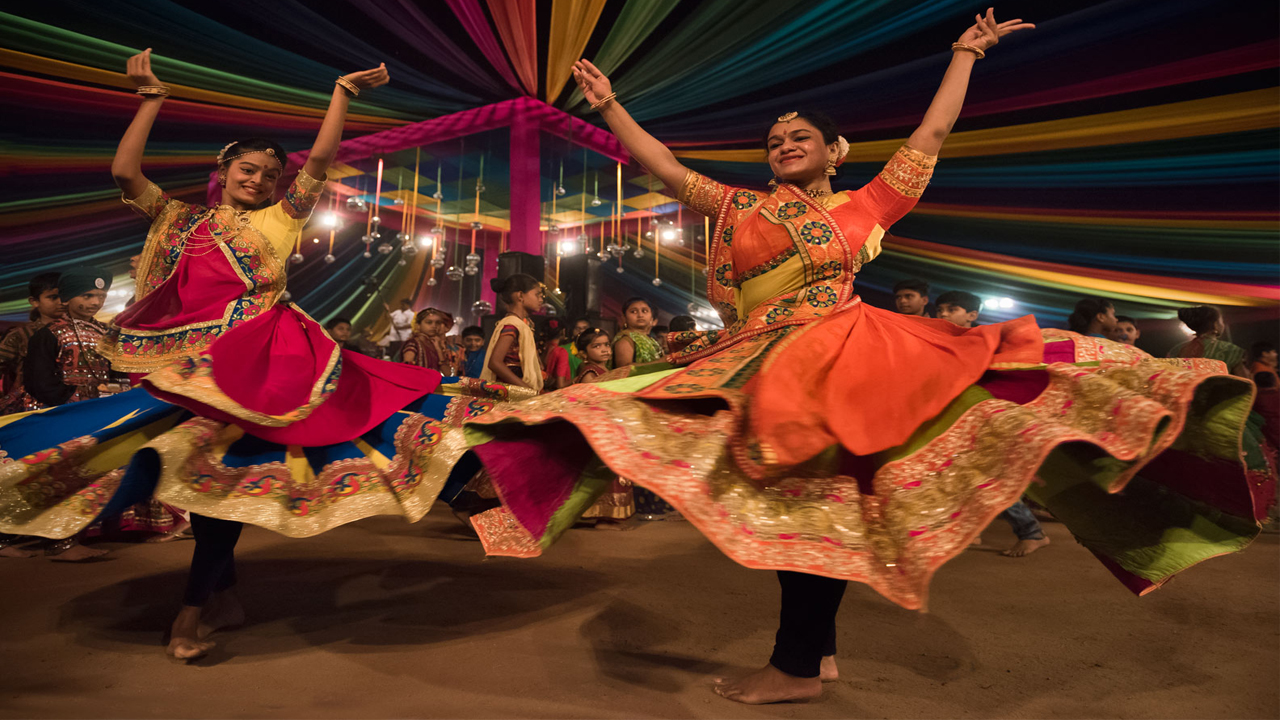
Gujarat government has issued guidelines for upcoming festivals of Navratri Garba, Dussehra, Diwali, Bestu Varsh and Sharad Poonam in view of Covid19 pandemic. These guidelines will be an effect from 16th October. As per the guidelines, no public events of Garba will be allowed during the Navratri. Garbi, Murti installation, pooja and aarti will be allowed in the open space but a touch of photo or murti will not be allowed. Similarly, the distribution of prasad will not be allowed. If such functions are held at indoor venues, maximum of 200 people will be allowed with the 50 per cent limit of total capacity. All permission is subject to the observance of Covid-19 protocol. Mass events like fairs, processions, exhibitions, Ravan Dahan and Ramlila are banned. Meanwhile, 1,243 new cases of Covid-19 recorded in Gujarat during the last 24 hours. At the other end, 1,518 patients recovered and were discharged from the various hospitals. The recovery rate has reached up to 86.76 per cent.
Bihar government has issued guidelines to restrict mass gathering and other large scale rituals during festive season owing to Covid-19 pandemic. As per guidelines, Durga puja can be organised only in temples or at home without any theme decoration. There will be no entrance gates and open space will have to be kept on the temple premises except where Goddess Durga will be kept. Distribution of Prasad, fairs, dandiya or Garba celebrations has been prohibited to avoid public gathering. Public address systems will not be allowed during the puja. Also, no person will be allowed without a face mask near the temple or any public area. The Puja organisers are required to have enough stock of sanitiser in the temples.
In Maharashtra, the Municipal Corporation of Greater Mumbai has issued guidelines for holding the upcoming Navratri festival that is set to begin on 17th. While the shine will be missing as the state has already announced that no Garba or dandiya events will be allowed in view of the Covid pandemic, small scale celebrations by installing the goddess’ idol in pandals have been allowed. Mumbai’s Deputy Municipal Commissioner Harshad Kale has especially advised people to strictly follow the three golden rules - wear masks, follow social distancing and maintain hand hygiene while celebrating the upcoming Navratri and Dussehra festivities.
In the guidelines issued by Mumbai’s civic body, people have been requested to install and worship metal or eco-friendly idols and avoid huge gatherings. While all processions have been banned, Navratri Pandals have been allowed to install idols, not higher than four feet. Mumbai’s civic body has asked pandals to arrange for online streaming of religious activities for the benefit of devotees and also to avoid crowding.
In order to streamline the process obtaining permissions, the civic body has said that it will consider the police and traffic permissions that were granted to mandals last year as valid for this year too, provided the mandals affirm that they will strictly follow COVID related guidelines and protocol.






.jpeg)
.jpg)
.jpg)
.jpg)
.jpg)
.jpg)
.jpg)


.jpg)
.jpg)
.jpg)
.jpg)
.jpg)
.jpg)