Tuesday, October 27, 2026
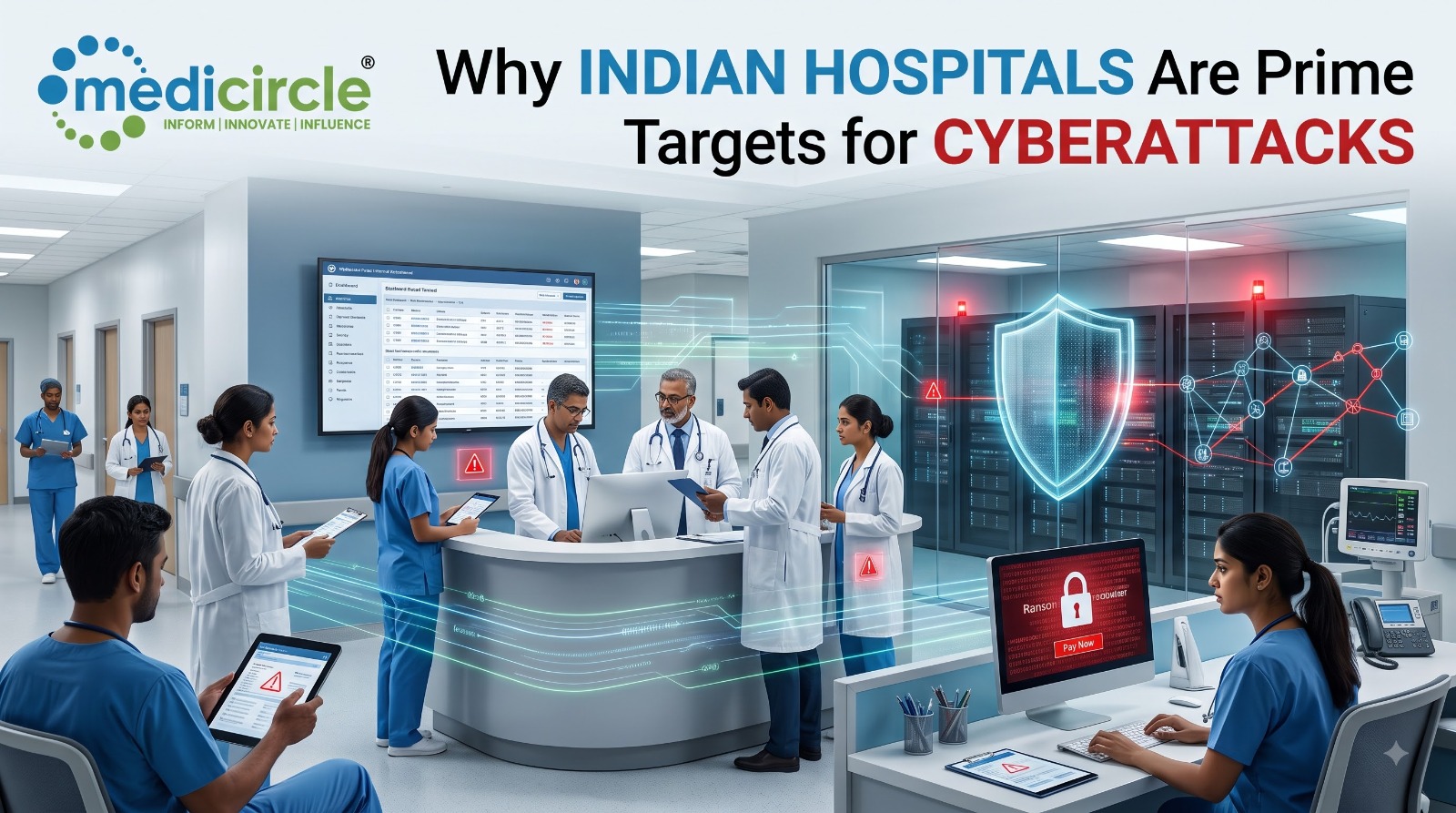
 Indian hospitals face rising cyberattacks driven by outdated infrastructure, valuable patient data, and insufficient cybersecurity investment, demanding urgent coordinated action across healthcare institutions and policy bodies.





Introduction
India's healthcare sector is undergoing a rapid and necessary digital transformation. Electronic health records, telemedicine platforms, online pharmacy integrations, diagnostic software, and connected medical devices are now part of everyday hospital operations across the country. This digital shift has brought enormous benefits to patients and healthcare providers alike. However, it has also introduced a threat that the Indian healthcare system was not fully prepared to handle: cyberattacks.
Over the past several years, the frequency and severity of cyberattacks on Indian hospitals have increased at an alarming rate. The November 2022 ransomware attack on the All India Institute of Medical Sciences (AIIMS) in New Delhi brought this crisis into sharp national focus. Hospital servers went offline for nearly two weeks. Patient services were severely disrupted. Data belonging to millions of patients was compromised. What happened at AIIMS was not an isolated incident. It was a warning signal that the entire Indian healthcare system needed to urgently confront.
Understanding why Indian hospitals have become prime targets for cybercriminals is the first and most critical step toward building stronger digital defenses. The answer lies in a combination of factors: the extraordinary value of healthcare data, outdated infrastructure, insufficient cybersecurity investment, and the sheer complexity of modern hospital operations.
Understanding the Scope of the Threat: Healthcare Cybersecurity in India
To appreciate the scale of this problem, it is important to first understand what cybercriminals are looking for and why the healthcare sector holds particular appeal for them.
A stolen credit card number is worth a few dollars on the dark web. A complete medical health record, by contrast, can fetch anywhere between ten to fifty times more. Healthcare records contain a comprehensive profile of an individual including name, address, Aadhaar-linked identification, insurance details, prescription history, chronic conditions, and even financial information. This data can be used for insurance fraud, identity theft, targeted phishing attacks, and illegal pharmaceutical purchases. In India, where Aadhaar integration with health platforms is growing under the Ayushman Bharat Digital Mission (ABDM), the data stakes are even higher.
According to a report by the Indian Computer Emergency Response Team (CERT-In), the healthcare sector ranked among the most targeted industries for cyberattacks in India in 2023. Globally, healthcare has consistently been identified as one of the most breached sectors, and India's accelerating digitization has made its hospitals increasingly attractive targets for both domestic and international cybercriminal groups.
Primary Reasons Why Indian Hospitals Are Vulnerable
Legacy IT Infrastructure and Outdated SystemsA significant portion of Indian hospitals, particularly government facilities and smaller private institutions outside Tier 1 cities, continue to operate on outdated software and aging hardware. Many systems still run on older versions of operating systems that no longer receive security updates. Legacy medical equipment, such as imaging machines and patient monitoring systems, often runs on software that cannot be easily patched or upgraded without replacing the entire device.
This creates what cybersecurity professionals call "endpoint complexity." When a hospital operates dozens or even hundreds of connected devices, each one becomes a potential entry point for attackers. The more complex the network, the harder it is to monitor, secure, and defend. Research published in the Journal of Medical Internet Research identifies endpoint complexity as the single most important variable influencing a hospital's risk of cyberattack, a finding that is directly relevant to India's healthcare environment.
Insufficient Cybersecurity Budgets and PrioritizationHealthcare in India operates under significant financial constraints. For most government hospitals, budget allocation goes primarily toward medical equipment, medicines, infrastructure, and staffing. Cybersecurity is rarely treated as a line-item priority. Even in many private hospitals, the information technology department receives a fraction of the investment it requires to build a robust security posture.
This budget gap means that hospitals often lack:
- Dedicated cybersecurity personnel or a Chief Information Security Officer (CISO)
- Modern firewall and threat detection systems
- Regular third-party security audits
- Data backup and recovery protocols
- Incident response plans
Without these basic protections in place, hospitals are operating with significant and entirely preventable vulnerabilities.
Rapid and Unplanned DigitizationIndia's push toward digital health, accelerated by the COVID-19 pandemic and supported by government initiatives such as the Ayushman Bharat Digital Mission and the National Digital Health Blueprint, has driven hospitals to adopt electronic systems at a pace that outstripped their ability to secure those systems. Telemedicine platforms were launched quickly. Hospital Management Systems (HMS) were deployed without thorough security assessments. Patient portals were built and connected to networks without adequate access controls.
Speed of digitization without corresponding investment in security creates exactly the kind of gaps that cybercriminals are trained to find and exploit.
Low Levels of Staff Awareness and TrainingIn any hospital, the human element is often the weakest link in cybersecurity. Phishing emails, which are fraudulent messages designed to trick recipients into revealing passwords or clicking malicious links, are among the most common methods used to breach hospital systems. A single staff member clicking on a suspicious link in an email can give an attacker full access to a hospital network within minutes.
Healthcare workers in India receive extensive clinical training but almost no formal education in cybersecurity awareness. Nurses, administrative staff, junior doctors, and even senior physicians are rarely trained to identify suspicious emails, secure their login credentials, or follow proper data handling protocols. This lack of awareness, combined with the high-pressure, fast-moving environment of hospital work, creates an environment where phishing and social engineering attacks are highly likely to succeed.
Internal Coordination GapsLarge hospitals are complex organizations. Multiple departments such as radiology, pharmacy, finance, administration, intensive care, and surgical units all operate with a degree of independence. In many hospitals, the IT department functions separately from clinical departments, and there is often little coordination between them on matters of data security.
Research on hospital cybersecurity has identified "internal stakeholder alignment" as one of the most critical factors in determining a hospital's resilience to cyberattacks. When different departments do not communicate effectively about security policies, when the board of directors does not actively oversee cybersecurity risk, and when clinical priorities consistently override IT security concerns, hospitals become far more vulnerable. This organizational fragmentation is a common challenge in Indian hospital systems, especially in large multi-specialty private institutions and government teaching hospitals.
The Nature of Attacks Targeting Indian Hospitals
Ransomware AttacksRansomware remains the most destructive and widely reported form of cyberattack against hospitals in India. In a ransomware attack, criminals use malicious software to encrypt all of a hospital's data, making it completely inaccessible. They then demand a ransom payment, usually in cryptocurrency, in exchange for the decryption key. The AIIMS Delhi attack followed this exact pattern. Hospitals that refuse to pay can face weeks of operational disruption, while those that pay offer no guarantee of full data recovery and effectively fund future attacks.
Data Theft and Dark Web SalesNot all attackers aim to disrupt operations. Many are focused on quietly extracting patient data and selling it on dark web marketplaces. These breaches can go undetected for months, during which time the stolen information is used for fraud, sold multiple times, or used to build targeted scams against patients.
Attacks on Medical DevicesAn emerging and particularly dangerous category of cyberattack involves connected medical devices. Infusion pumps, ventilators, cardiac monitors, and other networked clinical devices can potentially be accessed and manipulated by attackers. While high-profile incidents of this nature remain rare in India, the risk is real and growing as more hospitals deploy Internet of Things (IoT) enabled medical equipment.
What Compliance Alone Cannot Solve
India has taken regulatory steps to address cybersecurity in healthcare. CERT-In has issued mandatory incident reporting guidelines. The ABDM framework includes data security protocols. The Digital Personal Data Protection Act, 2023, places new obligations on organizations handling personal data.
However, compliance with regulations is not the same as security. A hospital can technically satisfy all regulatory requirements and still be deeply vulnerable to a sophisticated attack. Compliance frameworks set minimum standards. What hospitals need is a security posture that goes significantly beyond those minimums, driven by genuine commitment from hospital leadership and board-level oversight.
Research consistently shows that hospital boards that actively include cybersecurity in their risk management agenda produce institutions that are materially more secure. In India, this culture of governance-level engagement with digital risk is still developing and needs to be accelerated.
The Path Forward: Building Cyber-Resilient Indian Hospitals
Addressing the cybersecurity crisis in Indian healthcare requires action at multiple levels simultaneously.
At the individual hospital level, the priority must be reducing endpoint complexity by rationalizing and modernizing the devices connected to hospital networks. Hospitals must also invest in internal stakeholder alignment, ensuring that IT security is not treated as the exclusive concern of the technology department but is understood and supported by clinical leadership, finance, and the board.
At the industry level, Indian hospital associations and regulatory bodies need to develop standardized cybersecurity frameworks specific to the healthcare sector, provide shared resources and threat intelligence to smaller and rural hospitals, and create incentive structures that reward investment in security rather than treating it purely as a cost.
At the national policy level, CERT-In, the Ministry of Health and Family Welfare, and ABDM need to work together to develop policies that go beyond data privacy and address data security in a substantive and enforceable way. Reducing the variation in cybersecurity capability between well-funded urban hospitals and under-resourced rural facilities must be a specific policy goal, because the vulnerability of any single hospital can compromise the broader healthcare infrastructure.
Platforms like Medicircle play a meaningful role in this ecosystem by bringing credible healthcare and health technology conversations to a wider audience, helping hospitals, healthtech companies, and the medical community stay informed about emerging risks and best practices in digital health.
Conclusion
Indian hospitals are becoming prime targets for cyberattacks because they hold extraordinarily valuable data, operate complex and often outdated technology environments, face financial and organizational constraints that limit their security investments, and are undergoing digitization faster than their security capabilities can keep pace with. The consequences of inaction are serious. They extend beyond financial loss and reputational damage to real risks to patient safety and the integrity of India's growing digital health infrastructure.
The solution is not simple, and it cannot rest with any single hospital, government body, or technology vendor. It requires a coordinated, long-term commitment from hospital leadership, policymakers, cybersecurity professionals, and the broader healthcare community. Indian hospitals must move forward together on this issue, because in cybersecurity, the weakest link puts everyone at risk.
Frequently Asked Questions
Q1: Why are Indian hospitals vulnerable to cyberattacks?
Indian hospitals are vulnerable due to outdated IT systems, limited cybersecurity budgets, weak staff training, and the high value of patient health records on the dark web.
Q2: What was the AIIMS Delhi cyberattack and why did it matter?
In November 2022, AIIMS Delhi suffered a major ransomware attack that took its servers offline for nearly two weeks, disrupted patient services across departments, and exposed data belonging to millions of patients. It highlighted the scale of cybersecurity risk facing even India's most advanced public hospitals.
Q3: What type of data do cybercriminals target in hospitals?
Criminals primarily target patient health records, Aadhaar-linked identification data, insurance details, diagnostic reports, prescription histories, and hospital financial information. Complete medical records command significantly higher prices on the dark web compared to other forms of stolen data.
Q4: What is ransomware and how does it affect hospital operations?
Ransomware is malicious software that encrypts hospital data and demands payment for restoration. It can shut down electronic health record systems, disrupt billing, delay diagnostic reporting, and prevent access to critical patient information, effectively paralyzing hospital operations.
Q5: What steps can Indian hospitals take to prevent cyberattacks?
Hospitals should modernize legacy IT infrastructure, invest in dedicated cybersecurity staff, conduct regular employee training on phishing and data security, implement strong access controls, schedule periodic security audits, develop incident response plans, and align with CERT-In guidelines and ABDM security standards.
Resources
- Indian Computer Emergency Response Team (CERT-In): Guidelines and advisories on cybersecurity incident reporting and best practices for Indian organizations
- Ministry of Health and Family Welfare, Government of India: Policy documents and digital health frameworks including the National Digital Health Blueprint
- Ayushman Bharat Digital Mission (ABDM): Official guidelines on health data standards, interoperability, and data security protocols for digital health platforms
- World Health Organization (WHO): Global reports and guidance on digital health security and health data governance
- Journal of Medical Internet Research (JMIR): Peer-reviewed research on hospital cybersecurity dynamics, organizational models, and capability development
Interlinking Keywords
hospital cybersecurity India, ransomware in healthcare, patient data protection, AIIMS cyberattack, digital health security, Ayushman Bharat Digital Mission, CERT-In guidelines, healthcare data breach, electronic health records India, health data privacy
Last Medically Reviewed by:
Medicircle Medical Editorial Board on August 24, 2026
Disclaimer:
This article is intended for informational and awareness purposes only. It does not constitute legal, technical, or cybersecurity advisory guidance. Hospitals and healthcare organizations should consult qualified cybersecurity professionals and refer to official regulatory frameworks, including CERT-In guidelines and the Digital Personal Data Protection Act, 2023, for specific compliance and security decisions.





-23-300x250.png)

.jpeg)






.jpg)
.jpg)
.jpg)
.jpg)
.jpg)
.jpg)
.jpg)
.jpg)
.jpg)