 Thursday, November 19, 2026
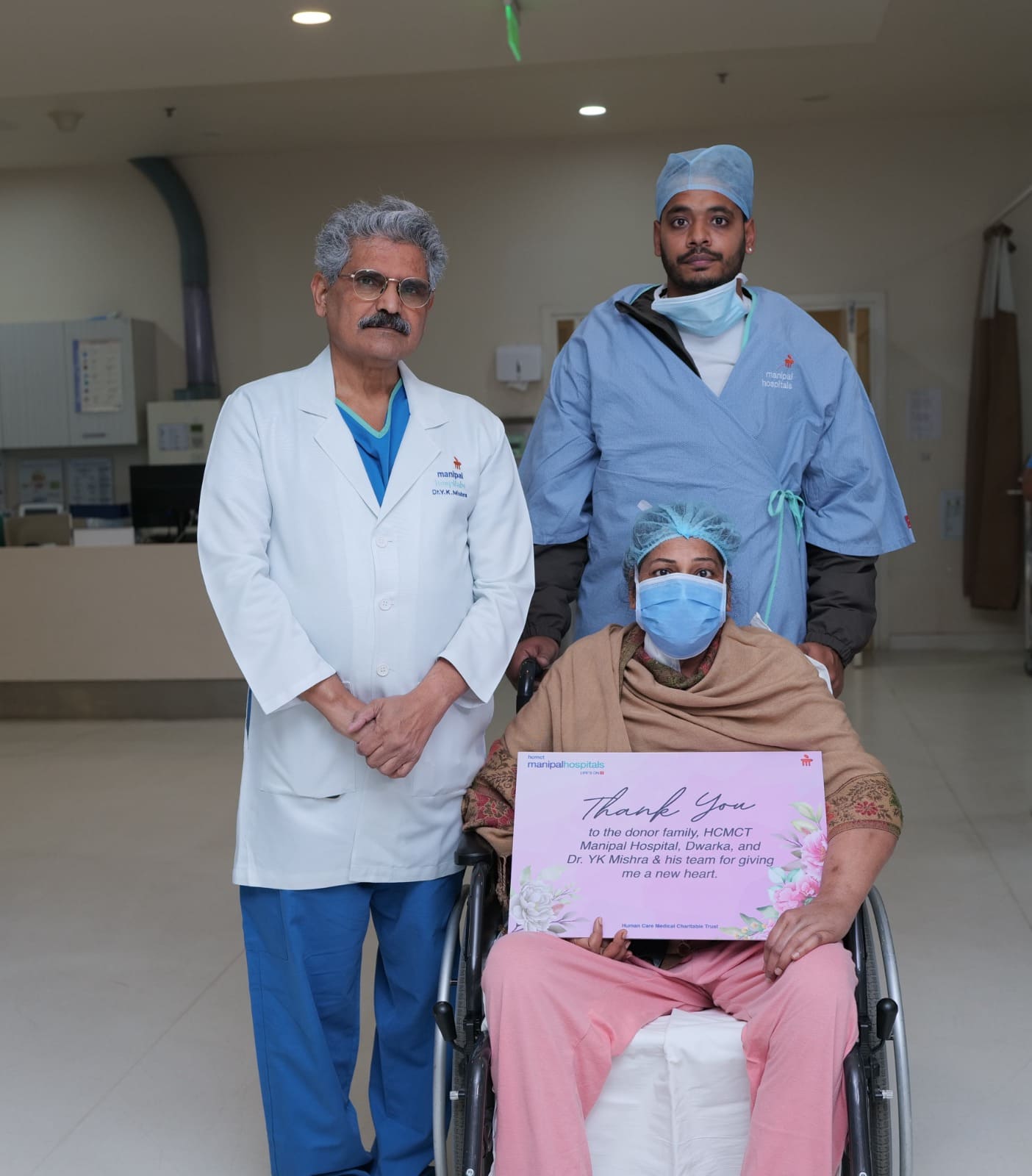
 In a significant medical achievement, doctors at HCMCT Manipal Hospitals Dwarka, New Delhi, successfully performed a life-saving heart transplant on a 54-year-old woman from Haryana who was battling end-stage heart failure.





New Delhi | 04 December 2025: In a significant medical achievement, doctors at HCMCT Manipal Hospitals Dwarka, New Delhi, successfully performed a life-saving heart transplant on a 54-year-old woman from Haryana who was battling end-stage heart failure. After years of struggling with cardiac dysfunction despite optimal medical therapy and advanced interventions, the transplant of a healthy heart from a brain-dead donor offered her a renewed chance at life and hope for her family.
She arrived at the hospital in a critical state with an extremely low ejection fraction of 15%, repeated hospitalisations, whole-body edema (swelling), severe fatigue and breathlessness that left her barely able to walk or lie down comfortably. She was on intra-aortic balloon pump (IABP) support that helps in pumping of the heart for 10 days, and even after undergoing cardiac resynchronisation therapy (CRT-D) – an advanced type of a pacemaker, her condition continued to worsen, making heart transplantation the only option.
Following a month-long critical wait, a compatible donor heart became available from a private hospital in Gurgaon, which was transplanted into the patient by Dr. Yugal Kishore Mishra, Chairman - Manipal Institute of Cardiac Sciences and Chief Cardiovascular Surgeon, Dwarka, Delhi and his team. A green corridor ensured the donor heart reached Dwarka within the safe window, and the complex surgical procedure completed in 3 hours and 20 minutes and the new heart began beating strongly soon after the transplant.
Dr. Yugal Kishore Mishra, Chairman - Manipal Institute of Cardiac Sciences and Chief Cardiovascular Surgeon, Dwarka, Delhi shared, “This milestone is the result of years of focused work in building a comprehensive, self-reliant heart failure and transplant program. By treating patients medically and surgically across all stages of heart failure, we ensure the right intervention is provided at the right time. The transplant has not only added years to the patient’s life but has also restored hope and quality of living for her and her family. Fortunately, the patient has responded exceptionally well, showing strong signs of recovery within 15 days. In many women, cardiac complications can progress rapidly, making early identification and treatment crucial. Although waiting periods are usually much longer, this patient received a suitable donor heart within a month, which significantly improved her chances.”
Ms. Viji Varghese, Hospital Director, HCMCT Manipal Hospitals Dwarka, Delhi added, “Heart transplant is among the most complex procedures in cardiac surgery, especially when performed on critically ill patients with severely compromised heart function. This case required extraordinary coordination, teamwork, rapid decision-making and surgical accuracy. This case is a testimony to the strength at HCMCT Manipal Hospitals Dwarka in terms of clinical excellence, technological capabilities, and operations.”
This achievement marks the hospital’s strengthening as one of the leading transplants and advanced heart failure treatment centres in Delhi NCR, setting strong benchmarks in patient care, surgical precision, and multidisciplinary coordination. As a centre of excellence in advanced cardiac care, the hospital provides a full spectrum of interventional treatments for heart failure including minimally invasive valve surgery, CRT-D implantation, LVAD support, TAVR, and now heart transplantation, ensuring patients receive timely and comprehensive care aligned to their clinical needs.




-23-300x250.png)





















