Sunday, October 25, 2026
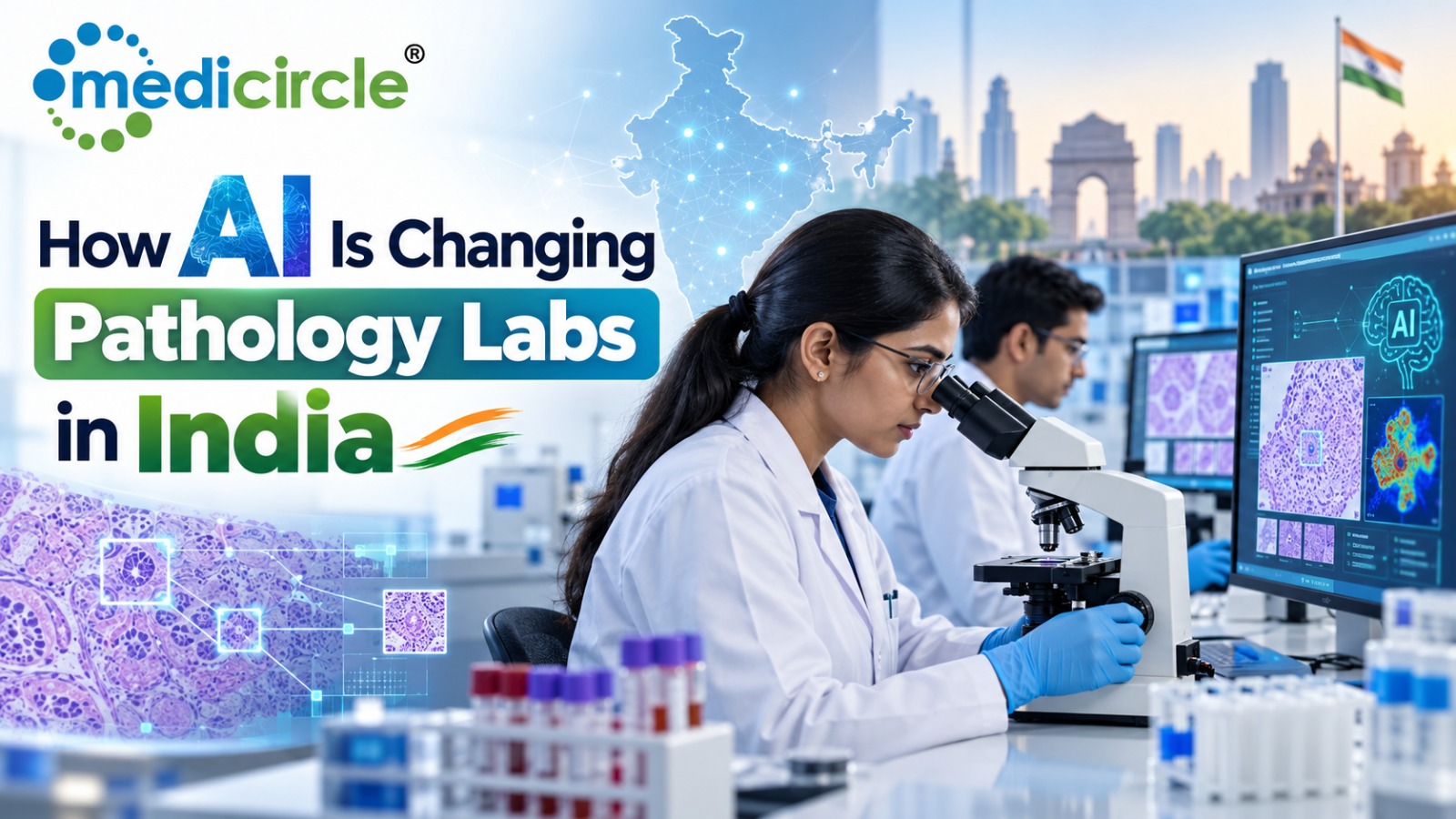
 Artificial intelligence is reshaping India's pathology laboratories by bridging the critical pathologist shortage, improving diagnostic accuracy, enabling telepathology, and expanding healthcare access across underserved regions.





Introduction
India's pathology sector is at a defining turning point. The country operates an estimated 3 lakh clinical laboratories, ranging from small collection centers in district towns to large reference laboratories in metropolitan cities. Yet the number of qualified MD pathologists practicing in the country is fewer than 10,000. This staggering imbalance has created diagnostic delays, inconsistent reporting quality, and widening gaps in access to accurate lab results, particularly in Tier 2 cities, Tier 3 towns, and rural districts where specialist expertise is nearly absent.
Against this backdrop, artificial intelligence is entering pathology not as a futuristic concept but as a practical, working solution. Across India, laboratories are beginning to integrate AI-powered diagnostic tools into their daily workflows. The change is not about replacing pathologists. It is about amplifying what they can do, helping fewer specialists serve far more patients, and making diagnostic accuracy something that does not depend entirely on geography or the availability of a single expert in a given location.
For a healthcare media platform like Medicircle, which exists to bridge expert knowledge with public understanding, this transformation deserves a clear and honest examination. What is AI actually doing inside Indian pathology laboratories today? What barriers still remain? And what does this mean for patients, diagnosticians, and the broader Indian healthcare system?
Understanding the Pathologist Shortage and Why AI Matters Now
The numbers tell a clear story. India has only around 5,500 qualified pathologists serving nearly 300,000 laboratories, and diagnostic delays are common, especially in underserved regions. Specialist pathologists and advanced diagnostic infrastructure are predominantly concentrated in metropolitan Tier 1 cities, while Tier 2 and Tier 3 cities, as well as rural districts, remain critically underserved.
This is not simply a numbers problem. It is a structural one. The traditional model of pathology requires a physical glass slide to be prepared, stained, and manually reviewed under a microscope by a trained expert present in the same room. In a country with India's population density and geographic spread, that model cannot scale. It creates a system where patients in smaller cities wait days longer for diagnostic reports than patients in Mumbai or Delhi, and where diagnostic quality varies enormously based on the workload and availability of a given laboratory's staff.
India's AI in medical diagnostics market is expected to triple in size by 2030, growing at a compound annual growth rate of 23.1 percent, driven by the shortage of skilled professionals and increasing demand for early and accurate diagnosis. This growth is being propelled not just by commercial interest but by clinical necessity.
How AI Is Being Applied Inside Indian Pathology Laboratories
Digital Pathology and Whole Slide ImagingThe foundation of AI-driven pathology is digitization. Whole slide imaging, or WSI, involves scanning a physical glass slide at high resolution and converting it into a digital file that can be stored, transmitted, and analyzed by AI algorithms. Digital pathology replaces the glass slide and microscope with a scanned digital image viewed and reported on a screen, enabling remote sign-out, easier consultation, and integration with AI-assisted image analysis tools.
In Indian laboratories that have adopted this approach, the practical benefits are already visible in three specific areas:
- Reporting workflow: Pathologists can review slides on a screen, annotate findings digitally, and provide remote second opinions without physically receiving glass slides from distant locations.
- Quality assurance: Digital records allow better tracking, audit trails, and standardized validation before clinical deployment.
- Turnaround time: In optimized workflows, digital processing reduces the time between sample collection and report delivery, though the transition period itself can be slow for labs still building digital infrastructure.
AI and digital pathology are reshaping cancer diagnostics in India by boosting accuracy, reducing delays, and expanding access amid a nationwide pathology workforce gap. The most promising applications include cancer detection and grading in histopathology, particularly in prostate, breast, and gastrointestinal cancers, as well as cervical cytology screening.
India's cancer burden makes this especially urgent. India faces a growing cancer burden, with over 1.7 million new cases recorded in 2025, and projections suggesting this could rise to 2.5 million by 2030. AI tools that help pathologists detect malignant cells faster, flag borderline cases, and prioritize urgent reports from high-volume slide queues have real clinical value in this environment.
Automating Routine DiagnosticsRoutine blood smear analysis, complete blood count interpretation, urine microscopy, and sputum examination are high-volume tasks that consume significant time in busy laboratories. Bengaluru-based medtech startup SigTuple has developed an AI-powered diagnostic device called AI100, which reduces diagnostic time from minutes to seconds with improved accuracy, increases pathologist capacity, and supports underserved regions in Tier 2 and Tier 3 cities.
This is one of the most meaningful applications of AI in the Indian context. By automating the screening of routine slides, AI allows trained pathologists to reserve their time and expertise for complex or ambiguous cases that genuinely require advanced human judgment.
Telepathology and Remote DiagnosticsTelepathology, the practice of transmitting pathology images digitally for remote diagnosis or consultation, is particularly relevant to India's geography. Telepathology has particular relevance in India given the geographic concentration of subspecialty pathology expertise in major cities and the shortage of trained pathologists relative to case volume across the wider healthcare system.
A pathologist in Mumbai or Bengaluru can review a digitized slide from a rural district hospital in Jharkhand or Chhattisgarh and provide a diagnosis within hours rather than requiring the physical slide to be transported across states. This model, when implemented well, has the potential to democratize diagnostic access in a way that was not possible in the analog era.
The Role of Regulation and Data Privacy in India's Digital Pathology Journey
Adoption of AI in pathology does not happen in a regulatory vacuum. The Digital Personal Data Protection Rules, 2025, were notified in late 2025, bringing key provisions into force, including measures to safeguard patient data, address security concerns, and build practitioner confidence, all of which are expected to encourage broader adoption of digital pathology in India.
Beyond data protection, laboratories in India that are adopting AI-powered digital pathology workflows must align with frameworks such as NABH accreditation standards and ISO 15189:2022, which governs quality requirements for medical laboratories. AI-powered applications are being used to monitor staining quality, flag anomalies, and support compliance with evolving laboratory standards such as ISO 15189:2022, and these tools are particularly valuable in high-volume labs where consistency and speed are critical.
The government's Ayushman Bharat Digital Mission (ABDM) is also creating a digital health infrastructure that could eventually support the integration of AI-generated diagnostic reports into unified patient health records, though this integration is still in early stages.
Challenges That Are Slowing Adoption in India
Despite the genuine promise of AI in Indian pathology, several barriers are preventing widespread adoption, particularly outside large urban centers.
The most significant challenge is infrastructure. Whole slide scanners are expensive, and many smaller laboratories simply do not have the capital to invest in digital imaging equipment. Reliable high-speed internet connectivity, which is essential for transmitting large image files, remains inconsistent in many parts of rural India.
Limited awareness and apprehensions about job displacement further prevent digital pathology adoption. Addressing these challenges requires a strategic approach, including innovative revenue-generating strategies, targeted training programs, robust data security, and development of high-quality datasets. Collaboration among pathologists, healthcare providers, policymakers, and technology developers is essential.
There is also the challenge of building training datasets that are representative of Indian disease patterns and Indian patient populations. AI algorithms trained predominantly on data from Western populations may not perform equally well on Indian histological samples, particularly for diseases that present differently across ethnic and geographic groups. This makes Indian-specific dataset development a critical research priority.
AI-assisted pathology tools enhance reproducibility and auditability, particularly in high-volume laboratories and multicenter studies, and real-world evidence indicates improvements in turnaround time, workflow efficiency, and diagnostic consistency following AI integration. But this evidence is still accumulating for Indian settings specifically, and laboratories need clearer validation guidance before committing to full digital workflows.
What AI in Pathology Means for Indian Patients
The patient perspective is ultimately what matters most. For a patient in a small town in Bihar or Odisha waiting for a biopsy report, the practical question is whether AI will reduce the number of days they spend in uncertainty. For a patient in a metropolitan cancer center, the question is whether AI-assisted analysis will catch something a fatigued pathologist reviewing hundreds of slides in a single day might miss.
The honest answer, supported by current evidence, is that AI improves pathology workflows when implemented thoughtfully and validated rigorously. AI tools currently assist with specific, narrow tasks including quantification, screening triage, and pattern flagging, rather than replacing pathologist judgment on the final diagnosis. The human expert remains central to the diagnostic process. AI makes that expert faster, more consistent, and more scalable.
For Indian patients, this translates into shorter waiting times for routine reports, better access to specialized diagnostic opinions regardless of location, and greater confidence that high-volume screening tasks are being completed with consistent attention to detail. These are meaningful improvements in a country where diagnostic delays have historically led to late-stage disease detection and worse treatment outcomes.
The Road Ahead: Building an AI-Ready Pathology Ecosystem in India
The transformation of Indian pathology through AI is not a single event. It is a multi-year process that requires coordinated action across multiple domains.
Laboratories need access to affordable digital imaging infrastructure. Medical colleges need to begin training pathology residents on digital workflows and AI tool interpretation so that the next generation of pathologists enters practice ready for a digitized environment. Regulatory bodies including the NMC and NABH need to develop clear standards for validating and deploying AI diagnostic tools in clinical settings. And the Indian government needs to recognize digital pathology as a priority investment within its broader health technology agenda.
Platforms that bring together healthcare experts, diagnostics leaders, and the broader medical community, such as Medicircle, have an important role to play in this ecosystem. Making credible information about AI-driven diagnostic innovation accessible to pathologists, hospital administrators, and patients alike is part of building the awareness and informed adoption that this transformation needs.
The technology is ready. The clinical evidence is growing. What India needs now is the infrastructure, the training, the investment, and the regulatory clarity to scale what is already working in forward-thinking laboratories to every corner of the country.
Frequently Asked Questions
Q1: What is AI-powered pathology and how does it work in Indian laboratories?
AI-powered pathology uses machine learning algorithms to analyze digitized tissue slide images. In Indian laboratories, AI tools assist pathologists by automating screening tasks, flagging abnormal cells, prioritizing urgent cases, and supporting remote diagnosis through whole slide imaging platforms.
Q2: Can AI replace pathologists in India?
No. AI currently assists with specific, narrow tasks such as screening, quantification, and pattern flagging. The final diagnostic decision remains with a qualified pathologist. AI is designed to make pathologists more efficient and to extend their reach, particularly in underserved regions, not to replace their expertise.
Q3: Which Indian companies are working on AI-based pathology solutions?
SigTuple, a Bengaluru-based medtech startup, is a prominent example. Its AI100 device automates routine diagnostic tasks such as blood smear analysis. Several global companies including Roche Diagnostics India and Agilent are also active in the Indian digital pathology space.
Q4: What is telepathology and why is it important for India?
Telepathology is the practice of transmitting digitized pathology images for remote diagnosis or consultation. In India, where specialist pathologists are concentrated in major cities, telepathology allows experts to review slides from rural or semi-urban laboratories remotely, dramatically improving diagnostic access in underserved areas.
Q5: What are the main challenges to adopting AI in Indian pathology laboratories?
Key challenges include the high cost of whole slide imaging equipment, limited internet connectivity in rural areas, a need for Indian-specific AI training datasets, concerns about job displacement among laboratory staff, and the absence of comprehensive national regulatory guidelines for clinical AI diagnostic tools.
Resources
- Indian Council of Medical Research (ICMR): National health research body providing guidelines, disease burden data, and evidence-based healthcare recommendations relevant to diagnostic innovation in India.
- Ministry of Health and Family Welfare (MoHFW): Government body governing national health policy, including digital health initiatives under Ayushman Bharat and ABDM.
- National Accreditation Board for Hospitals and Healthcare Providers (NABH): Sets quality and accreditation standards for Indian healthcare facilities, including pathology laboratory guidelines.
- PubMed / National Library of Medicine: Access to peer-reviewed research on AI in pathology, digital diagnostics, and clinical laboratory medicine worldwide.
- Ayushman Bharat Digital Mission (ABDM): National digital health infrastructure initiative supporting integrated health records and digital diagnostics across India (abdm.gov.in).
Interlinking Keywords
AI in healthcare India, digital diagnostics, pathology lab technology, cancer diagnosis India, telepathology, ABDM digital health, medical laboratory innovation, diagnostic accuracy India
Last medically reviewed by:
Dr. Manthan Tripathi, Editorial and Medical Advisory Team, Medicircle.in on 09, September 2026
Medical Disclaimer:
This article is intended for general informational and educational purposes only. It does not constitute medical advice, diagnosis, or treatment. Readers should not use this content as a substitute for professional medical consultation, diagnosis, or treatment by a qualified healthcare provider. Always seek the advice of your doctor or a qualified medical professional regarding any medical condition, diagnostic concern, or healthcare decision. Medicircle does not endorse any specific laboratory, diagnostic product, or AI technology mentioned in this article.





-23-300x250.png)

.jpeg)


.jpg)
.jpg)
.jpg)
.jpg)
.jpg)
.jpg)
.jpg)
.jpg)
.jpg)