Sunday, October 25, 2026
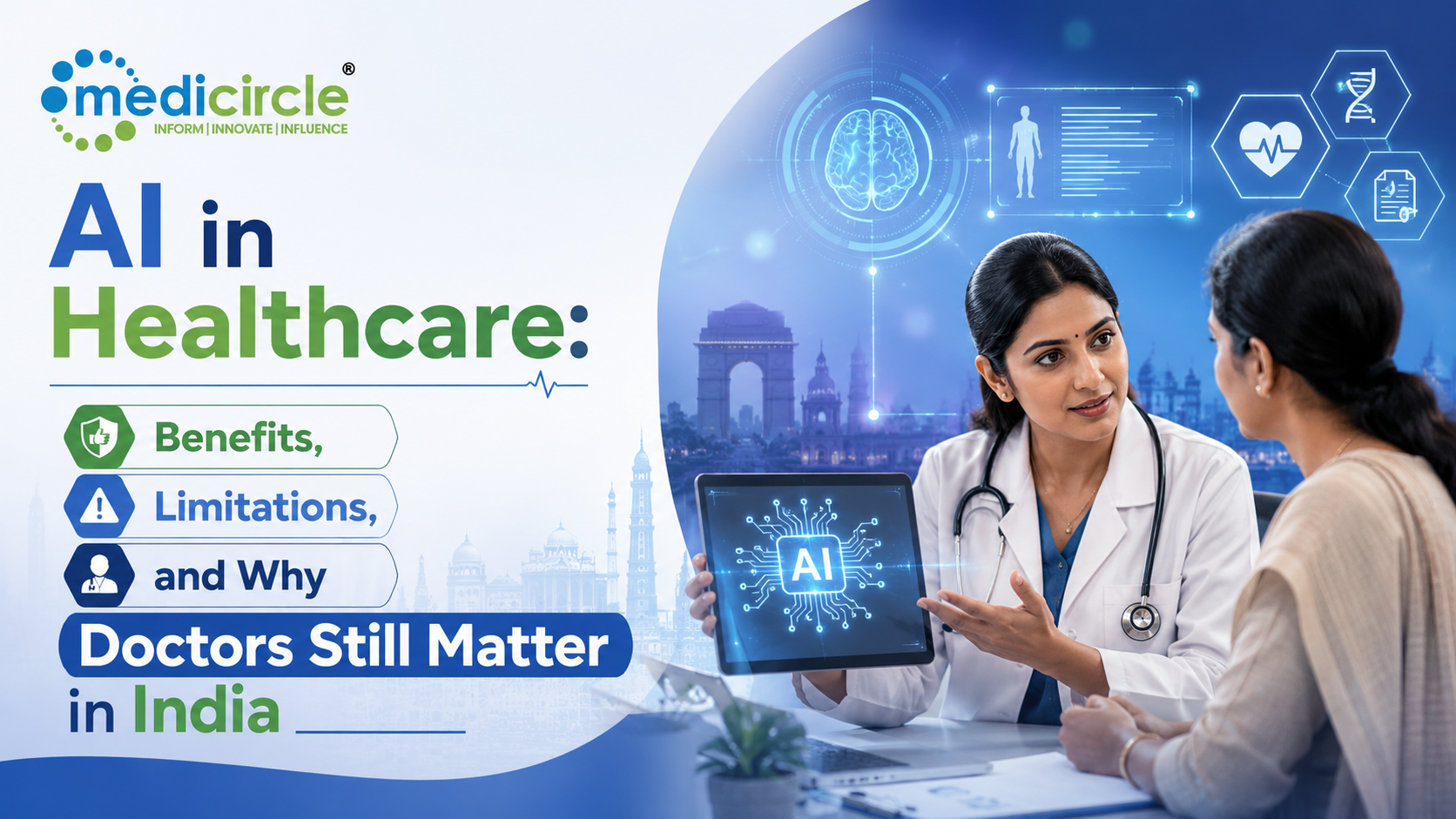
 Artificial intelligence is transforming healthcare through improved diagnosis, predictive analytics, telemedicine, and clinical support. However, doctors remain essential for empathy, judgment, accountability, and delivering truly patient-centered care.




AI in Healthcare: How It Can Help Patients, But Why Doctors Still Matter
Artificial intelligence is creating a quiet transformation across hospitals, clinics, and laboratories in India. Unlike many medical breakthroughs that arrive in the form of a new medicine or surgical technique, this change is being driven by advanced technology. From government medical institutions to leading private hospitals, AI-powered tools are helping healthcare professionals improve efficiency, enhance diagnosis, and expand access to care.
As AI becomes more visible in healthcare, many patients wonder whether they can trust these systems and whether technology could eventually replace doctors. The answer is more complex than a simple yes or no. Understanding the role of AI is particularly important in India, where healthcare resources remain unevenly distributed, and the demand for quality medical care continues to grow.
What AI in Healthcare Actually Means
Artificial intelligence in healthcare does not refer to robots independently treating patients or replacing medical professionals. Instead, it involves software systems that analyze large amounts of medical data, recognize patterns, identify abnormalities, support clinical decisions, and automate routine tasks.
AI can be compared to a highly knowledgeable assistant that continuously learns from medical information and helps healthcare professionals make more informed decisions. Its purpose is not to replace clinical expertise but to strengthen it.
India faces a significant challenge in meeting healthcare demands due to shortages of healthcare professionals in many regions. AI offers an opportunity to improve access and efficiency by supporting existing medical teams and helping them serve more patients effectively.
How AI Is Currently Helping Patients
Faster and More Accurate Diagnosis
One of the most important applications of AI is diagnostic support. AI systems trained on extensive collections of medical images can identify signs of diseases such as diabetic retinopathy, tuberculosis, certain cancers, and heart conditions.
In areas where specialist availability is limited, AI-powered screening tools can help identify diseases at an earlier stage. Early detection allows patients to receive timely treatment and improves the chances of better outcomes.
Research has shown that AI-assisted diagnosis can enhance the accuracy of healthcare professionals in specific clinical situations. Even small improvements in diagnostic precision can positively affect thousands of patients across a large population.
Predicting Health Risks Before They Become Serious
AI has a unique ability to process large volumes of information and detect patterns that may not be immediately obvious. Through predictive analytics, AI systems can evaluate medical history, lifestyle factors, genetic information, and demographic data to estimate future health risks.
This capability is especially valuable in managing chronic conditions such as diabetes, cardiovascular disease, and chronic kidney disease. By identifying individuals at higher risk, healthcare professionals can recommend preventive measures, monitor patients more closely, and encourage healthier lifestyle choices before serious complications develop.
Supporting Imaging and Pathology Services
Radiology and pathology departments often manage heavy workloads. AI tools can assist by reviewing imaging studies and laboratory data to identify abnormalities, prioritize urgent cases, and highlight findings that require immediate attention.
This support allows specialists to focus more of their time on complex cases that require detailed human judgment. Patients benefit from quicker reporting times and potentially lower risks of oversight caused by excessive workload.
Improving Access Through Remote and Rural Healthcare
Many people in India live far from specialist healthcare services. AI-supported telemedicine platforms are helping reduce this gap by enabling remote screening and assessment.
Community healthcare workers can use AI-assisted tools to evaluate conditions such as anemia, heart rhythm abnormalities, and maternal health risks. Results can then be reviewed by doctors located in urban centers, allowing patients in remote regions to receive expert guidance without extensive travel.
This approach extends the reach of healthcare professionals and improves access to care for underserved populations.
How AI Is Helping Doctors
While patient benefits receive significant attention, AI is also transforming the daily work of healthcare professionals.
Reducing Administrative Work and Burnout
Doctors often spend substantial time on documentation, medical records, referrals, and other administrative responsibilities. AI-powered transcription and documentation systems can automatically record consultations and update patient records.
By reducing paperwork, doctors can devote more attention to patient care. This may also help decrease professional burnout, which is a growing concern in healthcare systems around the world.
Supporting Clinical Decision-Making
Healthcare professionals frequently encounter complex cases that require careful evaluation. AI systems can assist by identifying possible diagnoses, highlighting medication interactions, recommending evidence-based treatment options, and presenting relevant clinical information.
For practitioners working in areas with limited specialist access, AI can serve as a valuable support tool by bringing extensive medical knowledge into routine clinical practice.
Accelerating Drug Discovery and Personalized Medicine
AI is also contributing to medical research. By analyzing large biological and chemical datasets, AI can help researchers identify promising drug candidates more efficiently than traditional methods alone.
This has the potential to accelerate parts of the drug development process and support the creation of more personalized treatment approaches. Patients with rare diseases may particularly benefit from AI's ability to identify patterns across large global datasets.
What AI Cannot Do and Why Doctors Remain Essential
Despite its capabilities, AI has important limitations. Medicine involves far more than identifying diseases and recommending treatments.
Doctors provide empathy, reassurance, communication, and emotional support. They understand patient concerns, interpret nonverbal cues, and consider personal circumstances that influence healthcare decisions.
Human health is shaped by cultural beliefs, family responsibilities, financial realities, and social factors. These elements often influence treatment choices and patient behavior in ways that technology cannot fully understand.
There is also the issue of accountability. Medical decisions carry significant ethical and professional responsibilities. Healthcare professionals must explain their reasoning, answer questions, and accept responsibility for patient care. AI can support decision-making, but it cannot replace professional accountability.
The future of healthcare is therefore centered on collaboration between doctors and AI rather than competition between them. Technology can enhance efficiency and accuracy, while doctors continue to provide judgment, compassion, and personalized care.
What This Means for Indian Patients
AI is already being used in several leading hospitals across India for cancer screening, cardiac monitoring, diabetic care, and other clinical applications. Government initiatives are also exploring digital health solutions that may incorporate AI-driven decision support systems in the future.
However, implementation remains uneven. Questions regarding data privacy, regulatory oversight, and algorithmic fairness continue to be discussed. Patients should understand both the strengths and limitations of AI so they can make informed decisions about their healthcare.
As adoption grows, AI is likely to become an increasingly important component of India's healthcare ecosystem.
A Tool in Service of Human Care
AI has the potential to improve healthcare by supporting faster diagnosis, expanding access to medical services, reducing administrative burdens, and assisting healthcare professionals in making informed decisions.
At the same time, technology cannot replace the human qualities that define excellent medical care. Compassion, communication, ethical responsibility, and clinical judgment remain central to the patient experience.
India faces significant healthcare challenges, including workforce shortages, infrastructure limitations, and rising rates of chronic disease. AI is not a complete solution to these issues, but it can play a meaningful role in improving healthcare delivery when used responsibly.
The most effective healthcare system will combine advanced technology with skilled healthcare professionals, ensuring that patient well-being remains the priority in every decision.
Frequently Asked Questions
What is AI in healthcare?
AI in healthcare refers to computer systems that analyze medical data, identify patterns, assist in diagnosis, support treatment decisions, and automate administrative tasks to improve healthcare delivery.
Can AI replace doctors in the future?
No. AI can support healthcare professionals by improving efficiency and accuracy, but it cannot replace human judgment, empathy, communication, and accountability, which are essential parts of patient care.
How does AI help in diagnosing diseases?
AI can analyze medical images, laboratory reports, and patient data to identify signs of diseases such as cancer, diabetic retinopathy, tuberculosis, and heart conditions. This helps doctors detect illnesses earlier and make more informed decisions.
Artificial intelligence is transforming healthcare through improved diagnosis, predictive analytics, telemedicine, and clinical support. However, doctors remain essential for empathy, judgment, accountability, and delivering truly patient-centered care.





-23-300x250.png)

.jpeg)
.jpg)
.jpg)
.jpg)
.jpg)
.jpg)
.jpg)
.jpg)
.jpg)
.jpg)