 Sunday, October 11, 2026
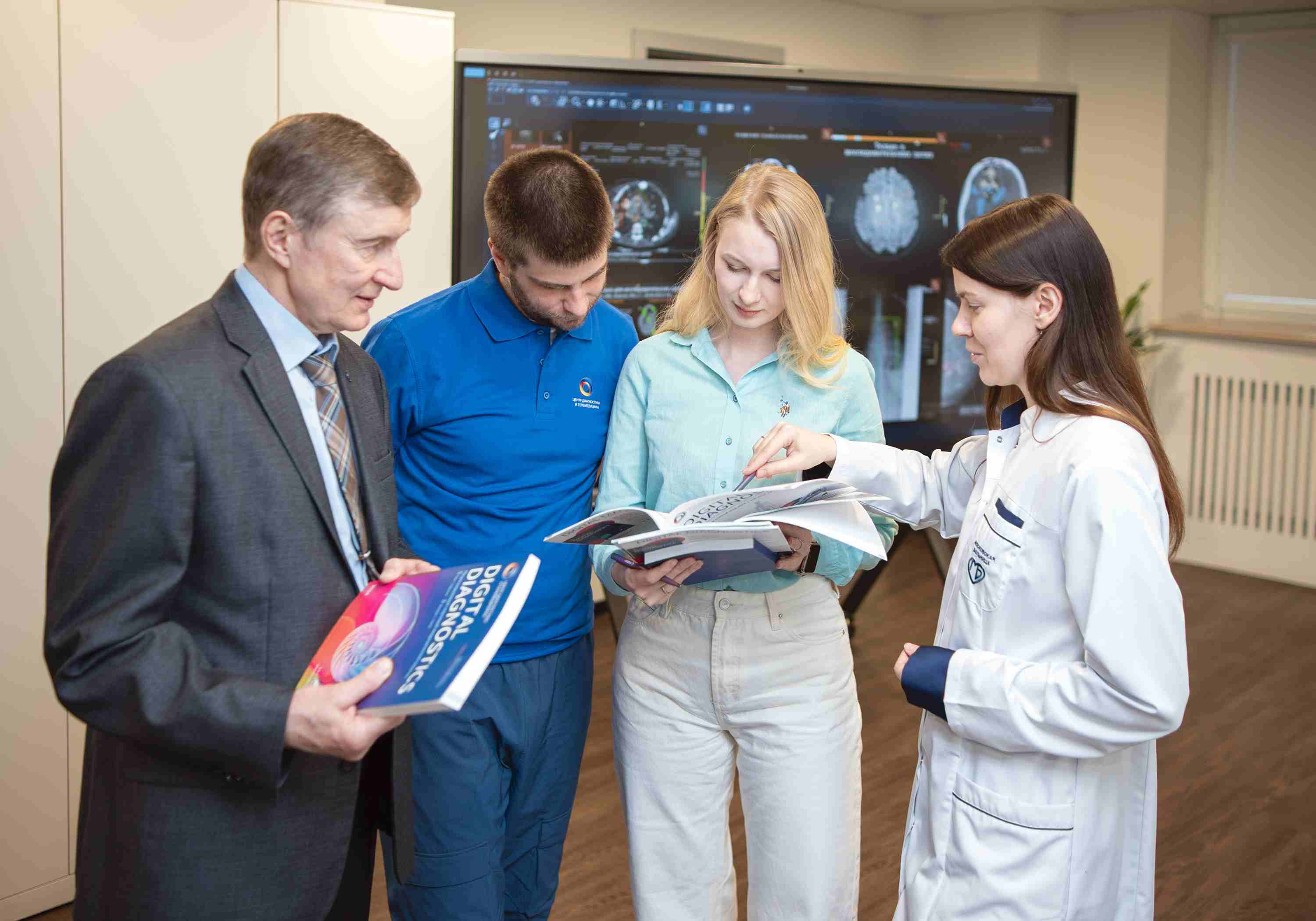
 Artificial intelligence (AI) has evolved from an emerging technology to a core component of Moscow's urban management and healthcare infrastructure.




Artificial intelligence (AI) has evolved from an emerging technology to a core component of Moscow's urban management and healthcare infrastructure. In alignment with the national "Digital Economy" project, the Moscow Government has integrated intelligent technologies into over 130 urban initiatives, ranging from transportation logistics to public services. A primary focus of this digital transformation is the enhancement of clinical diagnostics through advanced medical imaging and data analysis, with some solutions developed in-house and others sourced from partners.
In 2025 alone, the city launched more than 20 new AI-driven projects, significantly bolstering the capabilities of the Moscow Healthcare System. Among the most clinically impactful advancements are those implemented by the Center for Diagnostics and Telemedicine of the Moscow Healthcare Department.
Advancements in Radiology AI Services
Among the most innovative applications of artificial intelligence is its use in medicine, with a specific focus on radiology. Radiologists at the Center now access more than 60 AI services, enabling detection of pathologies across 43 clinical areas.
In 2025, Moscow clinicians gained access to two new AI-powered services designed to enhance the detection of multiple fractures in the ankle and wrist. A third service, focused on detecting shoulder fractures, addresses one of the most technically challenging anatomical regions in X-ray. These tools are engineered to identify subtle fractures and detect multiple concurrent pathologies, thereby supporting more comprehensive and precise treatment planning.
AI-Powered Clinical Summaries
A significant advancement in health information management is the implementation of an AI service designed to synthesize electronic health record (EMR) data. Prior to a patient consultation, the system now generates a summary of the patient's medical history. This summary includes prior visits, relevant test results, prescribed medications, and emergency call data pertinent to the current complaint.
Clinicians report that this tool markedly improves diagnostic quality by reducing the time spent on manual history-taking and minimizing the risk of overlooking critical information. As of late January 2025, the service has generated over 17 million such summaries for physicians.
AI Assistant: Alice
The AI assistant Alice enables patients to log vital signs (blood pressure, pulse, weight, height, temperature, blood glucose, and oxygen saturation) into EHRs, alongside appointment and test management. To date, over 100,000 health records have been entered via this tool.
The Center for Diagnostic and Telemedicine, established in 1996 under Moscow City Hall's Social Development Complex, leads in AI integration for medicine, radiology, advancement, radiology department management, research, and clinician education.






.jpeg)










.jpg)
.jpg)
.jpg)
.jpg)
.jpg)
.jpg)


.jpg)