 Thursday, October 08, 2026
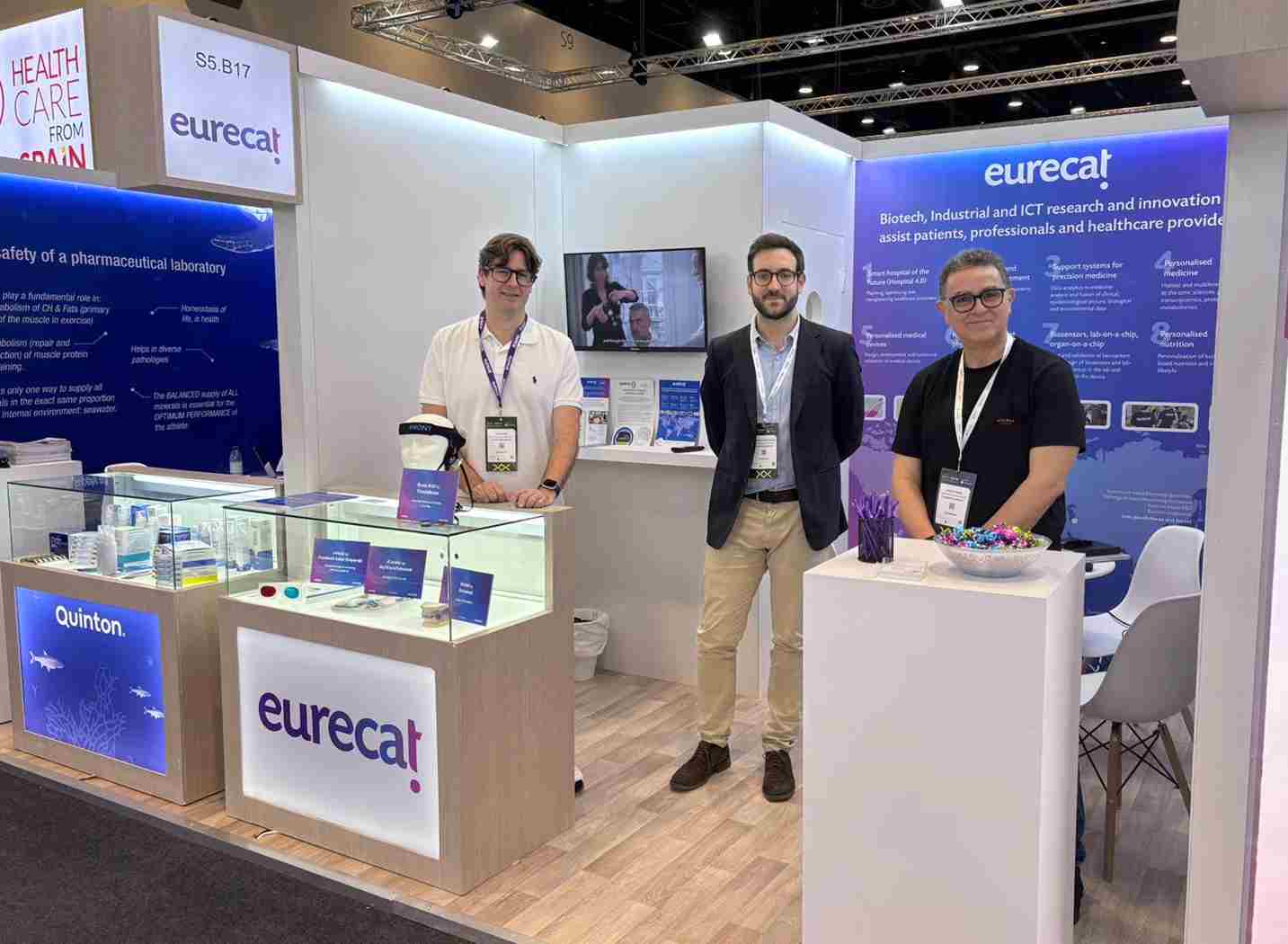
 The Eurecat technology centre is presenting at the World Health Expo (WHX) how it applies these technologies in the development of a portable electrocardiograph and a system for monitoring stroke, among other solutions.




Dubai/Barcelona, 11th February 2026.- The Eurecat technology centre is presenting at the World Health Expo (WHX), in Dubai, its advances in the application of printed electronics technologies to the creation of ultrathin, more flexible and lighter, low-cost medical devices, such as single-use diagnostics and wearables, a field in which Eurecat is a pioneer, with innovations such as a portable electrocardiograph and a system for monitoring stroke.
Printed electronics represent “a paradigm shift in healthcare by enabling the direct printing of sensors, circuits and antennas onto flexible substrates, making continuous physiological monitoring possible, improving patient comfort and allowing scalable manufacturing at a fraction of the cost of conventional electronics,” explains David Marí, Director of Eurecat’s Digital Health Unit.
In this regard, Felip Miralles, Director of Health Technologies at Eurecat, also highlights that the application of this technology, together with others such as artificial intelligence, “is driving a new generation of intelligent medical solutions, ranging from sensorised patches and bandages to connected implants and point-of-care diagnostic tests, which support earlier detection, personalised care and data-driven clinical decision-making, while reducing the care burden and costs of the healthcare system.”
In this sense, Eurecat is showcasing at World Health Expo its capabilities in digital health technologies, medical devices, assistive robotics, sensors and wearables, omics sciences, nutrition and health, and environmental health.
One of the demonstrators on display at the fair is the iCardio system, developed in collaboration with the telemedicine specialist company My Wave Telemed. It is a device that preforms an electrocardiogram without the need to attend a medical appointment and provides a diagnostic report in just ten minutes.
Among the devices on display stands out the headband developed in collaboration with the company Time is Brain, which is integrated into the BraiN20® medical device. This innovative solution enables real-time monitoring of brain activity during an acute stroke, providing critical and immediate information to healthcare professionals. This facilitates faster and more accurate decision-making, with the ultimate goal of improving patients’ clinical and functional outcomes.
In addition, it will be possible to carry out an eye check-up thanks to an application developed with the Salut Empordà Foundation, which allows ophthalmological tests to be performed remotely using a smartphone or an internet browser, with the aim of decentralising care and empowering users and improving the population’s eye health.
“These technologies to improve the wellbeing and health of the population are the result of alliances with suppliers, industry and healthcare institutions in Europe,” explains the Director of Health Technologies at Eurecat, who underlines that “the participation of the technology centre at WHX demonstrates its willingness to establish collaborations in nearby markets, fostering long-term partnerships adapted to local challenges and healthcare systems.”






.jpeg)










.jpg)
.jpg)
.jpg)
.jpg)
.jpg)
.jpg)


.jpg)