Tuesday, October 27, 2026
 Incidental Diagnosis After Cardiac Surgery Leads International Patient To HCGMCC For World-Class Treatment.




Nashik, July 08: In a remarkable journey spanning continents and specialties, HCG Manavata Cancer Centre (HCGMCC) Nashik, successfully treated 62 year old Mr Bosco Daniel, a Dubai based hotelier, for prostate cancer using advanced robotic assisted surgery. What began as a sudden cardiac emergency in India quickly became a life altering moment when routine investigations revealed an incidental diagnosis of prostate cancer. After exploring treatment options across leading metros, Bosco chose Nashik, and never looked back. When he arrived in India for an angioplasty to address his cardiac condition, a subsequent evaluation during hospitalization uncovered early stage prostate cancer. This presented a clinical dilemma - after angioplasty, surgery cannot be performed for at least six months due to the high risk of stent thrombosis. To bridge this gap, Dr Raj Nagarkar and his team administered hormone therapy, a carefully timed intervention that controlled the cancer while allowing Bosco’s heart to heal.
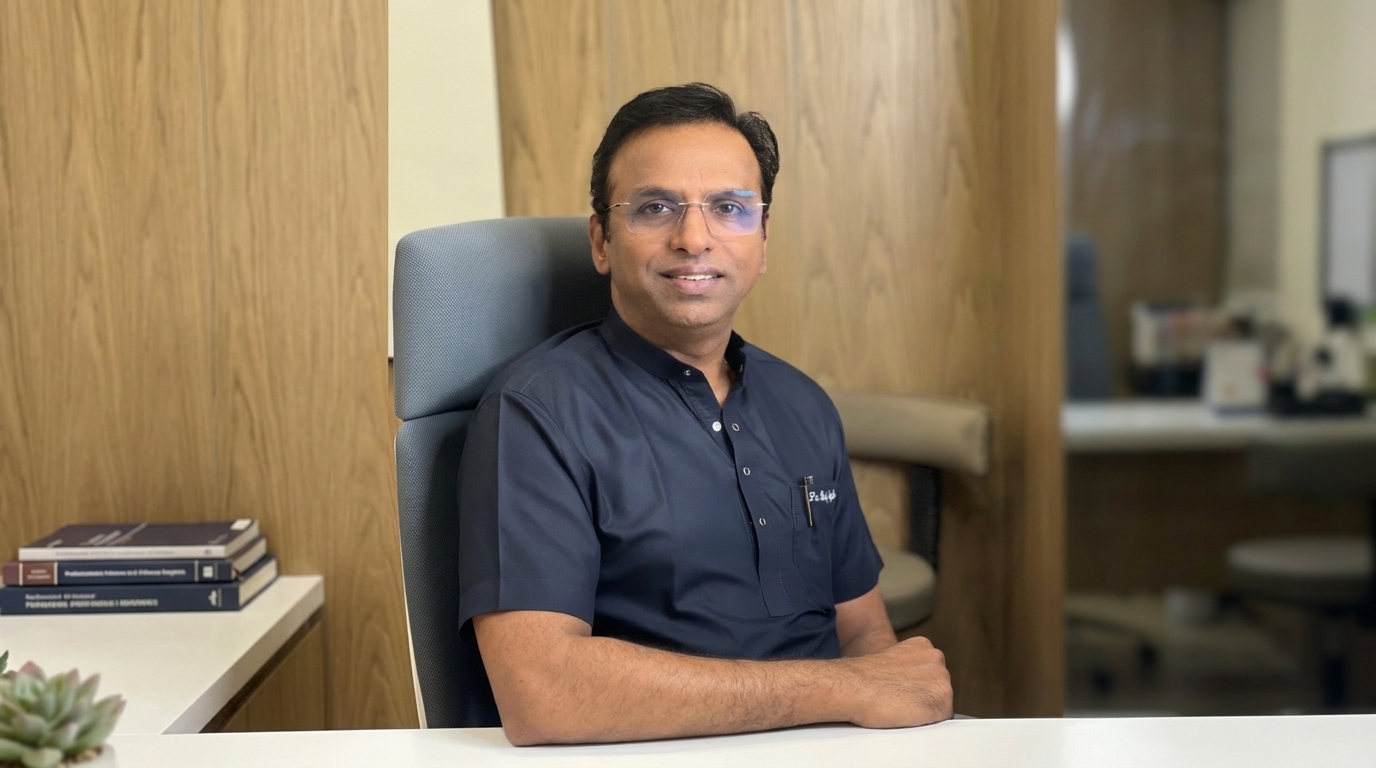
“Bosco’s case required careful coordination between cardiac and cancer care. Regarding his health, there were two challenges viz. how to address his prostate cancer without compromising his heart health. We used hormone therapy for 3 to 6 months, which kept the cancer in check while his cardiac condition stabilised. Once the safe window arrived, we proceeded with robotic assisted surgery. This is the importance of individualized treatment planning, where every decision is made in the patient’s best interest rather than following a one-size-fits-all approach. Bosco recovered exceptionally well and returned to his country within a fortnight,” says Prof Dr Raj Nagarkar, Chief of Surgical Oncology & Robotic Services and Managing Director, KIMS Manavata Hospitals, HCG Manavata Cancer Centre and Six Sigma, Nashik.
The minimally invasive robotic procedure was completed successfully, allowing the patient to recover remarkably quickly. He was able to walk and resume basic activities within just two days, was discharged after three days in hospital, and returned to Dubai within two weeks. Following removal of the urinary catheter a week later, he regained complete bladder control and, importantly, his final histopathology report confirmed that no further treatment such as radiation therapy was required.
“One of the biggest concerns among men diagnosed with prostate cancer is the fear of losing urinary control after surgery. Thanks to advances in robotic assisted surgery and growing surgical expertise, these risks have reduced significantly. Robotic surgery offers unmatched precision, enabling better preservation of vital nerves and structures, resulting in faster recovery, minimal pain, shorter hospital stay and excellent functional outcomes. In Mr Bosco’s case, he regained complete bladder control soon after catheter removal and was able to return to his normal life without requiring any additional treatment. Cases like these reinforce why robotic surgery has become one of the preferred treatment options for appropriately selected patients with localized prostate cancer,” concludes Dr Nagarkar.
Now back in Dubai, Bosco continues to remain under the care of Dr Nagarkar and his team through regular tele-consultations and virtual follow ups, reflecting HCGMCC’s commitment to providing seamless continuity of care for international patients.





-23-300x250.png)

.jpeg)






.jpg)
.jpg)
.jpg)
.jpg)
.jpg)
.jpg)
.jpg)
.jpg)
.jpg)