 Thursday, October 08, 2026
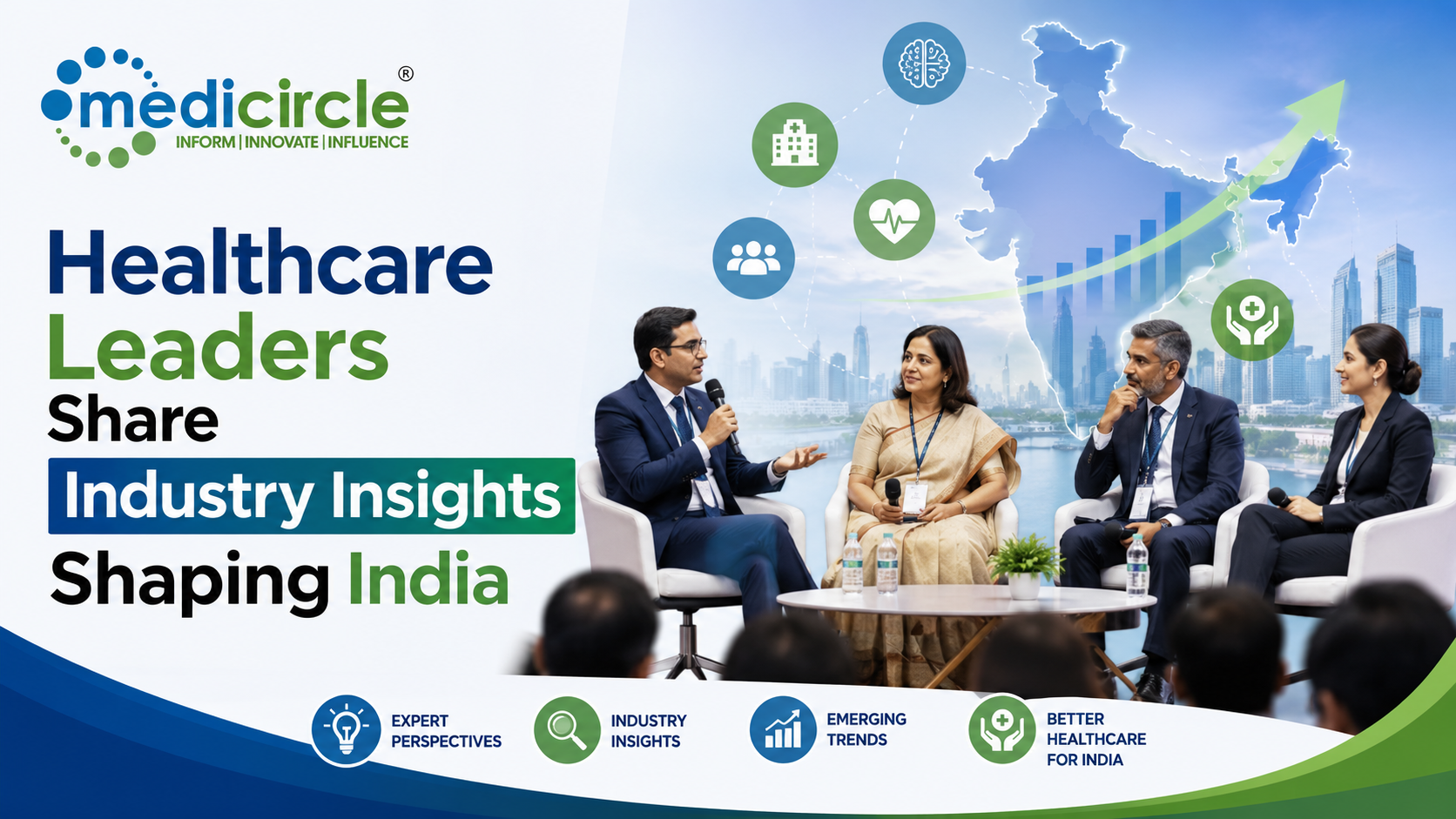
 This article examines what healthcare leaders across India are saying about digital transformation, policy reform, patient care, and workforce development, and what these insights mean for the sector's future.





Introduction
India's healthcare sector stands at a genuinely pivotal moment. The government increased the health budget allocation to over Rs. 1,01,000 crore for the current financial year, marking close to a ten percent rise, and the Ayushman Bharat Pradhan Mantri Jan Arogya Yojana now covers more than 12 crore families across the country. At the same time, hospitals in smaller cities are expanding, artificial intelligence is entering clinical workflows, and patient expectations are shifting in ways that even experienced healthcare administrators did not anticipate a decade ago.
Understanding where the sector is heading requires listening closely to the people running it. Healthcare leaders, including hospital administrators, senior doctors, policy analysts, and health-tech executives, are consistently sharing insights that reveal both the opportunities and the friction points within Indian healthcare. This article brings together the themes that are shaping these conversations today, drawing on how India's healthcare institutions, government schemes, and clinical priorities are evolving, and what that means for doctors, hospitals, and patients alike.
Understanding the Current Healthcare Leadership Landscape
Healthcare leadership in India today looks different from what it did even five years ago. It is no longer confined to hospital boardrooms or pharmaceutical headquarters. Leadership now spans public health officials working on rural outreach, chief information officers managing digital transformation projects, cancer specialists advocating for policy reform, and economists analyzing how India's healthcare spending compares globally.
What ties these voices together is a shared recognition that Indian healthcare cannot be built on borrowed models. The country's healthcare burden is unique. Lifestyle diseases account for a significant share of deaths nationally, out-of-pocket healthcare spending remains high compared to many developed economies even though it has declined meaningfully from 62.6 percent in 2014-15 to around 47.1 percent by 2019-20, and there is a persistent gap between healthcare access in metro cities and in Tier 2 and Tier 3 towns. Leaders across the sector are increasingly vocal that solving these problems requires India-specific strategies, not simply adapted versions of Western healthcare models.
Industry conversations, whether at leadership summits, in published opinion pieces, or during policy roundtables, tend to circle back to a few consistent priorities: expanding access without compromising quality, integrating technology responsibly, and building a workforce that can sustain the sector's rapid growth.
Digital Health and Technology Adoption
Few themes dominate healthcare leadership discussions as consistently as digital transformation. The Ayushman Bharat Digital Mission has pushed hospitals, diagnostic centers, and insurance providers to rethink how patient data is stored, shared, and used. Millions of Indians have created ABHA health accounts, allowing their medical records to travel with them rather than being locked within a single hospital's paper files.
Healthcare technology leaders speaking at industry forums have repeatedly emphasized that digital tools only create value when they are tied to measurable outcomes. It is not enough to digitize records or introduce artificial intelligence tools into a hospital. The real test, as several chief information officers have noted, is whether these systems reduce patient wait times, improve diagnostic accuracy, or ease the administrative burden on doctors and nurses who are already stretched thin.
This is particularly relevant for India, where the healthcare workforce faces significant strain. With over 13 lakh registered allopathic doctors and close to 40 lakh nursing personnel serving a population of more than 1.4 billion, technology is often positioned not as a replacement for human care but as a way to extend the reach of a limited workforce. Artificial intelligence-assisted diagnostics, remote patient monitoring, and teleconsultation platforms are frequently cited by leaders as tools that can bridge the urban-rural divide, provided they are implemented with proper training and infrastructure support.
There is also a growing emphasis on interoperability. Hospital systems built in isolation from one another create fragmented patient journeys. Leaders in health-tech and hospital administration are pushing for systems that can talk to each other, so that a patient moving from a primary health center in a rural district to a tertiary hospital in a metro city does not lose their medical history in the process.
Policy, Access, and the Rural-Urban Divide
Healthcare policy remains one of the most discussed topics among Indian healthcare leaders, and for good reason. Government schemes like Ayushman Bharat, the expansion of Ayushman Arogya Mandirs across the country, and increased budgetary allocation toward primary healthcare infrastructure have all shaped how leaders think about equitable access.
A recurring theme in leadership commentary is that India's healthcare paradox lies in the gap between infrastructure growth and consistent outcomes. The sector is expanding rapidly in terms of hospital beds, medical colleges, and insurance coverage, yet basic fundamentals such as timely diagnosis, referral systems, and continuity of care remain uneven, especially outside major cities. Senior healthcare leaders, including hospital executives overseeing home healthcare and out-of-hospital care models, have pointed to the need for India to adapt global care delivery frameworks rather than adopt them wholesale, given the country's distinct patient demographics and infrastructure realities.
Policy analysts within the sector have also raised concerns about specialist recognition and workforce continuity, particularly in fields like oncology, where transitions in medical regulation can disrupt patient care if not managed carefully. These conversations reflect a broader leadership consensus: policy decisions made in New Delhi or state capitals have direct, tangible consequences for patients receiving treatment in district hospitals.
Elder care is another area receiving renewed attention. With India's elderly population growing steadily, healthcare leaders have been vocal about the need for policy frameworks that go beyond token gestures and address long-term care infrastructure, caregiver support, and chronic disease management for senior citizens.
Clinical Innovation and Patient-Centered Care
Beyond policy and technology, healthcare leaders are increasingly focused on how clinical practice itself is evolving. Senior doctors and medical researchers are sharing insights on treatment protocols, preventive care guidelines, and public health education, often with a strong emphasis on making complex medical information accessible to patients without oversimplifying it.
Discussions around vaccination programs, cancer screening, and chronic disease management have taken on new urgency as India grapples with a rising burden of non-communicable diseases. Leading oncologists and public health experts continue to advocate for early detection programs, particularly for conditions like cervical cancer, where awareness and vaccination can significantly reduce long-term disease burden.
There is also a noticeable shift toward patient experience as a leadership priority, not just clinical outcomes. Hospital leaders increasingly recognize that good medicine paired with a poor patient experience does not build lasting trust. This has led to greater investment in communication training for medical staff, more transparent billing practices, and hospital environments designed with patient comfort in mind.
Pharmaceutical and medical technology leaders, meanwhile, are focused on innovation that addresses distinctly Indian health challenges, from insulin delivery methods suited to local patient behavior to medical device manufacturing that can compete globally while remaining accessible domestically. India's position as a major global supplier of generic medicines and vaccines gives these conversations added weight, since decisions made by Indian pharmaceutical leaders often have ripple effects well beyond the country's borders.
Workforce Development and the Future of Healthcare Careers
A less discussed but increasingly important theme in leadership circles is workforce sustainability. India added 43 new medical colleges in a recent academic cycle, bringing the total to over 800 institutions nationwide, yet leaders across hospital administration and medical education continue to flag concerns about distribution. Many newly trained doctors and specialists gravitate toward metro cities, leaving smaller towns and rural areas underserved.
Healthcare leaders are responding with a mix of strategies, including incentive programs for rural postings, telemedicine partnerships that allow specialists in cities to support primary care providers in remote areas, and expanded training for nursing and allied health professionals who often form the backbone of care delivery in under-resourced regions.
There is also growing conversation around career diversification within healthcare. Doctors who once saw clinical practice as their only professional path are increasingly moving into health-tech leadership, public health policy, medical entrepreneurship, and hospital administration. Leaders view this as a positive development, provided the core commitment to patient care remains central to these expanded roles.
What These Insights Mean for India's Healthcare Future
Taken together, the insights shared by India's healthcare leaders point toward a sector in active transition rather than one that has settled into a fixed direction. Digital transformation, policy reform, clinical innovation, and workforce development are not separate conversations. They are deeply interconnected, and leaders across disciplines increasingly recognize this.
For platforms like Medicircle, this ongoing dialogue between doctors, hospital administrators, policy experts, and healthcare technology leaders represents exactly the kind of knowledge-sharing that benefits the broader healthcare ecosystem. When credible voices from across the sector share their perspectives responsibly, patients gain a clearer understanding of where healthcare is heading, and healthcare institutions gain visibility for the work they are doing to improve access and outcomes.
The path forward for Indian healthcare will likely continue to be shaped by how effectively leaders balance ambitious growth targets with the fundamentals of quality, access, and trust. As the sector matures, the leaders who succeed will be those who stay grounded in patient outcomes even as they navigate technology, policy, and market pressures.
Conclusion
India's healthcare sector is being reshaped in real time by the people leading it, from hospital administrators rethinking care delivery models to doctors advocating for better policy frameworks and technology leaders working to make digital health tools genuinely useful rather than just fashionable. The insights emerging from these conversations reflect a sector that is growing rapidly but remains acutely aware of its own gaps, particularly between urban and rural access, and between technological ambition and on-ground execution.
For doctors, hospital administrators, and healthcare organizations, staying engaged with this evolving leadership dialogue is not optional. It is essential to understanding where the sector is headed and how to prepare for it. For patients and the general public, these insights offer a window into decisions that will directly shape the quality and accessibility of the care they receive in the years ahead.
Frequently Asked Questions
Q1: Why is leadership important in shaping India's healthcare future?
Healthcare leadership determines how quickly innovation reaches patients, how effectively resources are allocated across urban and rural India, and how well hospitals and health systems respond to changing patient expectations and public health challenges.
Q2: What are Indian healthcare leaders currently focused on?
Current priorities include digital health adoption through the Ayushman Bharat Digital Mission, expanding access to Tier 2 and Tier 3 cities, addressing the rising burden of lifestyle diseases, and integrating artificial intelligence responsibly into clinical and operational workflows.
Q3: How does Ayushman Bharat influence healthcare leadership decisions?
Ayushman Bharat has pushed hospital administrators and policymakers to rethink affordability, insurance integration, and rural outreach, making inclusive care planning a central part of leadership strategy across public and private healthcare institutions.
Q4: What role does technology play in the insights shared by healthcare leaders?
Technology, particularly artificial intelligence, electronic health records, and telemedicine, features prominently in leadership conversations because it directly affects diagnostic speed, workforce efficiency, and the ability to extend quality care beyond metro cities.
Q5: How can healthcare professionals stay updated with leadership insights in India?
Following credible healthcare media platforms, attending industry summits, engaging with professional associations, and reading expert opinion pieces from practicing doctors and hospital administrators are reliable ways to stay informed.






.jpeg)








.jpg)
.jpg)
.jpg)
.jpg)
.jpg)
.jpg)


.jpg)
.jpg)
.jpg)