 Thursday, October 08, 2026
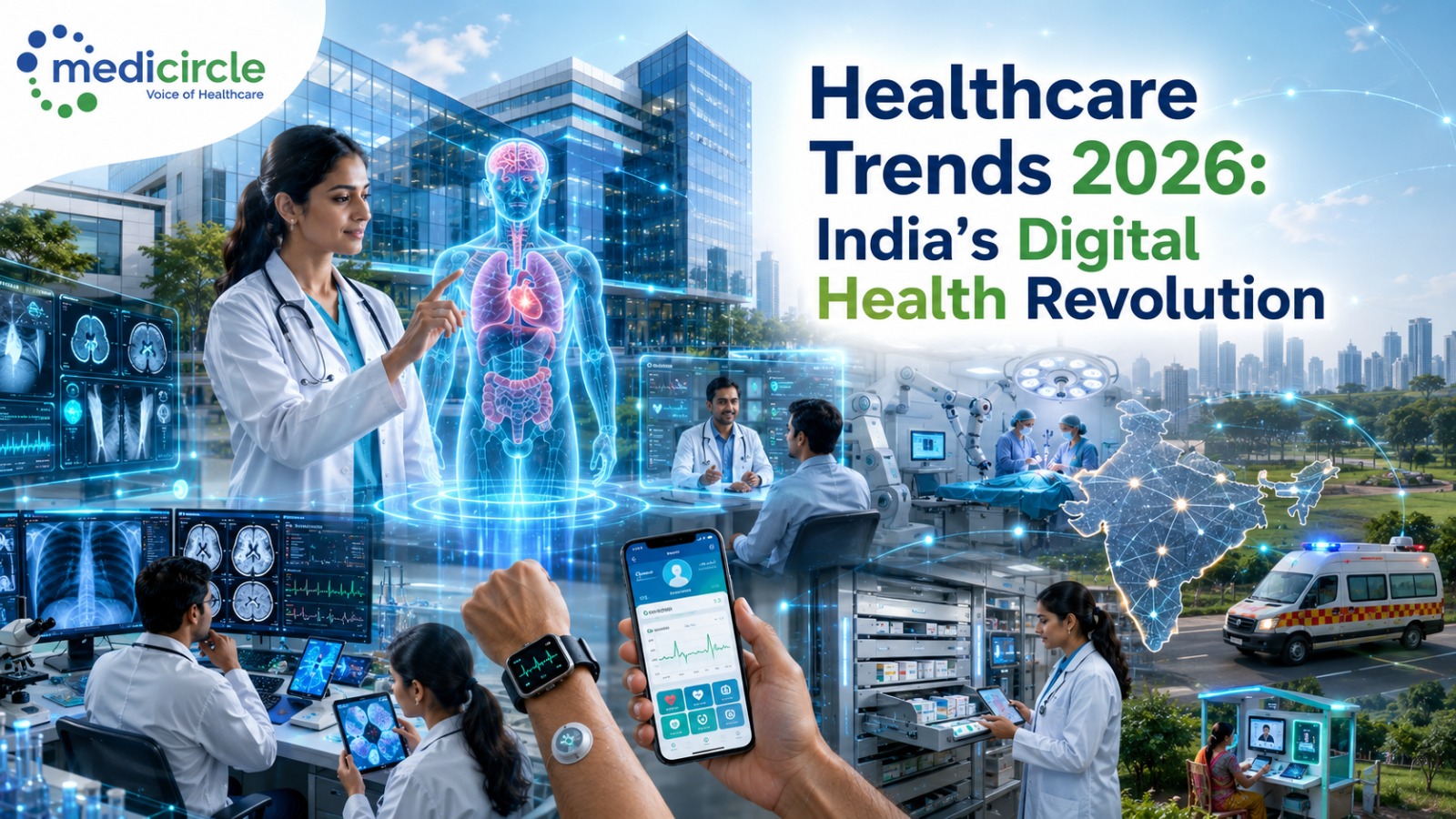
 India's healthcare sector in 2026 is being reshaped by ABDM adoption, AI diagnostics, telemedicine growth, and cybersecurity focus, even as rising costs and chronic disease demand affordable, patient-centred solutions.





Introduction
Indian healthcare is undergoing a period of rapid and meaningful change. Digital health infrastructure is scaling at a pace few anticipated even three years ago, artificial intelligence is moving from pilot projects into everyday clinical use, and patients across tier one and tier two cities are demanding faster, more transparent, and more affordable care. At the same time, hospitals and healthcare companies are contending with rising treatment costs, growing cybersecurity risks, and an ageing population with a heavier burden of chronic disease.
For doctors, hospital administrators, healthcare brands, and patients alike, understanding these shifts is no longer optional. The decisions made in 2026, whether about adopting digital health records, investing in telemedicine, or strengthening data security, will shape the quality and accessibility of care for years to come. This article examines the healthcare trends most relevant to India in 2026, grounded in current data and policy developments, and explains what they mean for the people who depend on the health system every day.
The Expansion of India's Digital Health Ecosystem
The Ayushman Bharat Digital Mission, commonly known as ABDM, has become the backbone of India's digital health transformation. Launched by the Ministry of Health and Family Welfare through the National Health Authority, ABDM is designed to give every citizen a unique digital health identity known as ABHA, along with interoperable registries for healthcare professionals and facilities.
Adoption has grown steadily year on year, moving from a modest base in 2021 to figures well beyond 90 crore ABHA accounts in 2026, with more than 100 crore digital health records now linked to the ecosystem. This scale places ABDM among the largest digital health identity programmes anywhere in the world, comparable in ambition to Aadhaar and UPI in other sectors.
For patients, this means fewer repeated diagnostic tests, easier sharing of medical history between hospitals, and reduced dependence on physical prescriptions and reports. For doctors and hospitals, it means access to a more complete clinical picture, which supports safer prescribing and better continuity of care. However, adoption has not been uniform. Research tracking ABHA saturation across states found significant variation linked to income levels, indicating that digital health equity between wealthier and less developed states remains a genuine challenge that policymakers and healthcare providers will need to address through 2026 and beyond.
Artificial Intelligence Is Moving Into Everyday Clinical Practice
Artificial intelligence in Indian healthcare has moved well past the experimental stage. Hospitals are increasingly using AI-supported tools for radiology image analysis, early detection of diabetic retinopathy, triage support in emergency departments, and predictive analytics that flag patients at risk of complications before they become emergencies.
This shift mirrors a global pattern. Internationally, health systems are combining electronic medical records, imaging archives, and genomic data to forecast which patients are most likely to develop complications or respond to specific treatments, with some validated models achieving meaningfully higher accuracy than traditional risk scoring methods. Indian hospitals, particularly larger tertiary centres in metro cities, are beginning to adopt similar approaches, while smaller hospitals in tier two cities are exploring AI-powered diagnostic support to compensate for a shortage of specialist radiologists and pathologists.
What This Means for Patients and DoctorsFor patients, AI-assisted diagnostics can mean faster results and earlier detection of conditions such as tuberculosis, diabetic complications, and certain cancers. For doctors, these tools function as a second opinion rather than a replacement for clinical judgement. It remains essential that AI-generated insights are reviewed and validated by qualified medical professionals before being used to guide treatment decisions.
Telemedicine and Home-Based Care Continue to Grow
Telehealth adoption in India accelerated sharply during the pandemic years and has continued to mature since. In 2026, virtual consultations are no longer viewed as a temporary substitute for in-person care but as a permanent part of how healthcare is delivered, particularly for chronic disease follow-up, mental health support, and access in rural and semi-urban areas where specialist availability is limited.
Hospital at home and virtual ward models, already well established in countries such as Australia, Spain, and the United Kingdom, are gaining early traction among Indian hospital chains looking to ease bed pressure and offer patients the option of recovering in familiar surroundings under remote clinical supervision. These models pair periodic in person visits with remote monitoring devices that track vital signs, allowing clinical teams to intervene early if a patient's condition changes.
Remote patient monitoring devices, including wearables that track heart rate, blood glucose, and oxygen saturation, are also becoming more accessible and affordable in India, supporting better management of common chronic conditions such as diabetes and hypertension, both of which remain widespread across Indian tier one and tier two populations.
Cybersecurity Has Become a Patient Safety Priority
As hospitals digitise records and connect more devices to their networks, the risk of cyberattacks has grown in parallel. Globally, healthcare has become one of the most frequently targeted sectors for data breaches, and the consequences extend well beyond financial loss. When hospital systems go offline, clinicians lose access to lab results, medication histories, and imaging, which can delay treatment and increase the risk of medical errors.
Indian hospitals are increasingly recognising that cybersecurity is not simply an information technology concern but a matter of patient safety. As ABDM linked records and connected medical devices become more common across Indian healthcare facilities, hospitals will need to invest in stronger authentication protocols, staff training, and regular security audits to protect patient data and maintain continuity of care.
For patients, this trend reinforces the importance of using verified, ABDM compliant platforms when sharing health information digitally, and asking hospitals about their data protection practices, particularly when opting into digital health records or wearable integrated monitoring.
Rising Healthcare Costs and the Push for Value Based Care
Healthcare costs continue to rise faster than general inflation, a pattern seen not only in India but across health systems worldwide. Contributing factors in the Indian context include the growing burden of chronic disease, the rising cost of specialty medications, an ageing population, and the ongoing expansion of private healthcare infrastructure to meet demand that public systems cannot fully absorb.
In response, both public and private stakeholders are exploring cost containment strategies that do not compromise care quality. These include greater use of generic and biosimilar medications, expansion of preventive care and early screening programmes, and a gradual shift toward value based reimbursement models that reward health outcomes rather than the volume of procedures performed. Government schemes such as Ayushman Bharat PM-JAY continue to play a central role in extending financial protection to economically vulnerable households, though awareness and last-mile access remain areas that require continued attention, particularly outside major cities.
What Patients Can DoPatients can help manage the impact of rising costs by prioritising preventive health checkups, maintaining adequate health insurance coverage, and making use of digital health records to avoid unnecessary repeat testing when moving between healthcare providers.
Chronic Disease and an Ageing Population Are Reshaping Demand
India's health profile is shifting. Non-communicable diseases such as diabetes, hypertension, cardiovascular disease, and certain cancers now account for a growing share of the country's overall disease burden, a trend consistent with patterns observed globally. At the same time, India's population of older adults is expanding, increasing demand for long-term management of multiple coexisting conditions rather than one-off treatment episodes.
This shift is prompting hospitals and healthcare companies to invest in chronic disease management programmes, home-based care services, and community-level screening initiatives, particularly in tier two cities where specialist access has historically been limited. Mental health awareness is also growing steadily across India, with more patients and families willing to seek professional support, though stigma and limited availability of trained mental health professionals in smaller towns remain ongoing challenges.
What This Means for India's Healthcare Ecosystem
Taken together, these trends point toward a healthcare system that is becoming more connected, more data-driven, and more focused on prevention rather than only treatment. Doctors who engage with digital health tools and demonstrate credible expertise will find new ways to reach and support patients. Hospitals that invest early in secure digital infrastructure and value-based care models will be better positioned to manage rising costs while improving outcomes. Healthcare brands and companies that communicate responsibly and transparently about their innovations will build the kind of trust that Indian patients are increasingly looking for.
Platforms that connect healthcare experts, hospitals, and the public through credible, well-explained information have an important role to play in this transition. As healthcare becomes more digital and more data-intensive, simplifying complex medical and policy developments for a general audience becomes essential to ensuring that the benefits of innovation reach patients as well as providers.
Conclusion
Healthcare in India is at a genuine inflection point in 2026. The rapid scale up of ABDM and digital health records, the practical integration of artificial intelligence into diagnostics, the steady growth of telemedicine and home based care, and the increasing seriousness with which hospitals are treating cybersecurity all reflect a system that is modernising quickly. At the same time, rising costs and a growing chronic disease burden mean that access, affordability, and equity must remain central to how this transformation unfolds. The healthcare organisations, doctors, and policymakers who approach 2026 with a clear focus on patient outcomes, data security, and responsible innovation will be the ones who shape a stronger, more resilient health system for India in the years ahead.
Frequently Asked Questions
Q1: What are the biggest healthcare trends in India for 2026?
The biggest healthcare trends in India for 2026 include wider adoption of the Ayushman Bharat Digital Mission and ABHA IDs, AI assisted diagnostics, growth in telemedicine and home based care, stronger cybersecurity requirements for hospitals, and rising focus on chronic disease management and cost containment.
Q2: How is Ayushman Bharat Digital Mission changing healthcare access in India?
ABDM allows citizens to create a unique digital health ID called ABHA, which links medical records across hospitals, laboratories, and pharmacies with patient consent, reducing duplicate testing and improving continuity of care.
Q3: Is telemedicine reliable for serious health conditions?
Telemedicine works well for consultations, follow ups, chronic disease monitoring, and initial assessments, but serious or emergency conditions still require in person clinical evaluation and diagnostic testing.
Q4: Why is cybersecurity becoming important for Indian hospitals in 2026?
As hospitals digitise records through ABDM and adopt connected medical devices, patient data becomes a target for cyberattacks. A breach can disrupt treatment, delay care, and compromise sensitive medical information, making cybersecurity a patient safety issue rather than only an information technology concern.
Q5: How can patients prepare for rising healthcare costs in India?
Patients can prepare by opting for adequate health insurance, using government schemes such as Ayushman Bharat PM-JAY where eligible, prioritising preventive checkups, and using verified digital health records to avoid repeated diagnostic testing.
Resources
- National Health Authority, Ayushman Bharat Digital Mission (ABDM): Official updates on ABHA adoption and digital health infrastructure
- World Health Organization (WHO): India Country Office Reports on public health priorities
- Indian Council of Medical Research (ICMR): Guidelines and publications on disease burden and prevention
- Ministry of Health and Family Welfare (MoHFW): Policy updates and Ayushman Bharat PM-JAY scheme details
- National Medical Commission (NMC): Regulatory standards for medical practice in India
Interlinking Keywords
Ayushman Bharat Digital Mission, telemedicine in India, AI in healthcare, hospital cybersecurity, chronic disease management, digital health records, Ayushman Bharat PM-JAY, preventive healthcare India
Last medically reviewed by:
Medicircle Editorial and Medical Advisory Team on July 17, 2026
Medical Disclaimer
This article is intended for general informational and educational purposes only and does not constitute medical advice, diagnosis, or treatment. The content reflects publicly available data, government sources, and industry reports at the time of writing and should not be used as a substitute for professional medical consultation. Readers should always seek the guidance of a qualified physician or healthcare provider regarding any medical condition, treatment decision, or health concern. Medicircle and its contributors do not accept responsibility for decisions made solely on the basis of this article.






.jpeg)








.jpg)
.jpg)
.jpg)
.jpg)
.jpg)
.jpg)


.jpg)
.jpg)
.jpg)