Tuesday, October 27, 2026
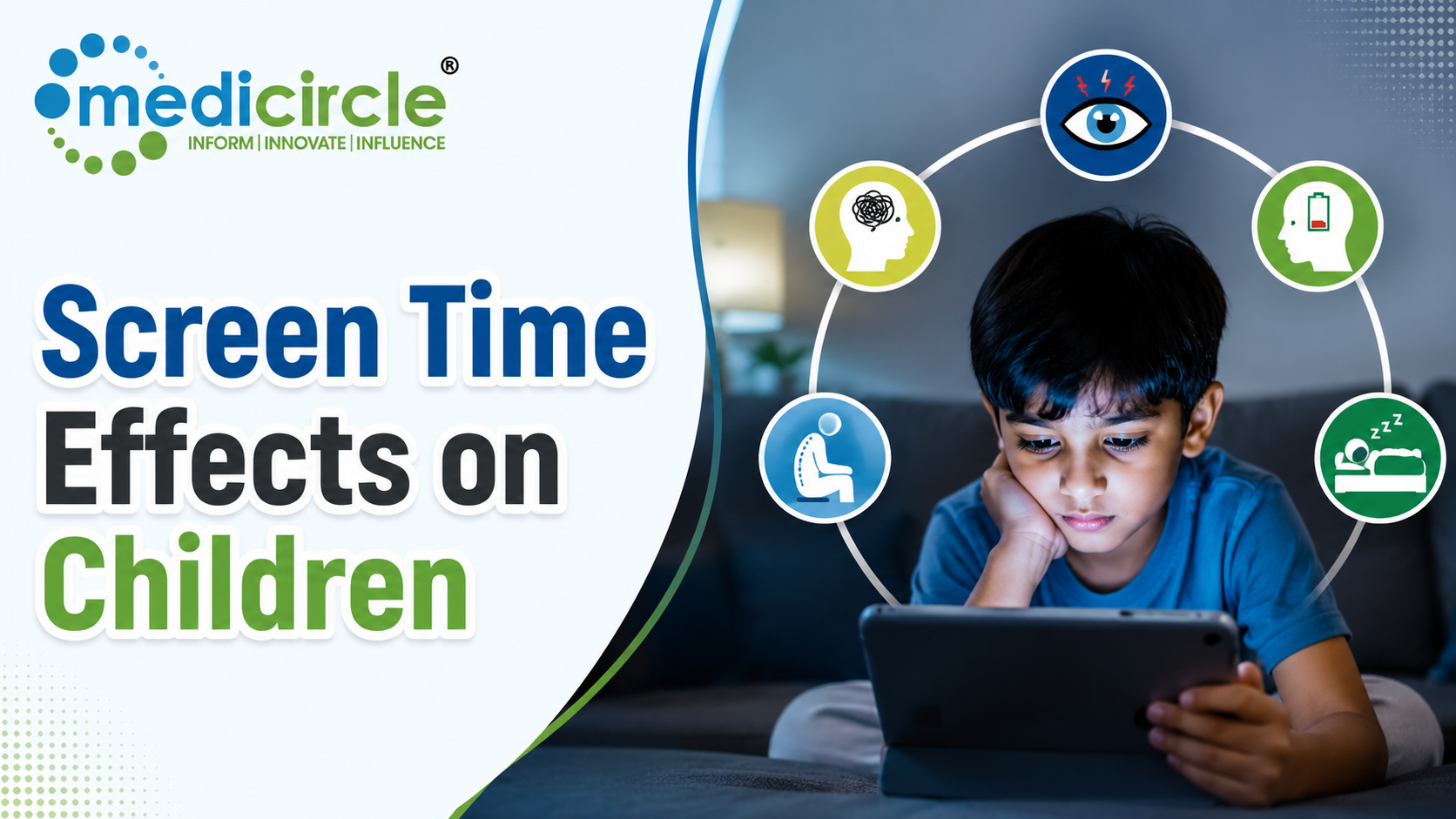
 Excessive screen time harms children's cognitive, language, emotional, and physical development. This article guides Indian parents and healthcare professionals with evidence-based strategies for healthier digital habits.





Introduction
Across India, in households from Mumbai apartments to small-town homes in Rajasthan, a familiar scene has become routine. A toddler quieted with a smartphone. A school-going child hunched over a tablet. A teenager spending the better part of the day immersed in short videos. Screens have seamlessly entered family life, and while they carry genuine educational potential, the volume and pace of this shift have outpaced the awareness most parents hold about the real developmental consequences.
India is now at a critical crossroads. The Economic Survey 2025-26, for the first time in Indian policy history, formally recognised digital addiction as a public health concern with real economic and social costs. Research from five northern Indian states published in 2024 found that over 60 percent of children aged two to five years were spending two to four hours on screens daily. In urban India, the prevalence of excessive screen time among young children ranges between 60 and 89.4 percent. These are not statistics from distant countries. These numbers reflect what is happening in Indian homes right now.
Understanding how screen time affects children is not about generating alarm. It is about equipping parents, paediatricians, teachers, and caregivers with knowledge that helps them make informed decisions for the children in their care. Medicircle, committed to simplifying credible healthcare knowledge for Indian audiences, presents this comprehensive guide on what current research tells us about screen time and child development, and what families in India can realistically do about it.
Understanding Screen Time and Why Context Matters
Screen time refers to the total duration a child spends engaged with any digital screen, including television, smartphones, tablets, computers, and gaming consoles. However, researchers increasingly emphasise that not all screen time is equal. The content being consumed, the presence or absence of a supervising adult, the purpose of use, whether educational or purely passive entertainment, and the age of the child all play a significant role in determining the outcomes.
Harvard paediatrician Dr. Michael Rich, director of the Center on Media and Child Health at Boston Children's Hospital, has noted that it is not simply how long children use screens that matters most, but how they are using them and what is happening in their brains in response. This distinction is important because it moves the conversation from a blanket prohibition to a more nuanced and workable framework for Indian families.
The age at which children begin regular engagement with digital media has dropped dramatically over the past two decades. What was once considered a phenomenon beginning around four years of age is now documented in infants as young as four months. This unprecedented early exposure is what makes the question of screen time effects on children so urgent across the global medical community.
How Screen Time Affects Cognitive Development
The human brain undergoes its most rapid and consequential development during the first five years of life. Neural connections form at an extraordinary rate, and the quality of stimulation a child receives during this window shapes learning, attention, problem-solving, and executive functioning for decades to come.
Research published in the journal Cureus examined the effects of excessive screen time on multiple cognitive domains. The findings showed that while certain types of screen content, such as well-designed educational applications, can support early reading skills and creative thinking, excessive screen use and media multitasking are consistently associated with weaker executive functioning, poorer working memory, reduced attention span, and lower academic performance.
A longitudinal study tracking children from early childhood found that each additional hour of television exposure at two years of age corresponded to meaningful declines in classroom participation and mathematics performance by the fourth grade. In India, where academic outcomes carry significant weight for family aspirations and upward mobility, these findings have particularly relevant implications.
The growing human brain is constantly building neural pathways and pruning those that are less stimulated. Digital screens, when used excessively, tend to provide what researchers describe as impoverished stimulation compared to the richness of real-world sensory and social experiences. Children need diverse inputs, including unstructured play, face-to-face conversations, physical exploration, and even the experience of boredom, which research identifies as the space where creativity and imagination flourish.
Among Indian adolescents, a 2025 survey revealed that screen time for children aged 12 to 18 has doubled in just five years, now averaging over six hours daily. The ASER 2024 survey found that while 82.2 percent of Indian teenagers aged 14 to 16 know how to use a smartphone, only 57 percent use it for educational purposes, while 76 percent primarily use it to access social media. This gap between potential and actual use underscores the challenge facing Indian families and policymakers.
Screen Time and Language Development in Young Children
Language is one of the most studied areas in relation to early screen exposure, and the evidence is substantial and consistent. Children learn language primarily through reciprocal interaction with human caregivers. These interactions, where a parent responds to a child's babble, names objects, narrates daily activities, and reads aloud, build the vocabulary, phonological awareness, and conversational competence that form the foundation of all future literacy.
Excessive screen time erodes the time and quality available for these interactions. When a television is on in the background, even if the child is not directly watching it, research has demonstrated that parents speak less frequently and interact with their children in a more passive manner. This background noise effect has measurable consequences for language development in children under the age of five.
Children aged 12 to 24 months who spend two or more hours daily on screens show a significantly elevated risk of language delay compared to those with minimal screen exposure. Studies have found that this risk is even greater when screen exposure begins before 12 months of age. For Indian families where multiple languages are spoken at home and language proficiency is closely tied to educational success, these findings deserve serious attention.
It is worth noting, however, that co-viewing, where a parent watches along with the child, explains the content, and prompts responses, can partially mitigate the negative effects and even support vocabulary development for children above 17 months. The key distinction, as researchers put it, is quality versus quantity. A child watching an age-appropriate educational programme with an engaged parent beside them is in a fundamentally different situation from a child handed a device as a substitute for interaction.
Recognising the Impact on Emotional and Social Development
The social and emotional consequences of heavy screen use are among the most complex and increasingly well-documented in recent research. A major meta-analysis published in 2025 by the American Psychological Association, reviewing 117 studies covering over 292,000 children globally, found a bidirectional relationship between screen time and socioemotional problems. Children who use screens excessively are more likely to develop anxiety, depression, aggression, and hyperactivity. And children who are already experiencing these emotional challenges are more likely to turn to screens as a coping mechanism, creating a reinforcing cycle that is difficult to interrupt.
Research has found that children who spend significant time on screens from early ages show measurable reductions in emotional understanding. Children who had a television in their bedroom at age six were found to have lower levels of emotional understanding by the age of eight. The ability to read social cues, empathise with others, manage frustration, and build friendships is fundamentally shaped by face-to-face interaction, and screen time directly competes with the time available for these experiences.
In India, where joint family structures and community-based childhoods have historically provided rich social environments, the rapid shift to individual, device-centred entertainment represents a meaningful cultural change with developmental consequences. The Economic Survey 2025-26 noted that weakening offline social bonds and increasing digital engagement are leading to greater loneliness and social withdrawal even among children who appear highly connected online.
Gaming is associated with elevated risks of emotional problems, particularly in boys. Social media use during early adolescence carries its own set of concerns, especially for girls, who research shows are more susceptible to the socioemotional consequences of heavy screen engagement.
Screen Time, Sleep, and Physical Health
The relationship between screens and sleep is mediated by a well-understood mechanism. Screens emit blue light that suppresses the secretion of melatonin, the hormone that regulates the body's sleep cycle. When children use devices close to bedtime, they take longer to fall asleep, sleep for fewer hours, and miss out on the deep restorative sleep that is essential for brain development, emotional regulation, and physical health.
Teenagers who stay up late using social media or gaming platforms not only accumulate sleep debt but also miss the REM sleep stages during which the brain consolidates learning and stores memories. This means that reduced sleep from screen use directly compromises academic retention and cognitive performance the following day.
Beyond sleep, excessive screen time is consistently linked to reduced physical activity and a higher likelihood of weight gain. Research has found that children who spend two or more hours on screens daily have a 42 percent greater risk of being overweight. In India, where the burden of childhood obesity and metabolic disease is rising steadily in urban populations, this association carries significant public health weight. A sedentary child watching screens for hours is simultaneously missing out on the physical activity essential for healthy bone density, cardiovascular fitness, and immune function.
Diagnosis and Medical Evaluation of Screen-Related Concerns
Parents in India often find it difficult to assess whether their child's screen use has crossed from manageable to concerning. Paediatricians and child development specialists are the appropriate first point of contact when parents observe the following:
- Persistent irritability, anger, or emotional outbursts when screens are taken away
- Significant decline in academic performance or disinterest in activities that were previously enjoyable
- Difficulty falling asleep or staying asleep, or complaints of eye strain and headaches
- Social withdrawal, reduced interaction with family members, and preference for screen-based entertainment over all else
- Speech or language delays in toddlers with high screen exposure
- Loss of appetite, skipping meals, or eating exclusively in front of screens
In India, paediatricians at both private hospitals and government facilities under programmes like the Rashtriya Bal Swasthya Karyakram (RBSK) are equipped to conduct developmental screenings. The Indian Academy of Paediatrics (IAP) has published guidelines on screen time management that align broadly with international recommendations from the World Health Organization and the American Academy of Paediatrics. Parents in Tier 1 and Tier 2 cities have access to child psychologists and developmental paediatricians who can provide more detailed evaluations when needed.
The absence of clear symptoms does not mean the absence of impact. Cognitive and emotional effects of excessive screen time can be subtle and cumulative, making regular developmental check-ups a valuable preventive tool for all children.
Treatment and Management Strategies for Families
Managing screen time in a household where screens are embedded in work, education, and entertainment requires a practical, compassionate, and consistent approach. Research provides clear guidance on what works.
Setting firm but age-appropriate limits is the cornerstone of management. The World Health Organization recommends no screen time for children under two years, one hour per day for children aged two to four, and no more than two hours of recreational screen time per day for older children. These limits need to be applied consistently across weekdays and weekends, as studies have found that weekend screen use, which tends to be more entertainment-focused, is associated with worse developmental outcomes than weekday use.
Parental role modelling is a critical but often overlooked element. Research shows that children in households where parents watch four or more hours of television daily are significantly more likely to develop heavy screen habits themselves. Parents who place their own devices aside during family meals, bedtime routines, and play time are sending a powerful message about the value of being present.
Practical strategies that Indian families can implement include:
- Establishing device-free mealtimes and making family dining a conversation-led experience
- Keeping smartphones and tablets out of children's bedrooms, especially overnight
- Using parental control features available on Android and iOS devices to set daily screen time limits
- Replacing screen time with activities like outdoor games, reading, drawing, cooking together, or visits to parks and libraries
- Co-viewing educational content with children and engaging them in conversation about what they are watching
- Designating specific "offline hours" in the daily family schedule, particularly in the evening
Schools also have a meaningful role. Several Indian states, including Maharashtra and Karnataka, are now implementing or considering restrictions on mobile phone use within school premises and developing digital wellness curricula. The Economic Survey 2025-26 has recommended parental workshops through schools and community centres to help caregivers recognise signs of digital addiction and use parental control tools effectively.
Prevention and Building Healthier Digital Habits from the Start
The most effective approach to managing screen time is prevention, beginning in infancy. Families that establish healthy media habits early find it far easier to maintain them than families who attempt to pull back after habits are entrenched. Early excessive screen use tends to cluster with other unhealthy behaviours, including poor diet, inadequate sleep, and reduced physical activity, making early intervention all the more important.
Healthcare professionals play a vital role in this preventive effort. Paediatricians are well-positioned to counsel parents about screen time at every routine check-up, beginning from the newborn visit. Public health initiatives and government schemes that reach families in rural and peri-urban settings, including the health workers under the ASHA programme and Anganwadi centres, can carry this messaging to communities where paediatric specialists may not be readily accessible.
Encouraging time in nature has emerged as an evidence-based counterbalance to screen time. Research from New Zealand found that children with greater exposure to green spaces, whether parks, gardens, or natural environments, showed reduced anxiety and stronger self-efficacy regardless of their screen habits. In the Indian context, traditional outdoor games, community play, and unstructured time in open spaces serve this purpose.
Medicircle believes that responsible health communication plays a meaningful role in bridging the gap between medical evidence and everyday parenting decisions. Platforms that connect healthcare experts with Indian families, provide reliable information on child development, and create space for expert voices to reach a wider audience contribute directly to better health outcomes for the next generation.
Conclusion
Screen time is not inherently harmful, and digital literacy is increasingly a life skill that Indian children will need. However, the evidence is unambiguous that excessive, unmonitored, and poorly chosen screen use during the formative years of childhood carries real and lasting risks to cognitive development, language acquisition, emotional health, sleep quality, and physical wellbeing.
India stands at a defining moment. With the Economic Survey 2025-26 elevating digital addiction to national policy priority, and with researchers, paediatricians, and child development experts converging on the same message, families now have both the urgency and the guidance to act. The goal is not to eliminate screens from children's lives but to ensure that screens serve children rather than the other way around. With consistent boundaries, active parental involvement, age-appropriate content, and a commitment to real-world experiences, Indian families can raise children who are both digitally capable and developmentally thriving.
Frequently Asked Questions
Q1: How much screen time is considered safe for children under five years of age?
According to the American Academy of Paediatrics and the World Health Organization, children below 18 months should have no screen time apart from video calls with family. Children aged 18 to 24 months should only engage with high-quality educational content under parental supervision. Children aged two to five years should be limited to one hour of screen time per day. The focus should always be on quality of content and active parental participation rather than screen duration alone.
Q2: Can screen time cause speech and language delays in children?
Yes, research consistently shows that excessive screen time, particularly before the age of two, is associated with delayed speech and language development. Children aged 12 to 24 months who spend two or more hours daily on screens have a significantly higher likelihood of experiencing language delays. This happens because screens reduce the quality and frequency of real-world verbal interactions with caregivers, which are essential for language acquisition.
Q3: What are the mental health effects of too much screen time on children in India?
Excessive screen time has been linked to increased anxiety, depression, emotional dysregulation, poor self-esteem, and behavioural problems in children. The Economic Survey 2025-26 identified digital addiction as a major public health concern, with nearly 15 percent of Indian adolescents reporting moderate to severe technology addiction symptoms. Screen-induced poor sleep, violent content exposure, and reduced face-to-face interaction all contribute to worsening mental health outcomes.
Q4: How does screen time affect a child's sleep?
Screens emit blue light that suppresses the production of melatonin, the hormone that signals the body to sleep. Children who use smartphones, tablets, or televisions before bedtime take longer to fall asleep, sleep fewer hours, and miss out on the deep REM sleep essential for memory consolidation and brain development. Poor sleep in turn worsens attention, mood, and academic performance.
Q5: What practical steps can Indian parents take to manage their child's screen time?
Indian parents can establish clear daily screen time limits appropriate to their child's age, keep screens out of children's bedrooms, turn off televisions during meals, use parental control tools on smartphones and tablets, and co-view educational content with younger children. Encouraging outdoor play, reading, and family activities provides healthier alternatives. Parents should also model responsible screen behaviour themselves, as children in homes with heavy parental TV use are significantly more likely to develop similar patterns.
RESOURCES
- World Health Organization (WHO): Guidelines on Physical Activity, Sedentary Behaviour and Sleep for Children Under 5 Years
- Indian Academy of Paediatrics (IAP): Screen Time Guidelines and Child Development Resources
- Indian Council of Medical Research (ICMR): Publications on Child Health and Digital Wellbeing
- American Academy of Paediatrics (AAP): Media and Children Communication Tools and Recommendations
- PubMed / National Library of Medicine: Peer-reviewed research on screen time and child development (pubmed.ncbi.nlm.nih.gov)
INTERLINKING KEYWORDS
child development milestones, paediatric health India, digital addiction children, speech delay treatment, childhood obesity prevention, sleep disorders in children, parenting in the digital age, child mental health India
Last medically reviewed by:
Medicircle Medical Review Board on August 6, 2026
Medical Disclaimer:
The information provided in this article is intended for general awareness and educational purposes only. It does not constitute medical advice, diagnosis, or treatment. Parents and caregivers concerned about their child's development, screen use patterns, or related health issues should consult a qualified paediatrician or child development specialist. Do not disregard professional medical advice or delay seeking it on the basis of information read here. Medicircle does not endorse any specific products, devices, or parental control applications mentioned in this article.





-23-300x250.png)

.jpeg)






.jpg)
.jpg)
.jpg)
.jpg)
.jpg)
.jpg)
.jpg)
.jpg)
.jpg)